
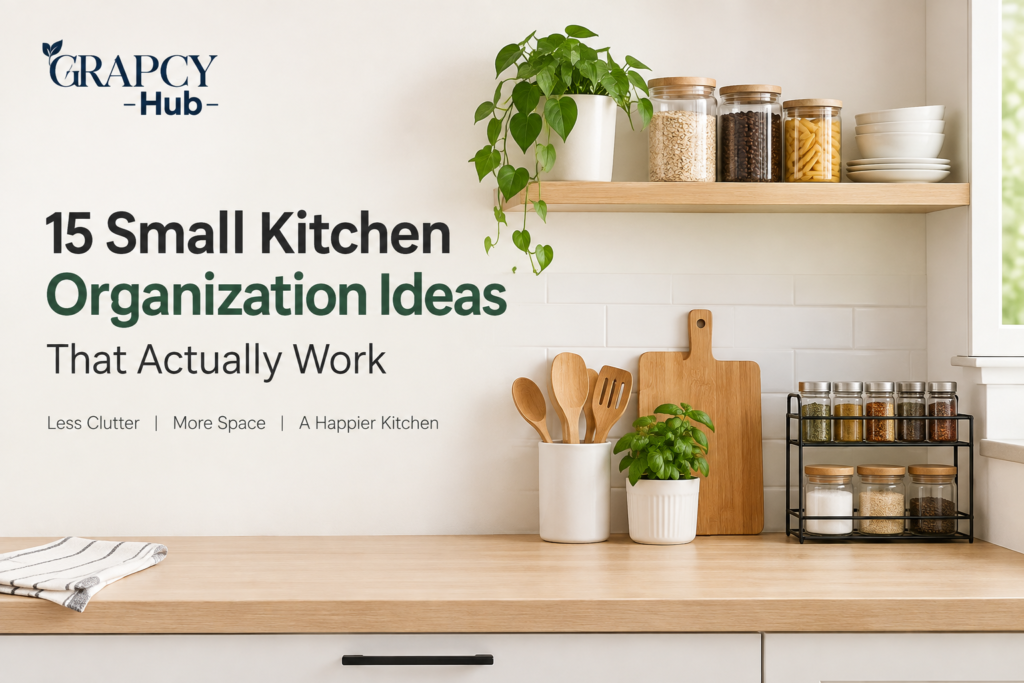
1. Declutter Before Adding More Storage
Small kitchen organization ideas can make a big difference when every cabinet, drawer, and countertop has limited space.
Before buying organizers, start by removing items you no longer use.
Small kitchens often become crowded because of duplicate utensils, expired pantry items, unused appliances, and containers without matching lids.
Sort your kitchen items into three groups:
- Items you use regularly
- Items you use occasionally
- Items you rarely or never use
Keep everyday items in accessible locations. Store occasional items in less convenient areas, and consider donating or removing things you no longer need.
Why it helps: Additional storage products cannot solve a clutter problem if the kitchen already contains too many unnecessary items.
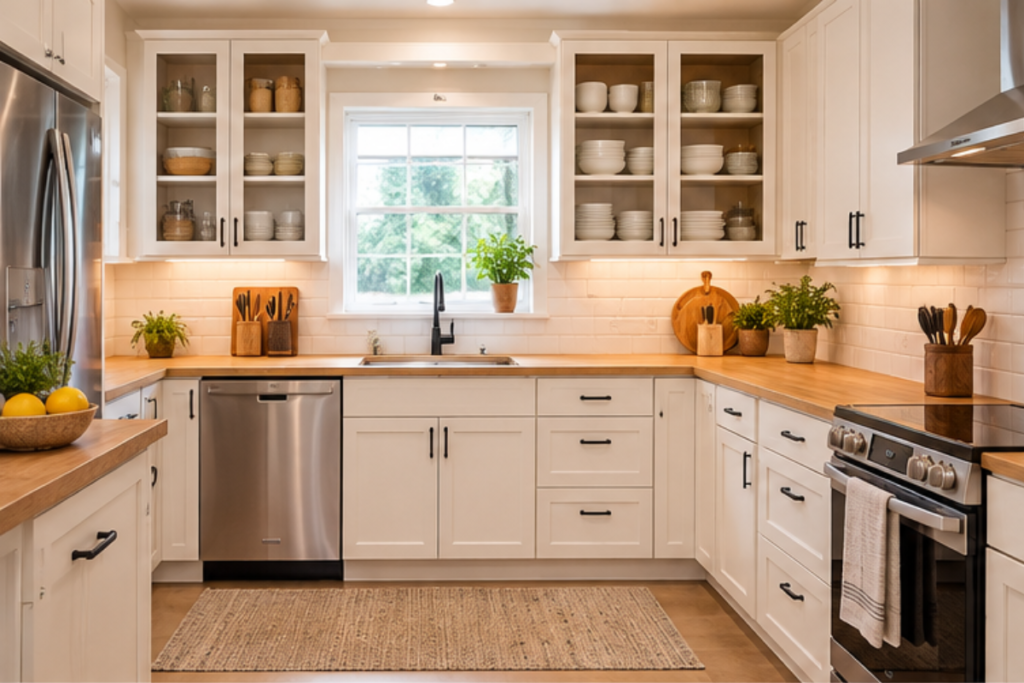
2. Use Vertical Space Inside Cabinets
Many kitchen cabinets contain unused space above plates, bowls, mugs, and pantry items.
Shelf risers and stackable organizers can create an additional storage level without requiring a new cabinet.
For example, you can use a shelf riser to separate:
- Dinner plates
- Small plates
- Bowls
- Mugs
- Canned goods
- Pantry containers
Before buying one, measure the cabinet’s width, depth, and available height. Make sure the organizer will leave enough room for the items you plan to store.
Best for: Kitchens with tall cabinets and limited shelf space.
3. Organize Deep Drawers With Dividers
Deep kitchen drawers can easily become disorganized when cooking tools, measuring spoons, and utensils are placed together.
Adjustable drawer dividers can help create separate sections for different categories.
You might organize one drawer into sections for:
- Cooking utensils
- Measuring tools
- Serving utensils
- Food-preparation accessories
- Small kitchen gadgets
Keep the items you use most frequently toward the front or in the easiest-to-reach section.
Tip: Measure the inside of the drawer rather than the outside before purchasing a divider.
4. Create a Dedicated Spice Storage Area
Spice jars can quickly take over a countertop or become difficult to find inside a crowded cabinet.
Instead of keeping spices in different locations, create one dedicated spice zone.
Depending on your kitchen layout, you could use:
- A tiered cabinet spice organizer
- A drawer spice organizer
- A pull-out spice rack
- A wall-mounted rack
- A compact countertop rack
Choose the location based on the space you already have. A countertop rack may not be the best option if your counters are already crowded.
For more specific ideas, read our related guide:
10 Spice Rack Ideas for Small Kitchens and Better Organization
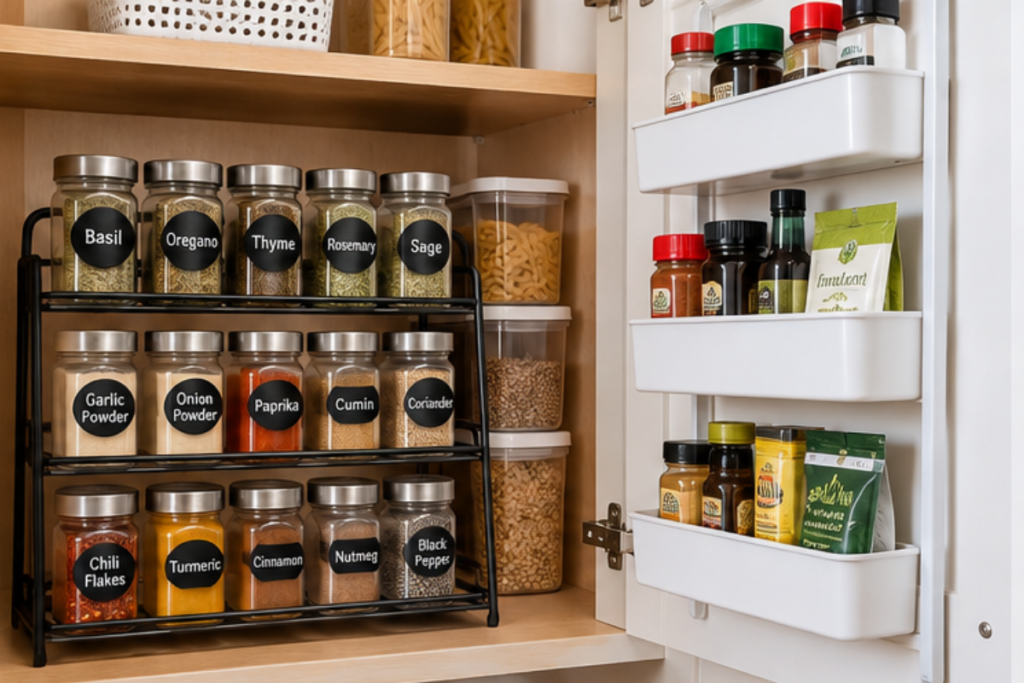
5. Use the Inside of Cabinet Doors
The inside of a cabinet door is often overlooked.
A suitable door-mounted organizer can create additional space for smaller kitchen items without taking up an entire shelf.
Depending on the cabinet and organizer, you may be able to store:
- Measuring spoons
- Kitchen wraps
- Cleaning supplies
- Small cutting boards
- Pantry accessories
- Lightweight kitchen tools
Before installing anything, check the available clearance. The cabinet door must still close properly, and the organizer should not interfere with shelves or plumbing.
6. Make Better Use of the Under-Sink Cabinet
The cabinet beneath the kitchen sink can be difficult to organize because of pipes, plumbing fixtures, and awkward corners.
Instead of placing everything inside randomly, divide the area into smaller zones.
You could use:
- A compact shelf
- A pull-out organizer
- A cleaning caddy
- Small storage bins
- Stackable containers
Keep frequently used cleaning products toward the front. Store heavier bottles on the bottom and avoid overcrowding the cabinet.
Important: Measure around the plumbing before buying an under-sink organizer.
7. Keep Countertops Reserved for Everyday Items
A small kitchen can feel crowded when every appliance remains on the countertop.
Start by deciding which items you use daily and which ones can be stored elsewhere.
For example:
- A coffee maker used every morning may stay on the counter.
- A blender used once a month may be stored in a cabinet.
- Seasonal appliances may be kept in less accessible storage.
Try dividing your kitchen items into three categories:
Daily-use items: Keep within easy reach.
Weekly-use items: Store nearby but off the countertop.
Occasional-use items: Keep in higher or less accessible storage.
This simple system can make your kitchen feel more open without adding new furniture.
8. Add a Slim Rolling Cart to an Unused Gap
A narrow space between a refrigerator and a cabinet may be useful for a slim rolling cart.
Depending on its size, the cart can hold:
- Spices
- Cooking oils
- Baking supplies
- Pantry items
- Cleaning products
Measure the gap carefully before buying a cart. Also check whether you will be able to pull it out easily.
A rolling cart is most useful when it improves access rather than creating another difficult-to-reach storage area.
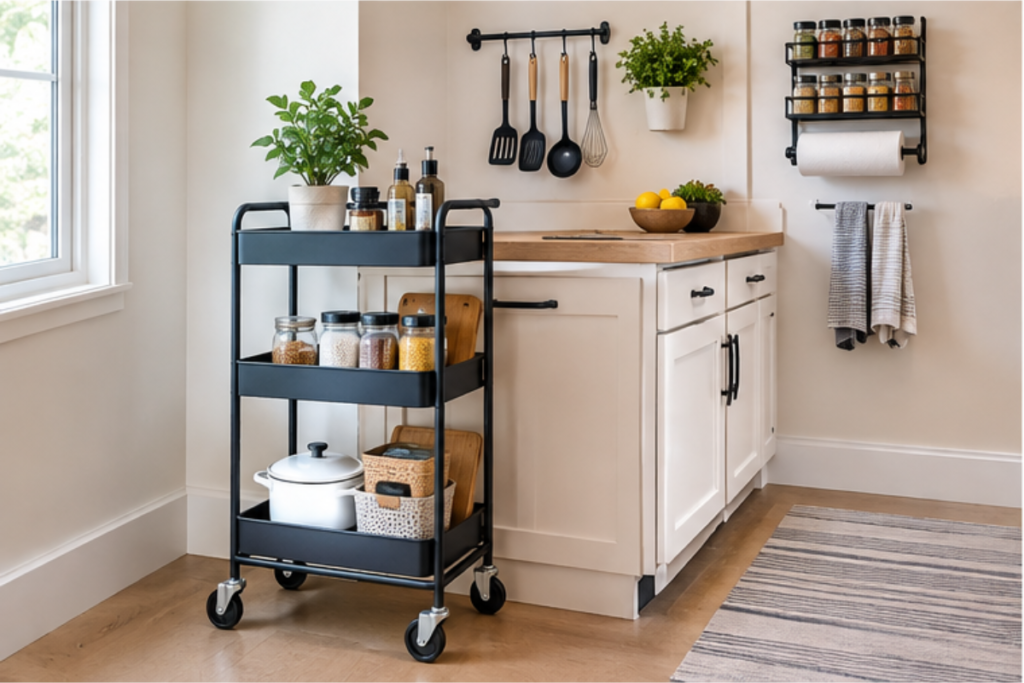
9. Use Empty Wall Space
When cabinets and drawers are full, look at your kitchen walls.
Depending on your space and rental restrictions, you may be able to add:
- Hooks
- Wall-mounted shelves
- Pegboards
- Storage rails
- Magnetic organizers
Wall storage can work well for lightweight items that you use frequently.
However, avoid covering every wall with storage. Too many visible objects can make a small kitchen look busy.
Choose only the wall-storage solutions that solve a specific problem.
10. Organize the Side of Your Refrigerator
The side of a refrigerator can sometimes provide useful storage space.
Depending on the refrigerator’s design and available clearance, you may be able to use:
- Magnetic organizers
- Lightweight hooks
- Slim storage racks
- Small shelves
Use this area for lightweight items and make sure the storage product is designed for the surface.
Avoid placing heavy objects where they could fall or interfere with refrigerator doors.
11. Create Simple Pantry Zones
Even if your kitchen does not have a separate pantry, you can create pantry-style zones inside cabinets.
Group similar items together so you can find them quickly.
For example:
Breakfast items
- Coffee
- Tea
- Cereal
- Oatmeal
Baking supplies
- Flour
- Sugar
- Baking ingredients
Snacks
- Crackers
- Granola bars
- Packaged snacks
Cooking staples
- Pasta
- Rice
- Grains
- Canned goods
Clear bins may help group smaller items, but you do not need to purchase matching containers for everything.
The most effective system is one that makes it easy to see what you have and return items to the correct place.
12. Store Food Containers and Lids Separately
Food storage containers can occupy a surprising amount of space when their bases and lids are mixed together.
Try nesting containers by size and storing lids vertically in one dedicated section.
A lid organizer may help if you have many different container sizes.
Before purchasing more containers, check whether you have:
- Duplicate sizes
- Missing lids
- Containers you never use
- Damaged pieces
Removing mismatched items can free up more space than buying another storage product.
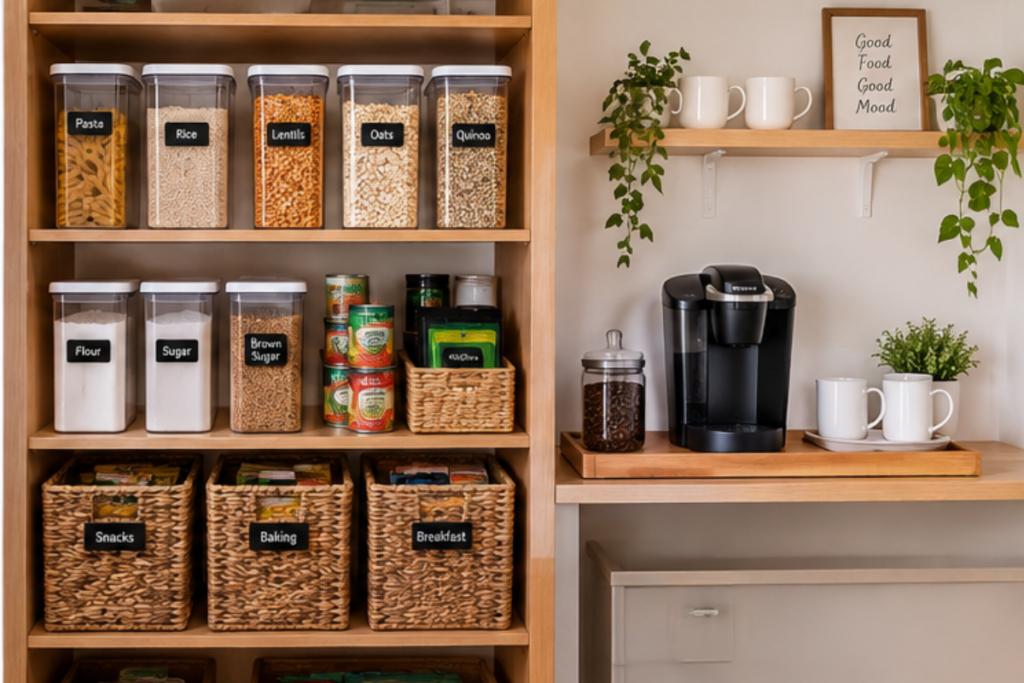
13. Create a Small Coffee or Tea Station
Coffee and tea supplies can spread across several cabinets and countertops.
A dedicated beverage zone can keep these items together and make your morning routine easier.
You might group:
- Coffee or tea
- Mugs
- Filters
- Sweeteners
- Spoons
- Frequently used accessories
The station does not need to be large. A single cabinet shelf, tray, or drawer may be enough.
Keep the items you use every day within easy reach and store occasional supplies elsewhere.
14. Use the Space Above Cabinets Carefully
The space above kitchen cabinets can sometimes hold items that you rarely use.
This area may work for:
- Lightweight serving pieces
- Seasonal kitchen items
- Extra storage containers
- Infrequently used accessories
However, the area can collect dust and may be difficult to access.
Use closed baskets or containers where practical, and avoid storing heavy objects overhead. Make sure you can safely reach the area before placing anything there.
15. Organize Your Kitchen Around Activity Zones
One of the most practical ways to organize a small kitchen is to arrange items according to how you use the space.
Instead of storing things only by category, create simple activity zones.
Food-preparation zone
Keep cutting boards, knives, mixing tools, and preparation accessories near the area where you prepare food.
Cooking zone
Store frequently used cookware and cooking utensils close to the stove.
Cleaning zone
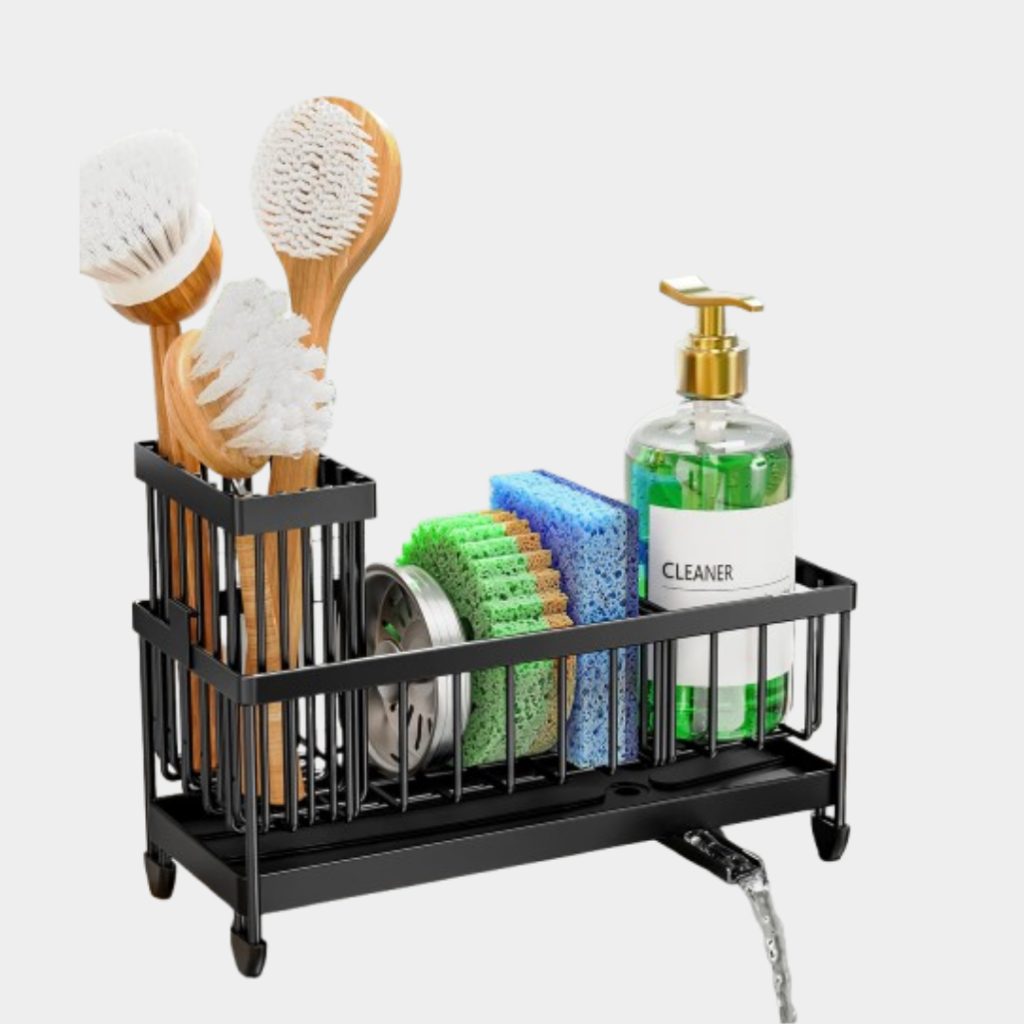
Keep dish soap, sponges, towels, and cleaning supplies near the sink.
Food-storage zone
Group pantry staples, food containers, and storage accessories together where practical.
This system can reduce unnecessary movement and make daily tasks easier.
You do not need a large kitchen to create useful zones. You simply need to give frequently used items a logical home.
How to Choose the Right Kitchen Organizers
Before buying an organizer, identify the exact problem you want to solve.
Ask yourself:
What needs organizing?
Is the issue related to spices, cookware, food containers, cleaning supplies, or countertop clutter?
Where is space being wasted?
Check cabinets, drawers, cabinet doors, the area under the sink, narrow gaps, and unused walls.
How often do you use the item?
Daily-use items should generally be easier to access than occasional-use items.
Have you measured the space?
Measure the width, depth, and height of the area before purchasing anything.
Will the organizer create more clutter?
A storage product should make the kitchen easier to use. If it adds another object to an already crowded counter, it may not be the right choice.
Small Kitchen Organization Mistakes to Avoid
Buying organizers before decluttering
More containers will not solve the problem if you have too many items.
Storing everyday items too far away
Frequently used tools should not require several steps and multiple cabinet doors to reach.
Overloading countertops
Keep countertops focused on items that genuinely need to remain accessible.
Ignoring measurements
An organizer that looks suitable online may not fit your cabinet or drawer.
Choosing appearance over function
Matching containers may look attractive, but the system should first be practical and easy to maintain.
Creating complicated systems
If putting something away takes too much effort, the system may not last. Choose simple storage arrangements that match your routine.
A Simple 30-Minute Kitchen Organization Plan
You do not need to reorganize the entire kitchen in one day.
Try this approach:
First 10 minutes
Choose one small area, such as a drawer, cabinet, or countertop section.
Next 10 minutes
Remove unnecessary items and group similar things together.
Final 10 minutes
Create a practical arrangement and decide whether an organizer is actually necessary.
Once one area works well, move on to another.
A gradual approach is often easier to maintain than removing everything from the kitchen at once.
Related GRAPCY Hub Guides
If you are organizing a small kitchen, these related guides may also help:
- 10 Spice Rack Ideas for Small Kitchens and Better Organization
- 12 Kitchen Cabinet Organization Ideas for Small Spaces
These three articles will form a connected Kitchen Organization topic cluster on GRAPCY Hub.
Frequently Asked Questions
What are some effective small kitchen organization ideas?
Some of the most practical small kitchen organization ideas include using vertical cabinet space, adding drawer dividers, creating dedicated spice storage, using the inside of cabinet doors, organizing the under-sink area, and making better use of unused wall space.
How can I organize a small kitchen without adding more cabinets?
Start by decluttering items you rarely use, then make better use of existing space. Cabinet-door organizers, shelf risers, drawer dividers, wall storage, slim rolling carts, and organized pantry zones can add useful storage without requiring new cabinets.
How do I organize kitchen cabinets in a small kitchen?
Group similar items together and organize cabinets around how you use the kitchen. Use shelf risers for vertical space, dividers for cookware or dishes, and cabinet-door storage for smaller items. Keeping frequently used items within easy reach can also make the kitchen easier to use.
What is the best way to organize spices in a small kitchen?
Choose a spice storage solution based on the space available. Drawer organizers, tiered cabinet racks, pull-out organizers, rotating racks, and wall-mounted storage can help keep spices visible and accessible without taking up unnecessary counter space.
How can I make better use of under-sink kitchen storage?
Group similar items together and organize cabinets around how you use the kitchen. Use shelf risers for vertical space, dividers for cookware or dishes, and cabinet-door storage for smaller items. Keeping frequently used items within easy reach can also make the kitchen easier to use.
How can I keep my small kitchen countertops organized?
Keep countertops reserved mainly for items you use every day. Store less frequently used appliances and supplies inside cabinets or other storage areas. A dedicated coffee or tea station can also help keep related items together instead of spreading them across the counter.
How can I organize a small kitchen on a budget?
You don’t need to buy many organizers at once. Start by decluttering and rearranging the storage you already have. Then add simple solutions such as drawer dividers, shelf risers, cabinet-door organizers, or a slim rolling cart where they solve a specific storage problem.
How do I organize a very small kitchen?
Focus on making every storage area work harder. Use vertical cabinet space, overlooked wall areas, cabinet doors, deep drawers, under-sink space, and unused gaps. Organizing the kitchen into activity zones can also make a small space more functional.
Final Thoughts
A small kitchen does not have to feel chaotic.
The most effective improvements usually come from making better use of the space you already have. Start by removing items you no longer need, then organize the remaining items according to how often you use them and where they make the most sense.
Look beyond countertops and cabinets. Vertical space, cabinet doors, narrow gaps, under-sink areas, and unused walls can all become useful when organized thoughtfully.
You do not need to apply all 15 ideas at once. Start with the area that causes the most frustration, improve it, and gradually build a system that works for your daily routine.
A well-organized small kitchen is not about fitting more things into less space. It is about making the things you actually use easier to find, reach, and put away.

Pingback: 15 Amazing Halloween Home Decor Ideas for a Spooky, Cozy Home - grapcyhub.com