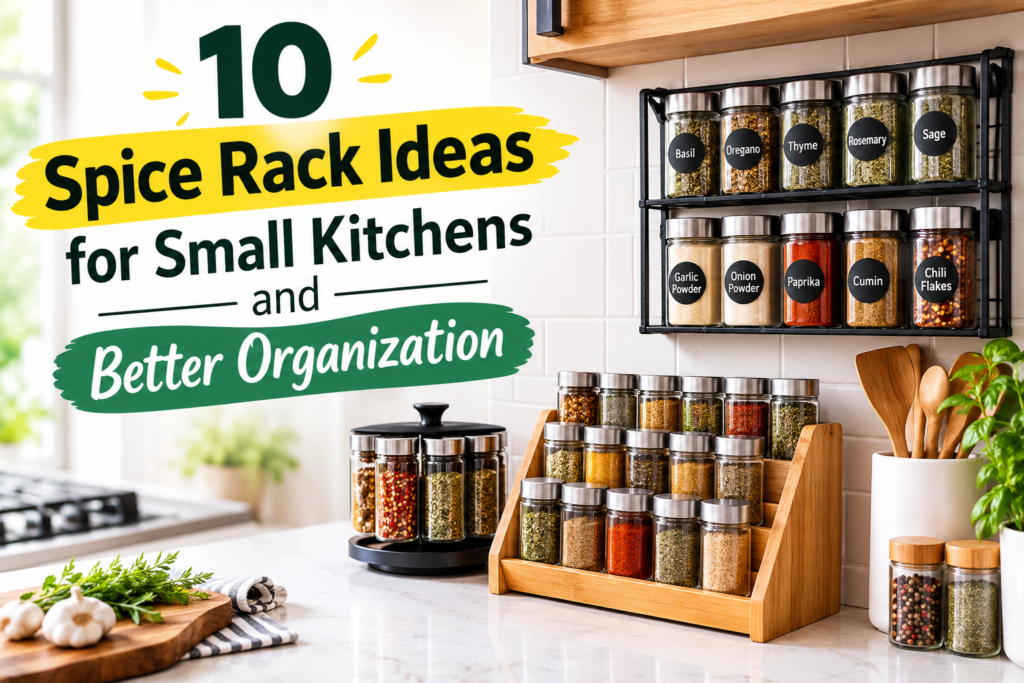
A small kitchen can make spice storage surprisingly difficult. Jars often end up crowded inside cabinets, scattered across countertops, or pushed toward the back where they are easy to forget.
The good news is that you don’t need a large pantry or a dedicated spice cabinet to keep seasonings organized. The right storage method can make better use of drawers, cabinet shelves, doors, walls, and even small gaps that would otherwise go unused.
The key is to choose a spice storage solution based on how much space you have, how often you cook, and where you naturally reach for your spices.
Here are 10 practical spice rack ideas for small kitchens that can help keep your spices visible, accessible, and easier to manage.
1. Use a Tiered Spice Rack Inside a Cabinet
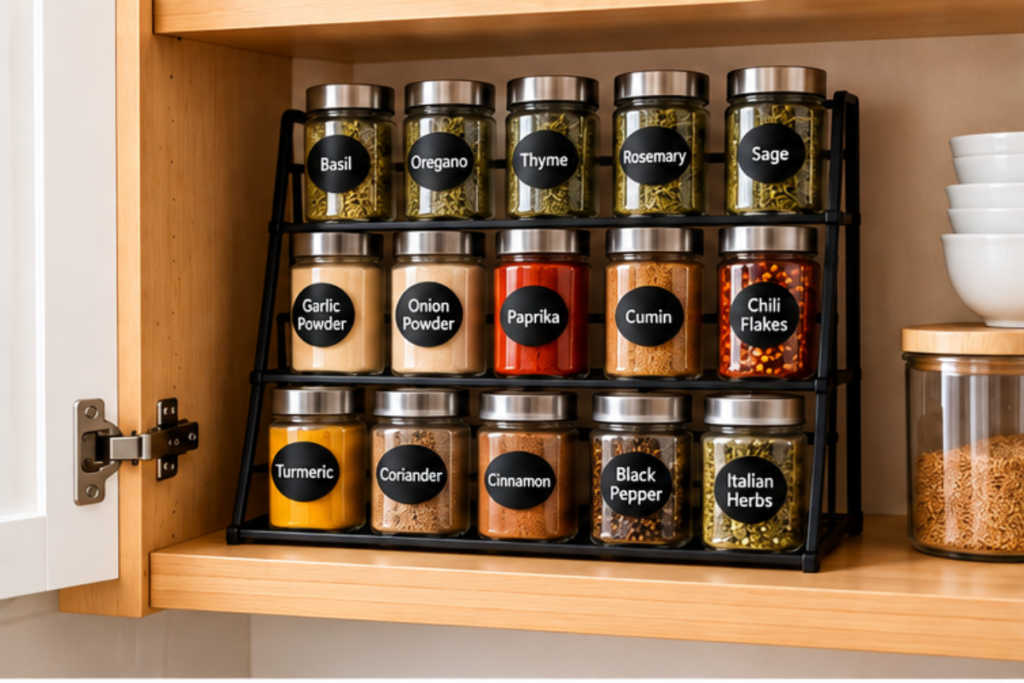
One of the simplest ways to improve spice storage is to add a tiered rack inside an existing kitchen cabinet.
Instead of placing jars in one flat row, a tiered organizer raises the jars in the back so you can see more of the collection at once. This can be especially useful when your cabinet has enough depth but limited vertical organization.
Look for a rack that fits comfortably inside your cabinet without making the door difficult to close.
Best for: Small cabinets with unused shelf depth.
Why it works: You use the cabinet space you already have while making the back rows easier to see.
Tip: Measure the cabinet’s interior width, depth, and usable height before buying an organizer.
2. Turn a Kitchen Drawer Into a Spice Drawer
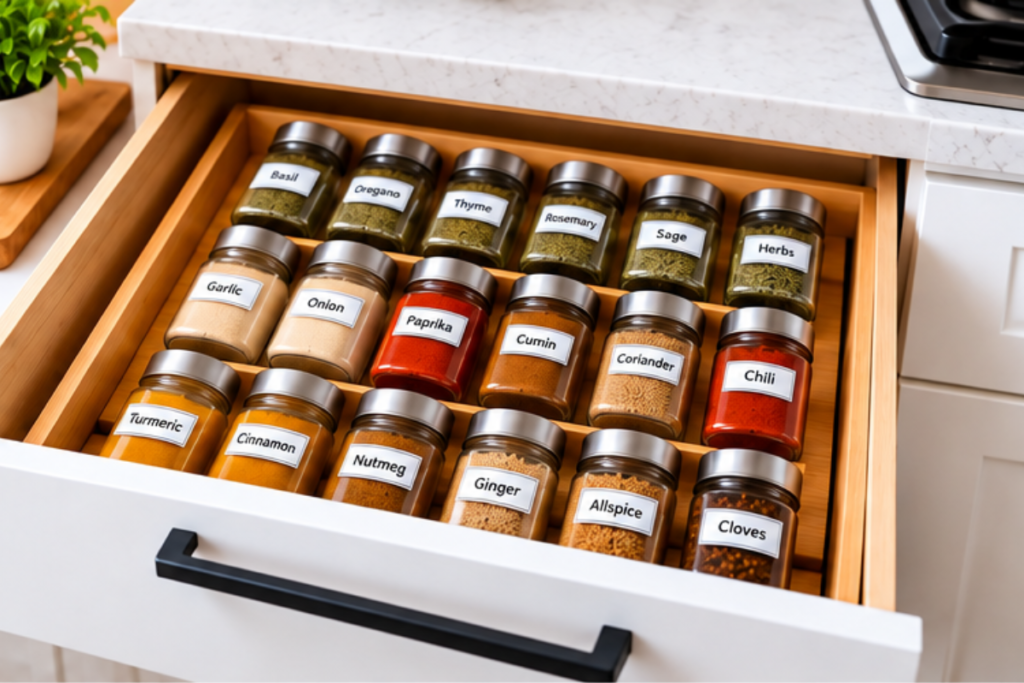
If you have a shallow drawer near your cooking area, consider turning it into dedicated spice storage.
A drawer organizer keeps jars lying flat or positioned at a slight angle, allowing you to read the labels from above. This can be much easier than digging through a crowded cabinet.
A drawer is particularly useful for cooks who prefer to see all their spices at once rather than reaching behind several containers.
Best for: Kitchens with an unused or underused shallow drawer.
Why it works: Every spice can have a defined position, making it easier to find what you need.
Tip: Arrange frequently used spices toward the front and less-used spices toward the back.
3. Install a Pull-Out Spice Rack
A pull-out spice organizer can make use of narrow spaces between cabinets or appliances.
These organizers slide forward, allowing you to access spices without reaching deep into a cabinet. Some models are designed specifically for narrow gaps, making them useful when every inch of kitchen space matters.
This approach is especially helpful if you have a small unused space beside a cabinet or refrigerator.
Best for: Narrow kitchens with unused gaps.
Why it works: It turns otherwise difficult-to-reach space into functional storage.
Before buying: Measure the available gap carefully. A few inches of difference can determine whether an organizer fits properly.

4. Try an Expandable Spice Rack
An expandable spice rack can be useful when you want flexibility rather than a fixed-size organizer.
These racks can adjust to different cabinet widths, making them easier to adapt as your storage needs change. They can also be useful if you don’t want to dedicate an entire cabinet shelf to a single large organizer.
Best for: Renters or kitchens where cabinet dimensions vary.
Why it works: The adjustable design can make better use of available shelf space.
Tip: Don’t expand the rack so far that there is no room left to comfortably remove the jars.
5. Use a Rotating Spice Rack on the Countertop
A rotating spice rack can provide quick access when countertop space is available.
Instead of searching through several jars, you can rotate the organizer to bring the desired spice toward you. This can work well for frequently used seasonings.
However, countertop storage should be used selectively in a small kitchen. Too many containers can quickly make the work surface feel cluttered.
Best for: Cooks who use several spices every day.
Why it works: It keeps frequently used spices together and easy to reach.
Tip: Keep only your most-used spices on the counter. Store specialty or rarely used seasonings elsewhere.
6. Mount a Spice Rack on the Inside of a Cabinet Door
The inside of a cabinet door is often overlooked as a storage area.
A slim spice rack designed for cabinet doors can turn this unused vertical surface into practical storage. It can be especially useful when your cabinets have enough door clearance for the rack and jars.
This solution keeps spices close to the cooking area without taking up valuable shelf space.
Best for: Cabinets with unused door space.
Why it works: It adds storage without requiring another cabinet or countertop.
Important: Check the door clearance before installing anything. The rack should not interfere with shelves or prevent the cabinet from closing properly.
7. Use a Magnetic Spice Rack on a Refrigerator or Metal Surface
Magnetic spice containers can be a creative option when cabinet space is extremely limited.
If your refrigerator or another suitable metal surface is positioned conveniently near your cooking area, magnetic spice storage can put seasonings within easy reach.
This method also keeps the cabinet shelves available for other kitchen essentials.
Best for: Very small kitchens with limited cabinet space.
Why it works: It uses vertical space that might otherwise remain unused.
Tip: Keep the arrangement organized rather than covering the entire refrigerator with containers. A small, intentional setup usually works better
8. Add a Wall-Mounted Spice Rack
If your cabinets and drawers are already full, look at the walls.
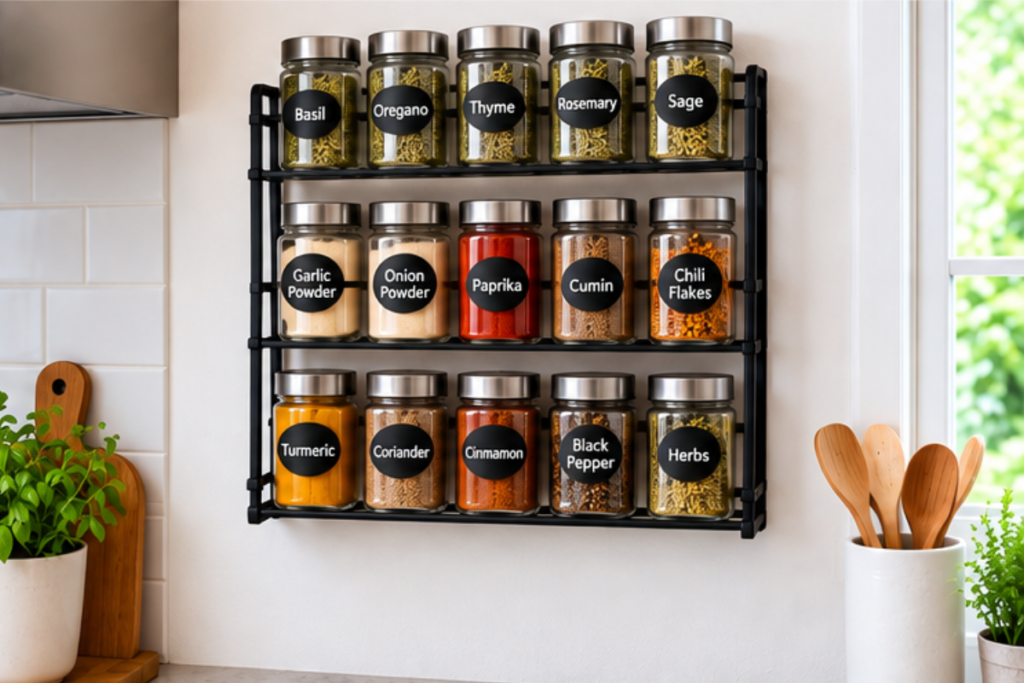
A slim wall-mounted spice rack can provide dedicated storage without taking up cabinet or countertop space. Depending on your kitchen layout, it can be installed near a prep area, cooking area, or pantry.
This can also make spices more visible, which may help prevent duplicate purchases.
Best for: Small kitchens with available wall space.
Why it works: It takes advantage of vertical space instead of competing for limited horizontal storage.
Before installing: Make sure the location is practical and that the rack doesn’t interfere with cabinets, appliances, or normal kitchen movement.
9. Use a Small Spice Organizer on a Pantry Shelf
If you have a pantry, even a small one, you don’t necessarily need a separate spice cabinet.
A compact organizer can create a dedicated spice zone on one pantry shelf. Grouping spices together makes them easier to locate and prevents small jars from becoming mixed with larger food containers.
You can organize them alphabetically, by cuisine, or by how frequently you use them.
Best for: Kitchens with a pantry but limited cabinet organization.
Why it works: It creates a specific home for spices without using additional kitchen furniture.
Tip: Place everyday spices at eye level and specialty spices higher or farther back.
10. Create a Simple Spice Station Based on How You Cook
Sometimes the best spice rack isn’t a particular product. It’s a storage system designed around your cooking habits.
For example, you could keep everyday seasonings together near the stove while storing baking spices separately. Another option is to create small groups such as:
- Everyday seasonings
- Baking spices
- International or specialty spices
- Spice blends
- Rarely used spices
This approach can work with almost any storage method, including drawers, cabinets, shelves, or countertop organizers.
Best for: Kitchens where one storage solution doesn’t fit every spice.
Why it works: The organization follows your routine instead of forcing your routine to follow the organizer.
Spice Rack Ideas for Small Kitchens: How to Choose the Right One
Before buying a spice rack, take a few measurements and consider how you actually use your kitchen.
1. Measure the available space
Check:
- Width
- Depth
- Height
- Cabinet door clearance
- Distance between shelves
A rack that looks compact online may take up more usable space than expected once your spice jars are inside it.
2. Count your spices
You don’t necessarily need a 30- or 40-jar organizer if you regularly use only 10 spices.
Start with the collection you actually have.
If you own a large variety of seasonings, choose a system that can accommodate some growth without becoming overcrowded.
3. Think about visibility
If you frequently forget what you already have, choose an organizer that makes labels easy to see.
Tiered racks, drawers, pull-outs, and wall-mounted storage can all improve visibility in different ways.
4. Consider how often you cook
Frequently used spices should be easy to reach.
Rarely used spices can be stored farther away, freeing the most convenient storage locations for everyday ingredients.
5. Don’t sacrifice useful counter space
A countertop spice rack can be convenient, but a small kitchen has limited workspace.
If a countertop organizer takes up a large portion of your prep area, a cabinet, drawer, wall, or pull-out solution may make more sense.
How to Organize Spices So They Stay Organized
Buying a spice rack is only the first step. A simple system can help keep it useful over time.
Group similar spices together
You might organize spices by:
- Frequency of use
- Type
- Cuisine
- Alphabetical order
Choose the system that makes the most sense for you.
Keep labels visible
If you can’t quickly identify a jar, the storage system isn’t doing its job.
Position containers so labels are easy to read whenever possible.
Check expiration dates
Spices don’t stay at peak quality forever. During an organization session, check older containers and discard anything that is clearly past its useful life or no longer smells fresh.
Avoid unnecessary duplicates
A well-organized spice collection can help you see what you already own before buying another jar.
This is one of the simplest benefits of making spices visible.
Common Spice Storage Mistakes in Small Kitchens
Even a good organizer can become frustrating when the storage system isn’t planned properly.
Using too much countertop space
A large rack may solve one problem while creating another by taking away valuable prep space.
Storing spices too far from where you cook
If you constantly walk across the kitchen to get basic seasonings, the system may not be convenient enough.
Overfilling an organizer
Leaving a little room between containers makes it easier to remove and replace jars.
Ignoring cabinet measurements
Always measure first. This is especially important for pull-out and cabinet-door organizers.
Keeping rarely used spices in prime storage locations
Reserve the easiest-to-reach spaces for ingredients you use regularly.
A Simple Way to Organize Your Spices Today
You don’t have to reorganize the entire kitchen at once.
Try this quick process:
Step 1: Take all your spices out of their current storage area.
Step 2: Check for duplicates, empty containers, and spices you no longer use.
Step 3: Group the remaining spices.
Step 4: Measure the space where you want to store them.
Step 5: Choose a storage method that matches that space.
Step 6: Put your most-used spices in the easiest-to-reach location.
Step 7: Keep specialty and rarely used spices in less convenient storage areas.
This simple approach can make a small kitchen feel much easier to use without requiring a major renovation.
Frequently Asked Questions
What is the best way to organize spices in a small kitchen?
The best method depends on your available space and cooking habits. Drawer organizers, tiered cabinet racks, pull-out organizers, cabinet-door racks, and wall-mounted storage can all work well. The goal is to keep spices visible, accessible, and grouped logically.
How can I store spices without using counter space?
Use a drawer organizer, cabinet shelf riser, pull-out spice rack, cabinet-door organizer, pantry shelf, or wall-mounted rack. These options use existing vertical or enclosed storage instead of taking up valuable countertop space.
Are drawer spice racks good for small kitchens?
Yes. A shallow drawer can be an efficient place for spice storage because the jars can be arranged so their labels are visible from above. This can reduce the need to search through deep cabinets.
How do I organize a lot of spices in a small kitchen?
Start by removing duplicates and rarely used items. Then group the remaining spices and choose a storage system that uses the available space efficiently. A combination of drawer, cabinet, pantry, or wall storage may work better than trying to fit everything into one rack.
Should spices be stored near the stove?
Keeping frequently used spices reasonably close to the cooking area can be convenient. However, avoid placing them where they are exposed to excessive heat or moisture. A nearby cabinet or drawer can provide easier access while offering better protection.
How do I choose the right size spice rack?
Measure the available width, depth, height, and door clearance before purchasing. Also count your current spice containers and leave some room for easy access. The right rack should fit the space without making it difficult to remove individual jars.
How can I organize spices on a budget?
You don’t necessarily need a specialized rack. Start by decluttering your collection and using existing drawers, shelves, or cabinets more efficiently. Simple bins, shelf risers, or dividers can solve specific storage problems without requiring a complete kitchen makeover.
How often should I reorganize my spice collection?
A quick check every few months can help prevent duplicates and overcrowding. You can also reorganize whenever you notice that spices are becoming difficult to find or frequently used containers are no longer easy to reach.
Related GRAPCY Hub Guides
If you’re working on a small kitchen, these guides can help you organize other areas too:
- 15 Small Kitchen Organization Ideas That Actually Work
- Echo Dot vs Echo Dot Max: What’s the Difference?
These articles are part of the GRAPCY Hub Kitchen Organization topic cluster and can be internally linked once the related pages are published.
Final Thoughts
Good spice organization isn’t about buying the biggest or most expensive rack. It’s about finding a storage method that fits your kitchen and makes everyday cooking easier.
For some kitchens, a drawer organizer will make the most sense. For others, a pull-out rack, cabinet-door organizer, wall-mounted rack, or compact pantry setup may work better.
Start by measuring the space you already have, removing spices you don’t need, and identifying the seasonings you use most often. Then choose a storage solution that keeps those spices visible and easy to reach without sacrificing valuable kitchen space.
A small change in spice storage can make the entire cooking area feel more organized.