
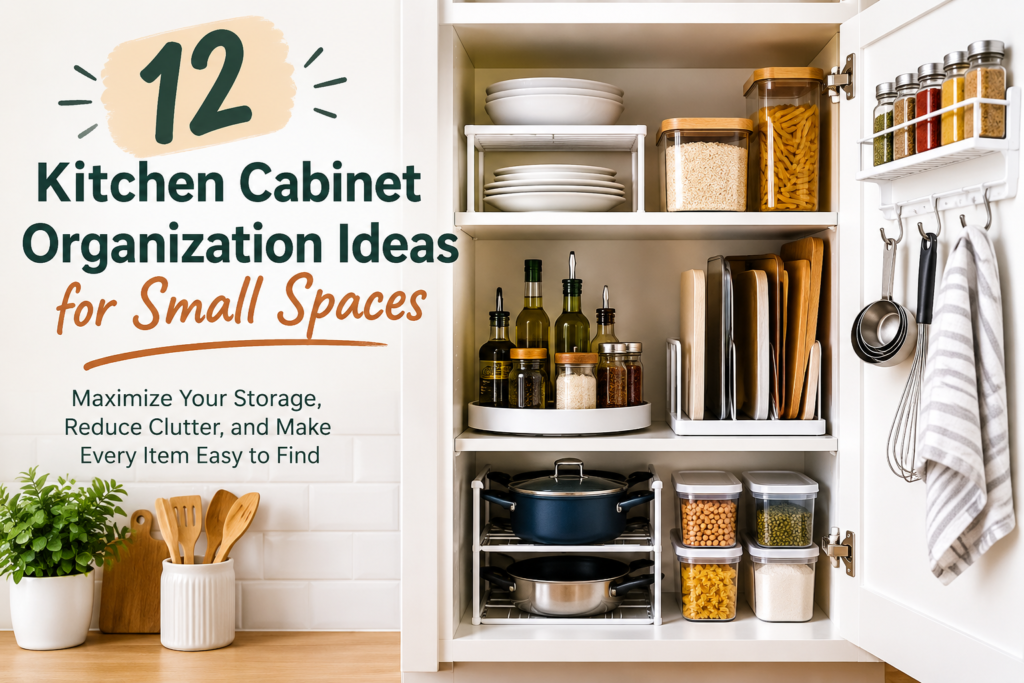
Small kitchens can become cluttered quickly, especially when cabinets are limited and every shelf has to do more work. Plates, cookware, food containers, spices, cleaning supplies, and everyday tools can easily end up stacked wherever there is room.
The good news is that you don’t necessarily need a larger kitchen to create more usable storage. A few smart kitchen cabinet organization ideas for small spaces can help you use vertical space, improve access, and make better use of areas that are often overlooked.
From shelf risers and pull-out organizers to door storage and better container placement, these ideas can make your cabinets easier to use without requiring a major kitchen renovation.
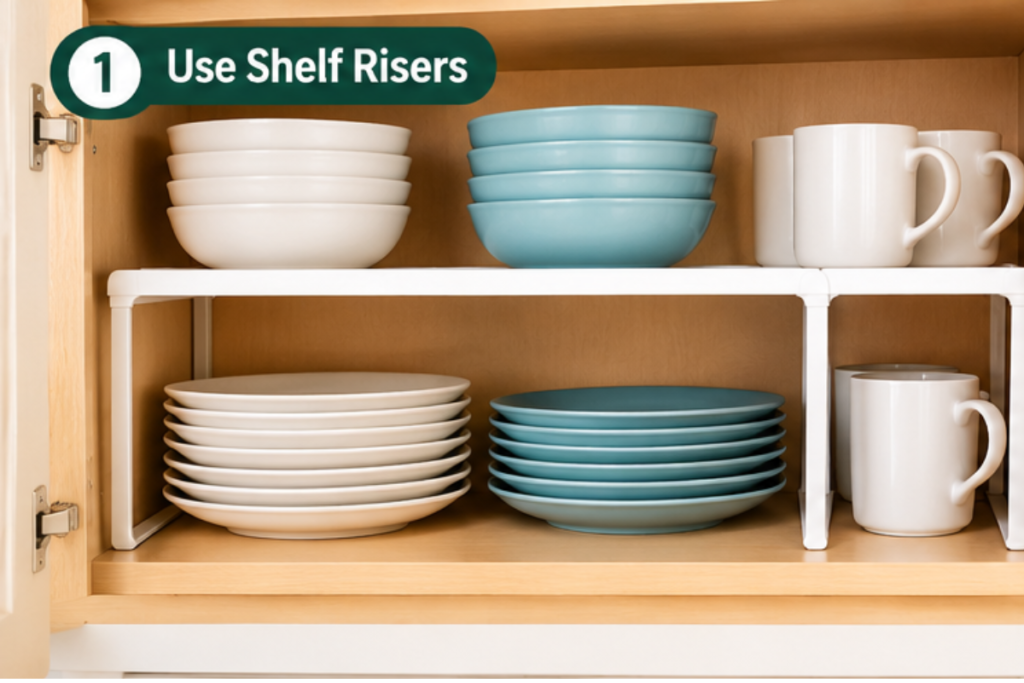
1. Use Shelf Risers to Create Extra Levels
One of the easiest ways to improve cabinet storage is to add shelf risers.
Without a riser, you may have a large amount of unused vertical space above plates, bowls, or mugs. A shelf riser creates another level so you can stack items without placing everything in one tall pile.
This works especially well for:
- Plates and bowls
- Coffee mugs
- Small serving dishes
- Food cans
- Baking supplies
Instead of stacking six or seven items together, you can create two smaller, easier-to-access groups.
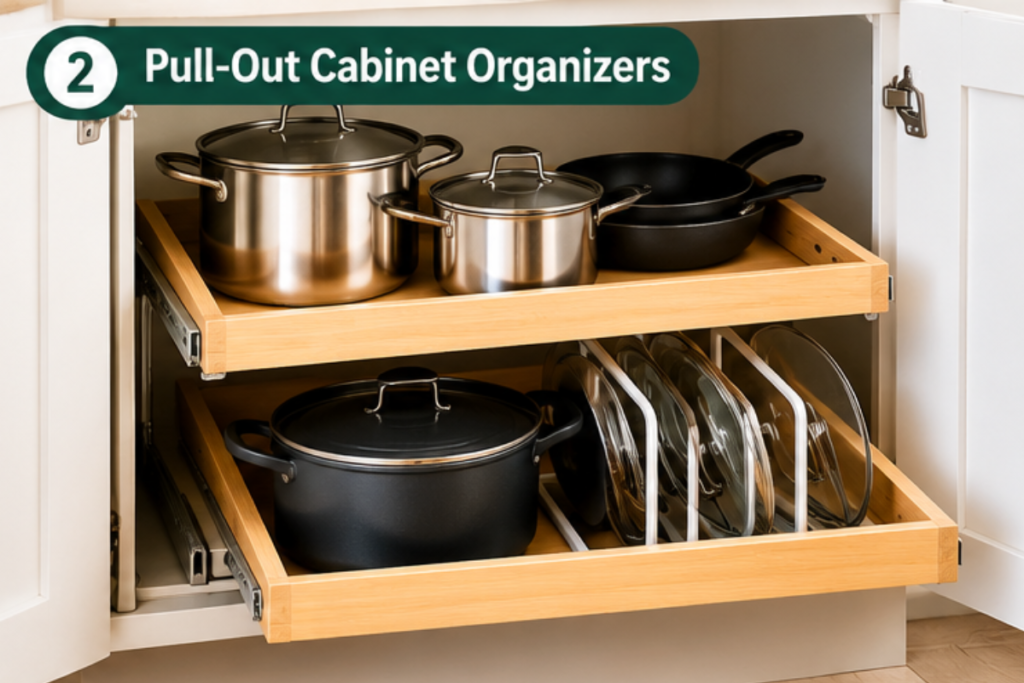
2. Install Pull-Out Cabinet Organizers
Deep cabinets often look spacious but can be difficult to use. Items pushed toward the back may become forgotten simply because they are hard to reach.
A pull-out organizer can solve this problem by allowing the storage tray to slide toward you.
Pull-out storage can work well for:
- Pots and pans
- Cooking oils
- Canned foods
- Baking supplies
- Cleaning products
For a small kitchen, this type of organization can make existing cabinet depth much more useful.
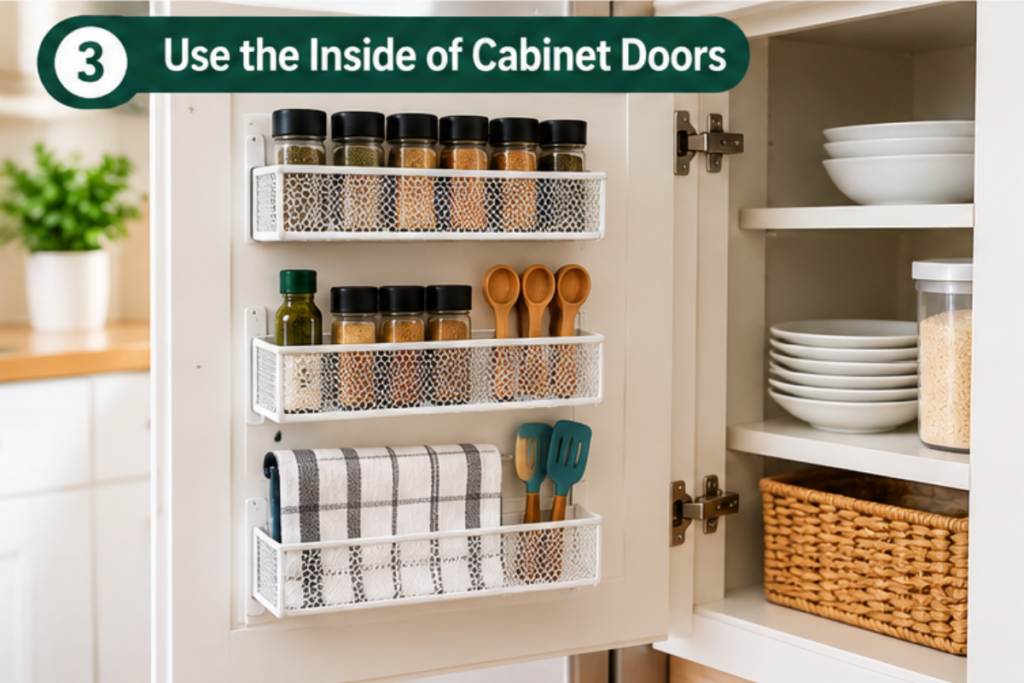
3. Make Use of the Inside of Cabinet Doors
The inside of a cabinet door is often completely unused.
Depending on the cabinet and what you store inside, a small door-mounted organizer can provide additional space for lightweight items.
You might use it for:
- Measuring spoons
- Kitchen towels
- Small food containers
- Cleaning accessories
- Spices
- Cutting boards
Before installing anything, check the available clearance. The organizer and its contents should not interfere with shelves or prevent the door from closing properly.
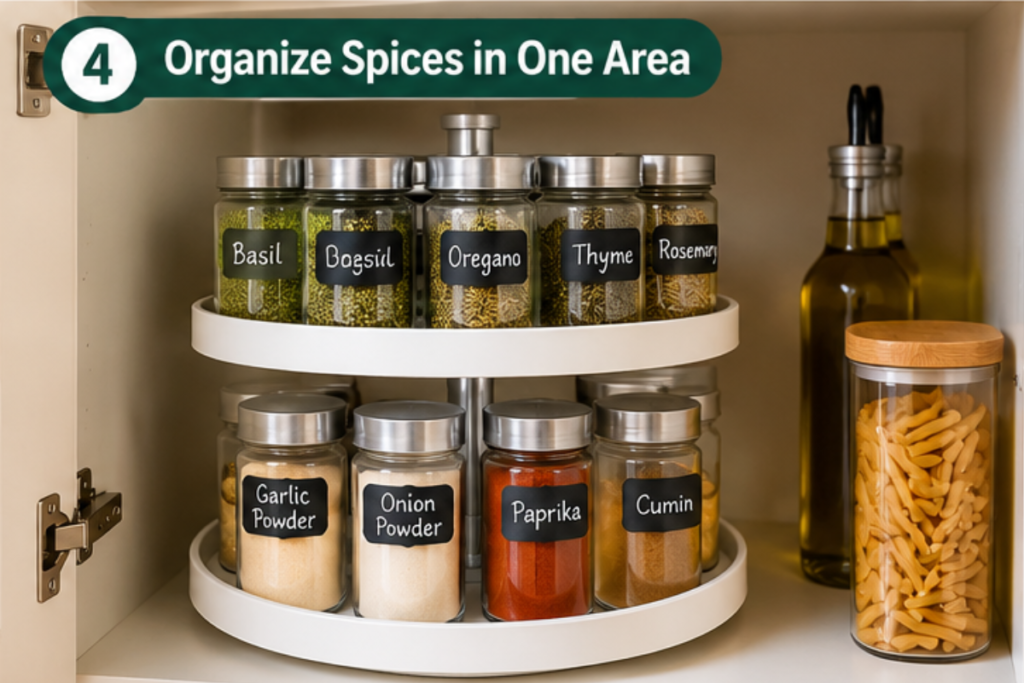
4. Organize Spices in One Dedicated Area
Scattered spice jars can quickly make a small kitchen cabinet difficult to manage.
Instead of storing spices wherever you find room, create one dedicated spice zone.
A drawer organizer, tiered rack, pull-out rack, or cabinet-door organizer can make spices easier to see and reach.
If you’re working with very limited cabinet space, check out our guide to 10 Spice Rack Ideas for Small Kitchens and Better Organization for additional storage approaches.
The goal isn’t simply to fit more spice jars. It’s to make the spices you use most frequently easy to find.
5. Store Cutting Boards Vertically
Laying cutting boards flat can consume valuable shelf space.
A simple vertical organizer can keep cutting boards, baking sheets, and similar flat items upright.
This creates a few advantages:
- Easier access
- Less stacking
- Better use of vertical space
- Less time searching through a cabinet
You can place the organizer inside a lower cabinet or another suitable storage area where the boards are easy to grab.
6. Use a Dedicated Container Zone
Food storage containers can be one of the biggest sources of cabinet clutter because containers and lids rarely stay organized on their own.
Create a dedicated cabinet zone for them rather than spreading them across multiple shelves.
Try these simple steps:
- Remove containers that are damaged or missing lids.
- Match containers with their lids.
- Nest containers from largest to smallest.
- Store lids vertically when possible.
- Keep frequently used containers toward the front.
You don’t need dozens of containers to organize a cabinet effectively. A smaller collection that is easy to maintain is often more useful.
7. Add a Small Lazy Susan to Corner Storage
Corner cabinets can contain awkward spaces that are difficult to access.
A rotating organizer, sometimes called a lazy Susan, can make those areas easier to use.
It’s particularly useful for items such as:
- Sauces
- Oils
- Condiments
- Canned goods
- Baking ingredients
Instead of reaching around several bottles to find something in the back, you can rotate the organizer and bring the item forward.
Choose the size carefully so the organizer can rotate freely inside the cabinet.
8. Create a Baking Supplies Cabinet
If baking supplies are spread across several cabinets, consider creating one dedicated baking zone.
Group similar items together, such as:
- Measuring cups
- Measuring spoons
- Mixing accessories
- Baking pans
- Decorating supplies
- Dry baking ingredients
Vertical dividers can be particularly helpful for baking sheets and pans.
A dedicated zone also makes it easier to see what you already have before buying duplicates.
9. Use Vertical Dividers for Pans and Lids
Stacking pans can work until you need the one at the bottom.
Every time you pull it out, the entire stack may need to be moved.
Vertical dividers allow cookware and lids to stand separately, making each item easier to access.
This approach works especially well for:
- Baking sheets
- Cutting boards
- Pot lids
- Serving trays
- Muffin pans
Think of the cabinet like a filing system: items stand next to each other rather than forming one heavy stack.
10. Move Frequently Used Items to the Easiest-to-Reach Area
Not everything in your kitchen deserves equal cabinet space.
Items you use every day should generally be easier to reach than things you use only occasionally.
For example:
Daily-use zone
- Plates
- Bowls
- Coffee mugs
- Everyday cookware
Occasional-use zone
- Large serving dishes
- Specialty baking equipment
- Holiday items
This simple change can make a small kitchen feel more efficient without adding any new storage products.
11. Don't Ignore the Space Under the Sink
The cabinet under the sink is often treated as a dumping ground for cleaning supplies.
Instead, divide it into simple categories.
For example:
- Dishwashing supplies
- Cleaning sprays
- Sponges and brushes
- Extra trash bags
- Dishwasher supplies
A compact bin or adjustable organizer can help separate these items.
Just remember that plumbing pipes take up space, so measure the cabinet before buying an organizer.
12. Keep One Cabinet for Kitchen "Extras"
Small kitchens often accumulate miscellaneous items that don’t have an obvious home.
Instead of putting these items wherever there happens to be space, designate one cabinet or section for less frequently used kitchen accessories.
This might include:
- Extra serving utensils
- Specialty gadgets
- Reusable bags
- Seasonal kitchen items
- Small appliances used occasionally
Keep this area controlled. If the cabinet becomes another catch-all space, the organization system will eventually break down.
Kitchen Cabinet Organization Ideas for Small Spaces: Step-by-Step Guide
You don’t have to reorganize every cabinet in one day.
A simple approach is to work through the kitchen one cabinet at a time.
Step 1: Empty one cabinet
Take everything out so you can see how much space you actually have.
Step 2: Remove obvious clutter
Set aside items that are broken, expired, duplicated, or no longer useful.
Step 3: Group similar items
Keep cookware together, food containers together, spices together, and so on.
Step 4: Decide what needs the easiest access
Place everyday items where you can reach them without moving other things.
Step 5: Add organizers only where they solve a problem
Don’t buy an organizer simply because it looks useful. First identify what is making the cabinet difficult to use.
Step 6: Leave some breathing room
A cabinet packed completely from front to back may technically hold more, but it can become frustrating to use.
A little open space makes it easier to remove and return items.
How to Choose Kitchen Cabinet Organizers for a Small Space
Before buying an organizer, consider four things.
Measure first
Measure the cabinet’s width, height, and depth. Also check for hinges, pipes, shelves, and doors that could affect the available space.
Think about accessibility
An organizer that holds more but makes everything harder to reach may not actually improve your kitchen.
Match the organizer to the problem
For example:
- Unused vertical space: shelf riser
- Deep cabinet: pull-out organizer
- Flat items: vertical divider
- Corner storage: rotating organizer
- Small loose items: bins or trays
- Spices: dedicated spice organizer
Don’t over-organize
You don’t need a specialized product for every category. Simple systems that are easy to maintain usually work better over time.
Common Small Kitchen Cabinet Organization Mistakes
Even a well-organized cabinet can become messy again if the system is difficult to maintain.
Avoid these common mistakes:
Buying organizers before measuring:
An organizer that doesn’t fit properly creates more problems.
Keeping too many duplicates:
Multiple versions of the same item can consume valuable cabinet space.
Putting everyday items in hard-to-reach areas:
Your most-used items should generally be the easiest to access.
Creating overly complicated systems:
If putting something away takes too many steps, the system may not last.
Filling every inch:
Completely packed cabinets make finding and returning items harder.
How to Make Small Kitchen Cabinets Stay Organized
Organization isn’t a one-time project. The easiest system to maintain is usually the simplest one.
Every few weeks, take a quick look at your cabinets and return items to their designated areas.
If one cabinet repeatedly becomes messy, that is often a sign that the current system isn’t working well.
You may need to:
- Move frequently used items closer
- Remove unnecessary products
- Change shelf positions
- Replace a poor-fitting organizer
- Create a clearer category
The goal is not to create a picture-perfect kitchen. It’s to create storage that works for the way you actually use your kitchen.
Related Small Kitchen Organization Guides
If you’re working with limited kitchen space, these guides may also help:
- 15 Small Kitchen Organization Ideas That Actually Work
- 10 Spice Rack Ideas for Small Kitchens and Better Organization
Together, these ideas can help you tackle cabinets, countertops, spices, and other common small-kitchen storage problems.
Frequently Asked Questions
How do I organize kitchen cabinets in a small kitchen?
Start by removing unused items and grouping similar products together. Then use vertical storage, shelf risers, pull-out organizers, dividers, and cabinet-door storage where they solve specific problems.
How can I get more storage out of my kitchen cabinets?
Use unused vertical space, cabinet doors, deep corners, and the areas under shelves. Shelf risers, pull-out organizers, vertical dividers, and rotating storage can make existing cabinet space more usable.
What should go in lower kitchen cabinets?
Lower cabinets are often useful for heavier or larger items such as pots, pans, appliances, food containers, and cookware. Frequently used items should be placed where they are comfortable to reach.
How do you organize a small kitchen without remodeling?
You can improve storage without remodeling by decluttering, changing shelf arrangements, using cabinet organizers, creating dedicated zones, and making better use of vertical and door space.
Are kitchen cabinet organizers worth it?
They can be, especially when they solve a specific storage problem. Measure the cabinet first and choose an organizer based on how you use the space rather than simply buying more storage products.
Final Thoughts
A small kitchen doesn’t necessarily need more cabinets. It often needs better use of the cabinets you already have.
By adding vertical storage, improving access to deep cabinets, organizing cookware and food containers, and giving frequently used items a logical home, you can make a limited kitchen feel much more functional.
Start with one cabinet, identify the biggest problem, and make one practical change at a time. The best kitchen cabinet organization ideas for small spaces are the ones that make everyday cooking and cleanup easier—not the ones that simply make a cabinet look organized for a few days.
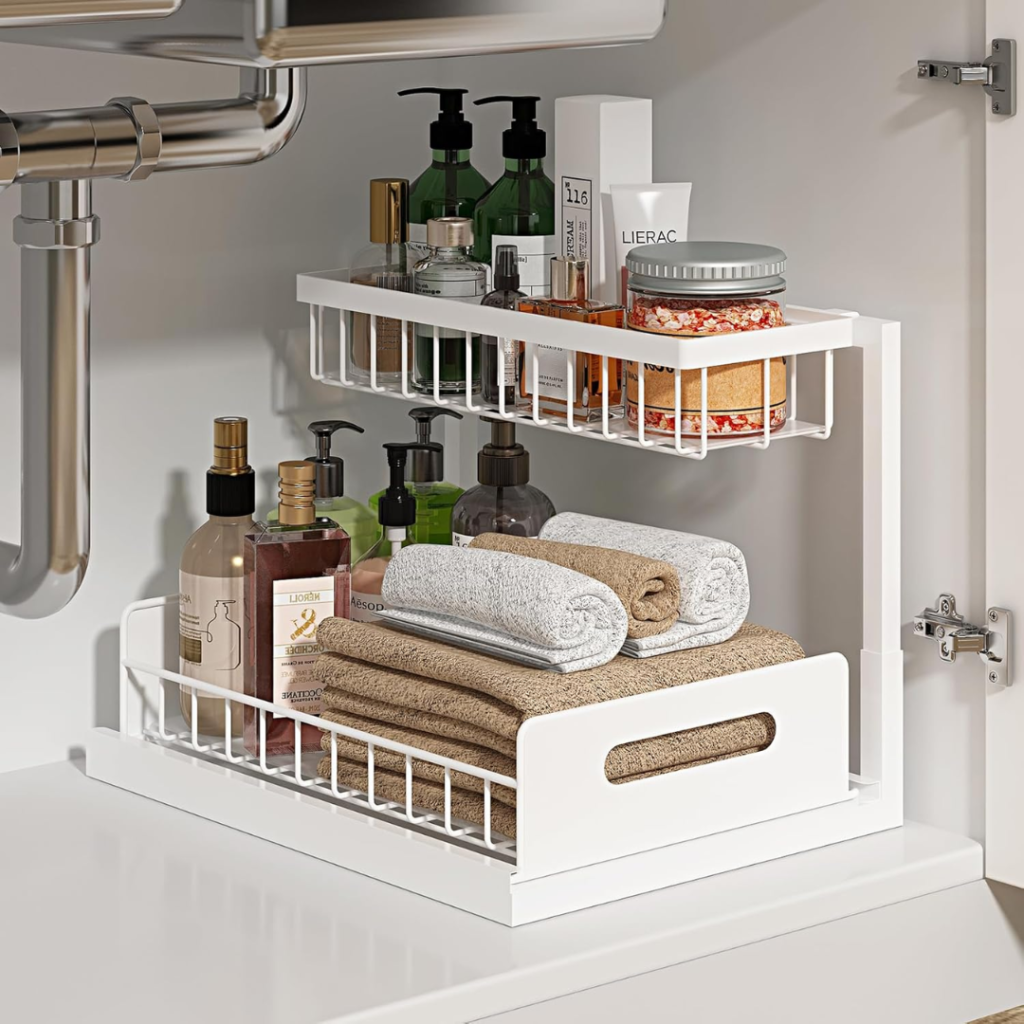
Sink Organizer
Key Features:
- L-Shaped 2-Tier Design – Makes use of vertical space while leaving room for plumbing and taller bottles.
- Pull-Out Drawer – Slides out from either side for easier access to items at the back.
- Tool-Free Installation – Includes suction cups and adhesive for stable placement without drilling.
- Sturdy & Rust-Resistant – Steel construction with a water-friendly grid design and removable pads.
- Versatile Storage – Great for under-sink cabinets, kitchens, bathrooms, and laundry areas.
- Size: 14.2 × 10.6 × 11 inches; bottom tier fits bottles up to 8 inches tall.
As an Amazon Associate I earn from qualifying purchases.