
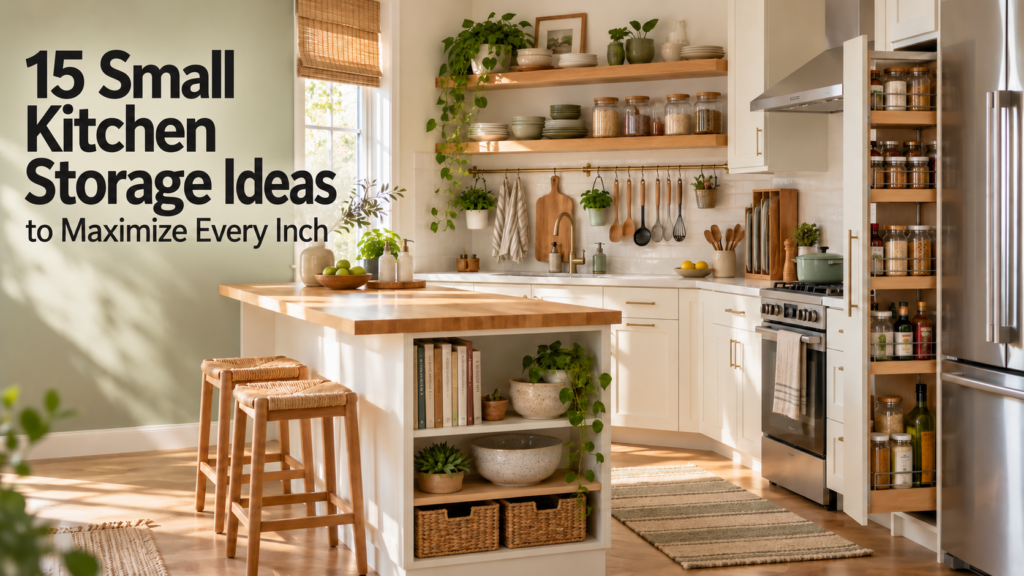
A small kitchen can become difficult to use when cabinets, drawers, and countertops are limited. The good news is that you do not always need a larger kitchen to create more storage.
The key is to make better use of the space you already have.
From vertical cabinet storage and wall-mounted solutions to drawer organizers and overlooked corners, the right small kitchen storage ideas can help you keep everyday items accessible while reducing countertop and cabinet clutter.
These small kitchen storage ideas can help you make better use of cabinets, drawers, walls, and overlooked spaces.
If your kitchen feels crowded, these 15 practical ideas can help you make better use of almost every available inch.
1. Add Shelf Risers Inside Cabinets
One of the easiest ways to create more usable cabinet space is to add shelf risers.
A single cabinet shelf often leaves a large amount of unused vertical space above plates, bowls, mugs, or cookware. A shelf riser divides that open space into two levels.
Use them for:
- Plates and bowls
- Coffee mugs
- Small serving dishes
- Food containers
- Kitchen accessories
Instead of stacking everything into one tall pile, shelf risers can create separate storage zones and make items easier to reach.
For more cabinet-specific ideas, see our guide to 12 Kitchen Cabinet Organization Ideas for Small Spaces
2. Use the Inside of Cabinet Doors
The inside of a cabinet door is often completely unused.
Depending on the cabinet and the weight of the items, you can use this area for lightweight kitchen supplies such as:
- Measuring spoons
- Small cleaning supplies
- Kitchen wraps
- Pot holders
- Small brushes
- Pantry accessories
Slim organizers are particularly useful because they add storage without taking up much cabinet shelf space.
Just make sure the organizer does not interfere with the shelves or prevent the cabinet door from closing properly.
3. Install a Pull-Out Organizer in Deep Cabinets
Deep cabinets can hold a lot, but reaching items stored at the back can be frustrating.
A pull-out organizer solves this problem by allowing the storage area to slide toward you.
This can work especially well for:
- Cleaning products
- Pots and pans
- Food containers
- Baking supplies
- Small appliances
Instead of moving several items to reach something at the back, you can simply pull the organizer forward.
This is particularly useful for lower cabinets where visibility is limited.
4. Make Better Use of Corner Cabinets
Corner cabinets can contain a surprising amount of wasted space.
A lazy Susan or rotating organizer can make these difficult areas easier to access. Instead of reaching deep into the back corner, you can rotate the storage surface toward you.
Use corner storage for items such as:
- Sauces
- Condiments
- Spices
- Small appliances
- Baking ingredients
- Serving accessories
The goal is not simply to put more things into the corner. It is to make the entire space accessible.
5. Create a Dedicated Drawer for Small Kitchen Tools
Small kitchen tools can quickly take over an entire drawer.
Instead of throwing everything together, divide one drawer into sections using a drawer organizer.
Separate items such as:
- Measuring spoons
- Peelers
- Can openers
- Tongs
- Whisks
- Small utensils
This makes the drawer easier to maintain and helps prevent duplicate purchases because you can actually see what you already own.
For more ideas, you can also read our 15 Small Kitchen Organization Ideas That Actually Work.
6. Store Cutting Boards Vertically
Cutting boards and baking sheets can consume a lot of horizontal cabinet space when stacked flat.
Instead, store them vertically using a divider or narrow organizer.
This arrangement makes it easier to pull out one board without disturbing everything else.
You can use the same approach for:
- Baking sheets
- Cutting boards
- Serving trays
- Cooling racks
- Pan lids
Vertical storage is especially useful when cabinet width is limited but there is unused height.
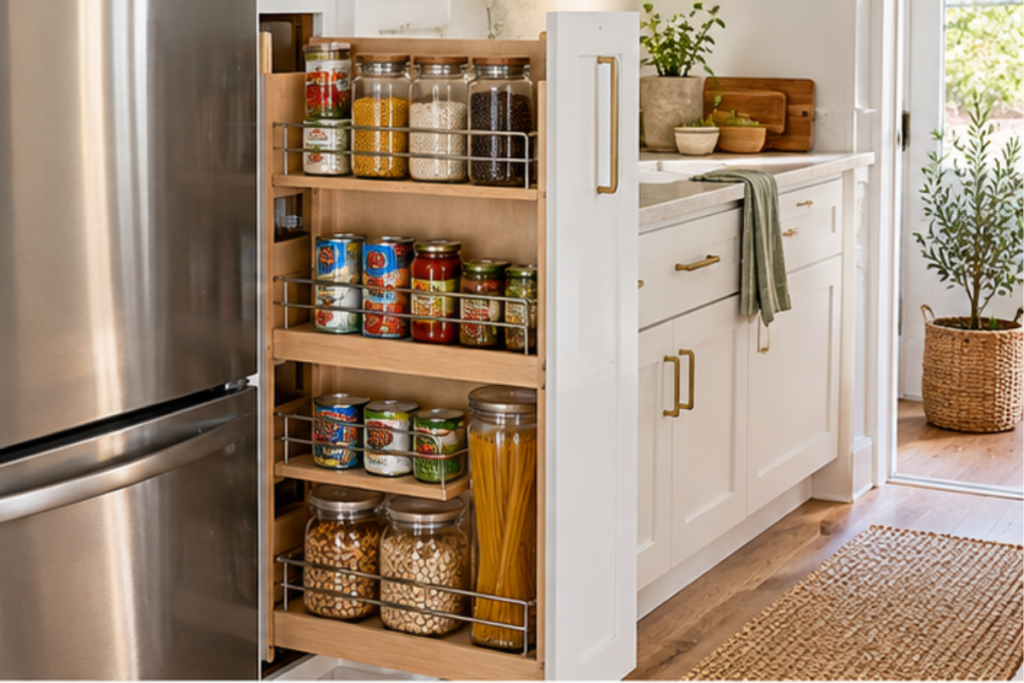
7. Use a Narrow Space Beside Cabinets
Look around your kitchen for narrow gaps that are currently unused.
A small space between a refrigerator and cabinet, for example, may be suitable for a slim rolling cart or narrow storage unit.
Depending on the available width, you could use it for:
- Spices
- Cooking oils
- Canned goods
- Cleaning supplies
- Baking ingredients
Measure the space carefully before buying anything. A storage solution is only useful if it can move or open without blocking nearby cabinets or appliances.
8. Add a Magnetic Storage Area
Some kitchen items can be stored vertically using magnetic solutions.
A magnetic strip can provide a convenient place for compatible metal kitchen tools, while magnetic containers can sometimes be useful for small ingredients or accessories.
This can free up valuable drawer and countertop space.
However, avoid placing heavy items on a magnetic organizer unless it is specifically designed to support them.
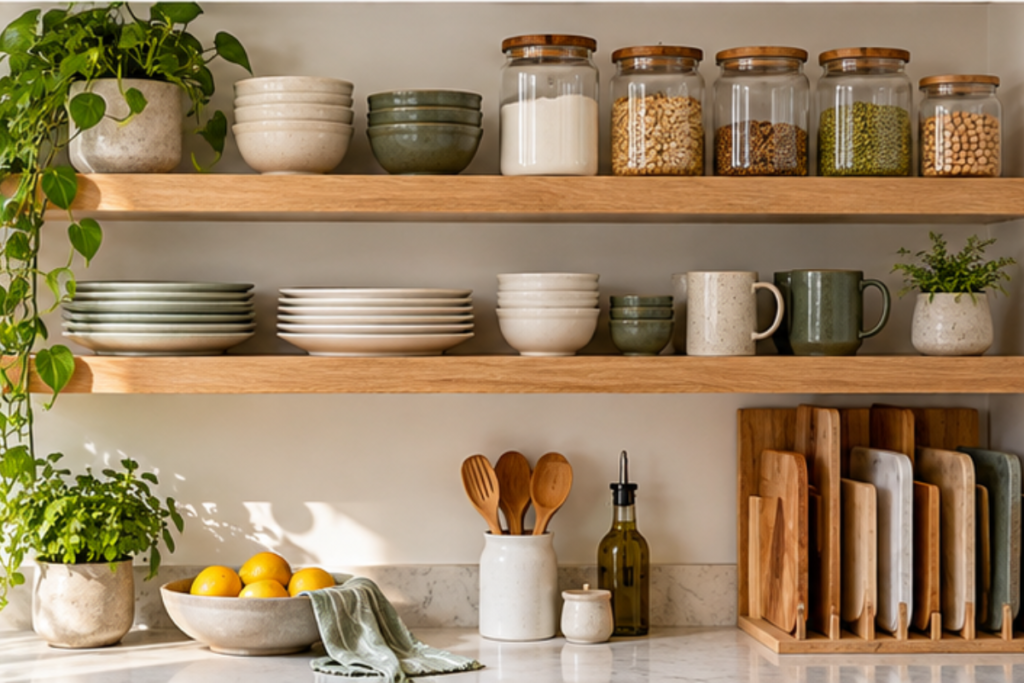
When small bottles, cans, or containers are stored in rows, items at the back can disappear from view.
A tiered shelf organizer raises the back row so you can see more of your supplies at once.
This works well for:
- Canned foods
- Sauces
- Condiments
- Spices
- Small jars
- Tea and coffee products
Better visibility can be just as important as adding physical storage because it helps you use the space more efficiently.
10. Turn an Unused Wall Into Storage
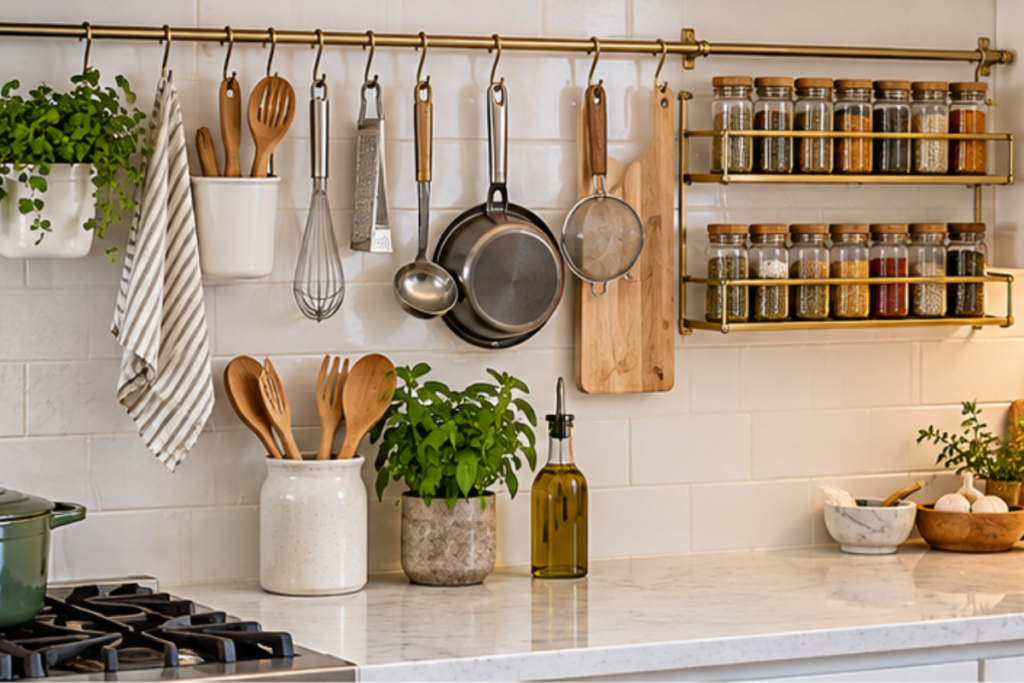
Your kitchen walls can provide valuable storage without taking up floor or cabinet space.
Depending on your kitchen layout, consider using:
- Wall-mounted shelves
- Pegboards
- Rail systems
- Hooks
- Magnetic organizers
These can be useful for frequently used items that you want within easy reach.
Keep heavier items properly secured and avoid overcrowding the wall. The goal is to create useful storage without making the kitchen feel visually cluttered.
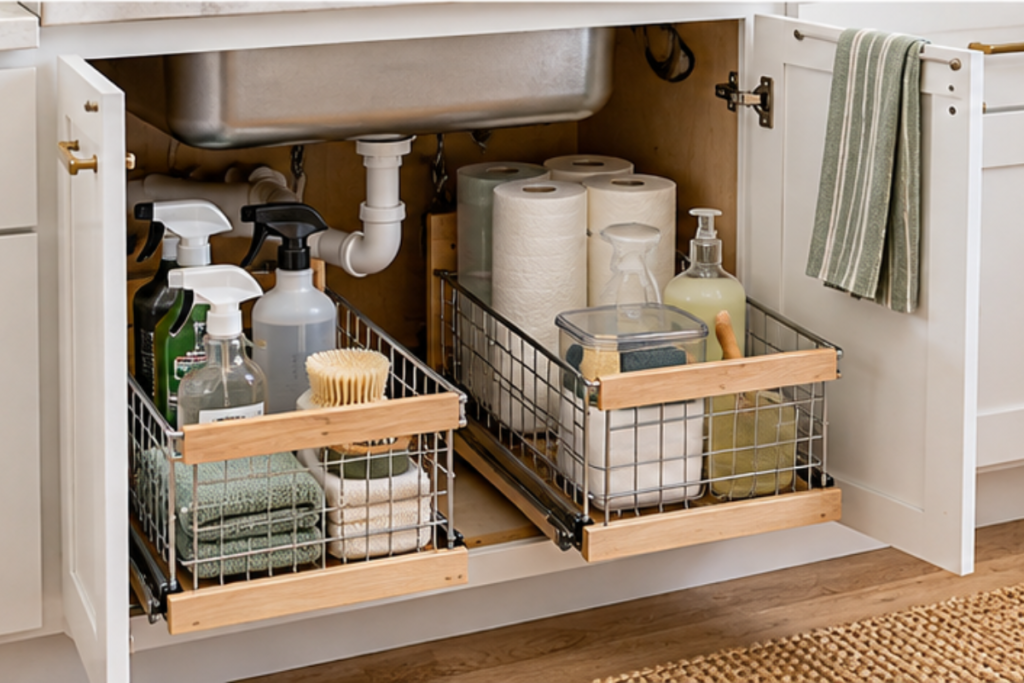
11. Organize Under the Kitchen Sink
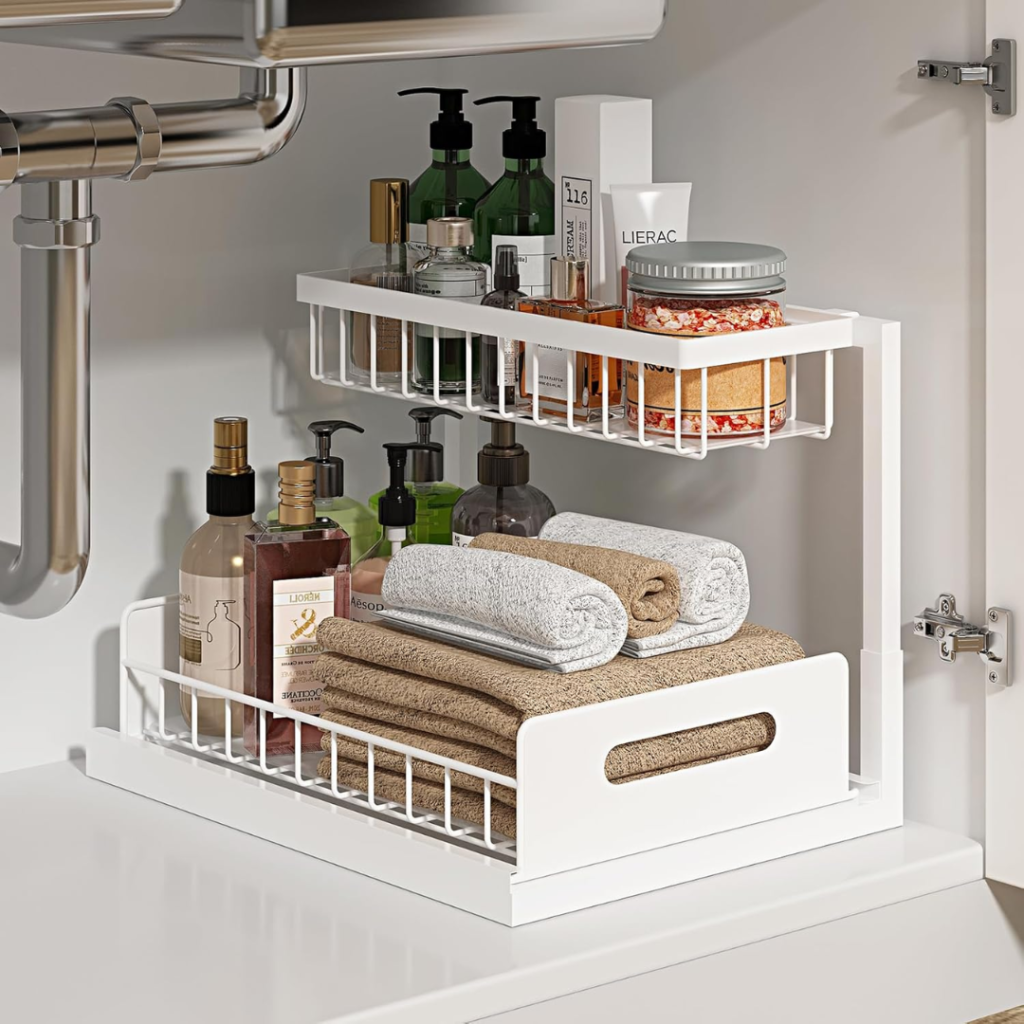
The area underneath the sink is often difficult to organize because of plumbing pipes and limited visibility.
Instead of filling the cabinet randomly, use storage solutions that work around the plumbing.
Consider:
- Two-tier organizers
- Pull-out baskets
- Slim bins
- Door-mounted organizers
- Stackable containers
Keep cleaning products grouped together and leave enough space around plumbing connections so you can access them when needed.
Under-sink storage is also a good place for products that you use regularly but do not need on the countertop.
12. Use the Top of the Refrigerator Carefully
The space above the refrigerator is another area that can sometimes provide additional storage.
You can use suitable baskets or containers for items that are:
- Used occasionally
- Lightweight
- Not temperature-sensitive
- Easy to identify
Avoid turning this area into a dumping zone.
Labeling baskets can help you know what is stored there and make occasional items easier to find.
13. Create a Dedicated Food Container Zone
Food containers can become one of the biggest sources of kitchen clutter because they often have different shapes and sizes.
Create one dedicated cabinet or drawer for containers and lids.
A simple system is:
- Stack containers by size.
- Keep lids together in a separate section.
- Remove damaged or mismatched pieces.
- Keep frequently used containers toward the front.
This gives you a defined storage area instead of allowing containers to spread across multiple cabinets.
14. Use a Rolling Kitchen Cart
A rolling cart can add storage without requiring permanent remodeling.
Because it can be moved, it is useful for kitchens where cabinet space is limited.
You could use a cart for:
- Coffee supplies
- Baking equipment
- Fruits and vegetables
- Kitchen appliances
- Pantry overflow
- Everyday cooking tools
Choose a cart that fits the available space without blocking walkways or cabinet doors.
It can also serve as temporary counter space when preparing meals.
15. Create a Storage Zone for Frequently Used Items
Not everything needs to be stored according to category alone.
Think about how often you use each item.
Frequently used items should be stored where they are easy to reach, while occasional items can go into higher or less accessible areas.
For example:
Daily: Coffee mugs, plates, cooking utensils, cutting boards
Weekly: Baking equipment, specialty cookware, serving dishes
Occasionally: Holiday items, large serving pieces, specialty appliances
This simple approach can make a small kitchen feel much more efficient because the items you use most are always within easy reach.
Small Kitchen Storage Ideas: How to Maximize Your Space
Before buying more organizers, take a few minutes to evaluate your existing space.
Start by Decluttering
Remove items that are broken, duplicated, rarely used, or no longer needed.
Adding organizers to an overcrowded kitchen will not solve the underlying problem.
Think Vertically
Look at the empty space above shelves, inside cabinet doors, and on walls.
Vertical storage is often one of the easiest ways to increase usable capacity without expanding the kitchen.
Group Similar Items Together
Keep similar products in dedicated zones.
For example:
- Spices together
- Baking supplies together
- Food containers together
- Cleaning products together
- Cooking tools together
This makes both storage and cleanup easier.
Keep Everyday Items Accessible
The best storage system is one you can actually maintain.
Items used every day should not be hidden behind several other things. Keep frequently used products in easy-to-reach locations.
Small Kitchen Storage Mistakes to Avoid
Even good storage products can create problems when they are used incorrectly.
Avoid these common mistakes:
Buying Organizers Before Measuring
Always measure the cabinet, drawer, or gap before buying an organizer.
Check:
- Width
- Depth
- Height
- Door clearance
- Nearby plumbing or hinges
Overfilling Every Available Space
More storage does not mean every inch needs to be packed.
Leave enough room to remove items easily.
Creating Too Many Storage Zones
If every small category has its own container or organizer, the system can become complicated.
Keep your system simple enough to maintain.
Ignoring Accessibility
A storage solution that technically fits but makes items difficult to reach may not improve the kitchen.
Prioritize accessibility along with capacity.
How to Choose the Right Small Kitchen Storage Solutions
The most effective small kitchen storage ideas focus on using vertical space, improving accessibility, and reducing wasted areas.
The best small kitchen storage ideas should make your kitchen easier to use, not simply give you more places to put things.
Available space: Measure before purchasing.
What you are storing: Different items need different storage solutions.
How often you use it: Frequently used items deserve easier access.
You do not need expensive products to improve a small kitchen. Sometimes a simple shelf riser, drawer divider, or wall hook can make a noticeable difference.
Frequently Asked Questions
What are the best small kitchen storage ideas?
Some of the most practical options include shelf risers, pull-out organizers, drawer dividers, vertical cabinet storage, wall-mounted solutions, rolling carts, and dedicated storage zones.
How can I maximize storage in a small kitchen?
Start by decluttering, then use vertical space, cabinet doors, deep cabinets, drawers, walls, and unused corners. Organize frequently used items where they are easy to reach.
How do I organize a small kitchen without remodeling?
You can add storage without remodeling by using shelf risers, drawer organizers, cabinet-door storage, rolling carts, wall-mounted shelves, and other removable organizers.
How can I get more storage without adding cabinets?
Use vertical storage, wall space, cabinet-door organizers, tiered shelves, narrow carts, and better drawer organization. These solutions can increase usable storage without installing new cabinets.
What should I do with deep kitchen cabinets?
Pull-out organizers, sliding shelves, and adjustable storage systems can make deep cabinets easier to access. Group similar items together and avoid placing frequently used items at the back.
What are the best small kitchen storage ideas for limited cabinets?
Focus on vertical storage, shelf risers, pull-out organizers, and making better use of cabinet doors.
How can small kitchen storage ideas maximize unused space?
Use overlooked areas such as cabinet sides, walls, corners, under-sink areas, and narrow gaps.
What small kitchen storage ideas work without remodeling?
Choose simple solutions such as drawer organizers, shelf risers, rolling carts, magnetic storage, and cabinet-door organizers.
Related Small Kitchen Guides
If you are working with limited kitchen space, these GRAPCY Hub guides may also help:
Final Thoughts
A small kitchen does not necessarily need more square footage to become more functional. Often, the biggest improvement comes from using existing space more intentionally.
With the right small kitchen storage ideas, even a compact kitchen can become easier to organize and use every day.
Start with the areas that cause the most frustration. A crowded cabinet may benefit from a shelf riser, while a deep cabinet might work better with a pull-out organizer. If countertops are crowded, look toward walls, cabinet doors, and vertical storage.
The best small kitchen storage ideas are the ones that make everyday items easier to see, reach, and put away.
You do not need to change everything at once. Start with one problem area, create a simple storage system, and build from there.
Sink Organizer
Key Features:
- L-Shaped 2-Tier Design – Makes use of vertical space while leaving room for plumbing and taller bottles.
- Pull-Out Drawer – Slides out from either side for easier access to items at the back.
- Tool-Free Installation – Includes suction cups and adhesive for stable placement without drilling.
- Sturdy & Rust-Resistant – Steel construction with a water-friendly grid design and removable pads.
- Versatile Storage – Great for under-sink cabinets, kitchens, bathrooms, and laundry areas.
- Size: 14.2 × 10.6 × 11 inches; bottom tier fits bottles up to 8 inches tall.
As an Amazon Associate we earn from qualifying purchases.