
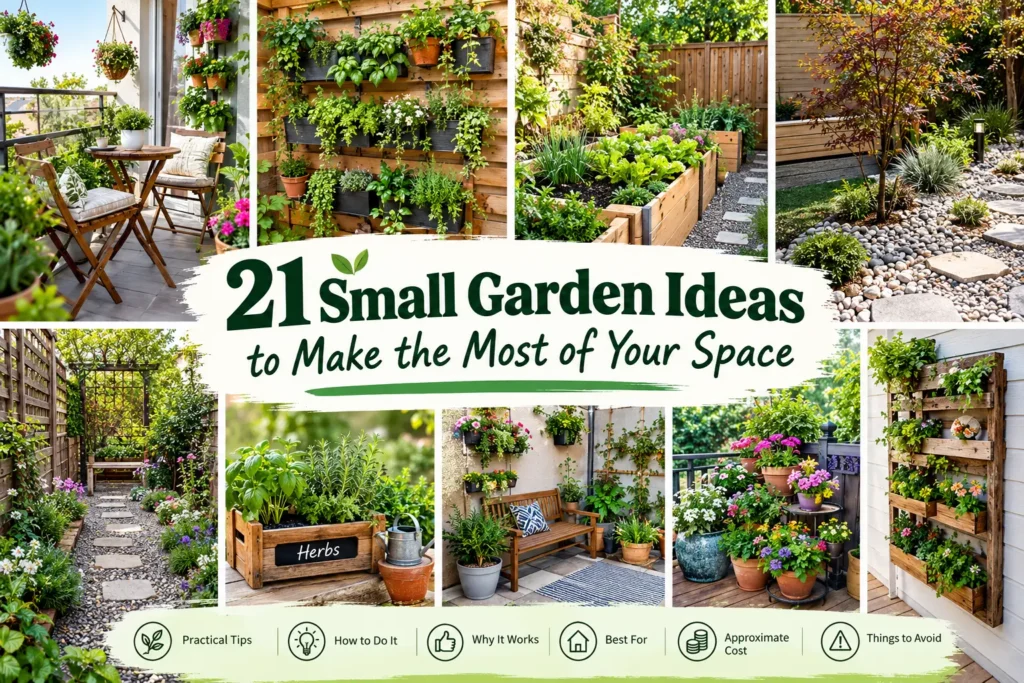
A small garden can still be productive, attractive, and enjoyable. The trick is not trying to squeeze a full-size landscape into a tiny space. Instead, use vertical space, containers, narrow planting areas, and smart layouts that make every square foot work harder.
Whether you have a narrow backyard, tiny patio, small front yard, balcony, or an awkward outdoor corner, these small garden ideas can help you create a space that feels intentional rather than cramped.
With the right small garden ideas, even a limited outdoor area can become useful and inviting
To make each idea easier to evaluate, you’ll find how to do it, why it works, who it is best for, an approximate cost level, and what to avoid.
These small garden ideas can help you choose a layout based on your available space, budget, and gardening goals.
Quick Guide: Which Small Garden Idea Is Right for You?
| If you have… | Try… |
|---|---|
| Very little floor space | A vertical garden |
| A narrow backyard | A narrow fence-line garden |
| A small patio | A container garden |
| A rental home | Movable planters |
| A limited budget | Repurposed containers |
| Poor soil | A compact raised bed |
| A shady corner | Shade-tolerant plants |
| Little time for maintenance | A low-maintenance garden |
| No room for a lawn | A gravel or stone garden |
| A blank wall or fence | Hanging planters or a trellis |
| A tiny front yard | Layered planting |
| An awkward corner | A corner garden |
| A small vegetable garden | A compact raised bed |
| A hot, sunny area | Drought-tolerant plants |
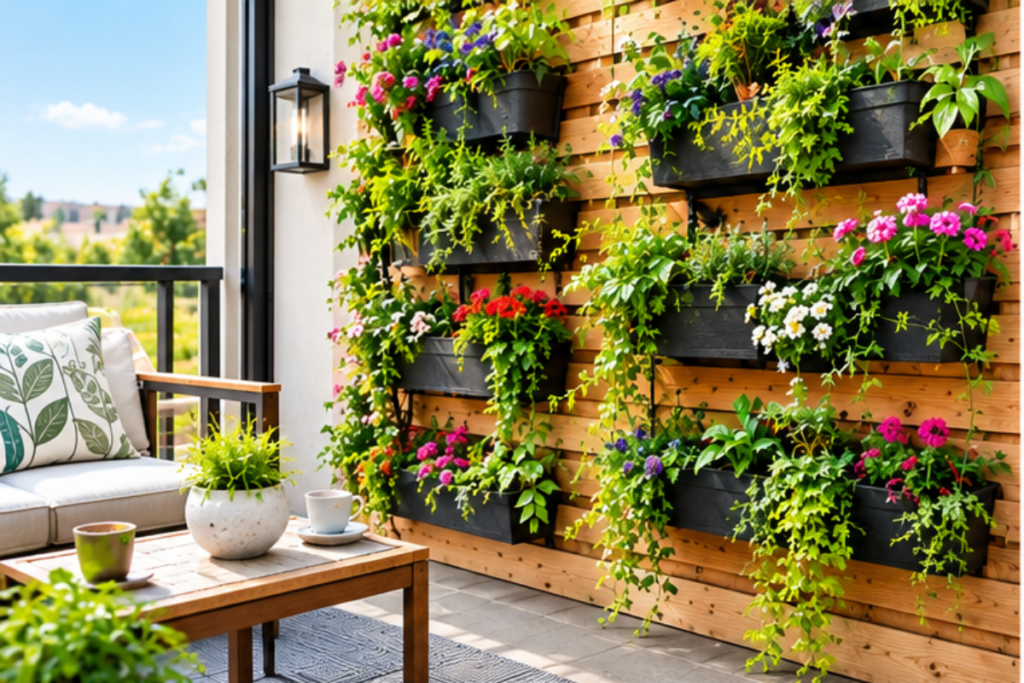
1. Create a Vertical Garden
When floor space is limited, look up.
A vertical garden uses fences, walls, trellises, plant stands, or other structures to grow plants upward instead of allowing them to spread across the ground.
How to do it
Install a sturdy trellis against a suitable wall or fence. You can also combine vertical planters, hanging containers, and climbing plants to use several levels of space.
For edible gardens, consider herbs, compact tomatoes, peas, or climbing beans where appropriate.
Why it works
Vertical gardening adds growing space without requiring much additional floor area. It can also turn a plain wall or fence into a living feature.
Best for: Tiny backyards, patios, balconies, and narrow spaces
Cost level: Moderate
Things to avoid: Overloading a wall or using a support that cannot safely handle the mature weight of the plants.
2. Use a Compact Raised Garden Bed
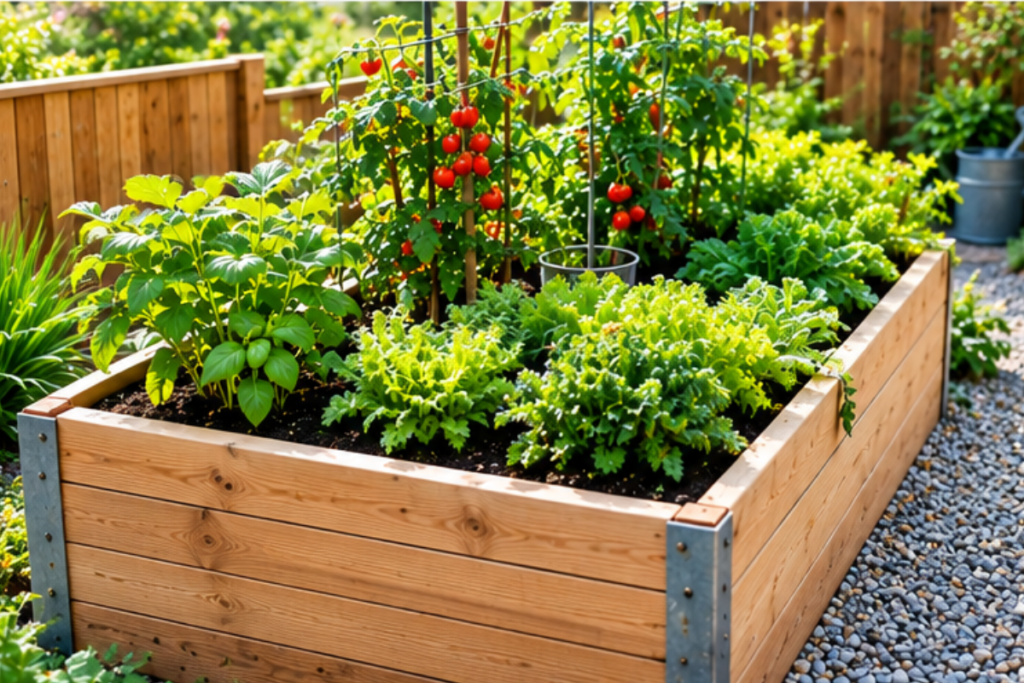
A raised bed can give you a productive garden without requiring a large planting area.
Instead of building one oversized bed, choose a compact rectangular or square design that fits comfortably into your available space.
How to do it
Leave enough room around the bed to walk, water, harvest, and maintain the plants. Fill it with quality soil appropriate for the crops you want to grow.
Why it works
Raised beds give you better control over the growing area and can make a small garden easier to organize.
Best for: Vegetables, herbs, and small backyards
Cost level: Moderate
Things to avoid: Making the bed so wide that you cannot comfortably reach the center.
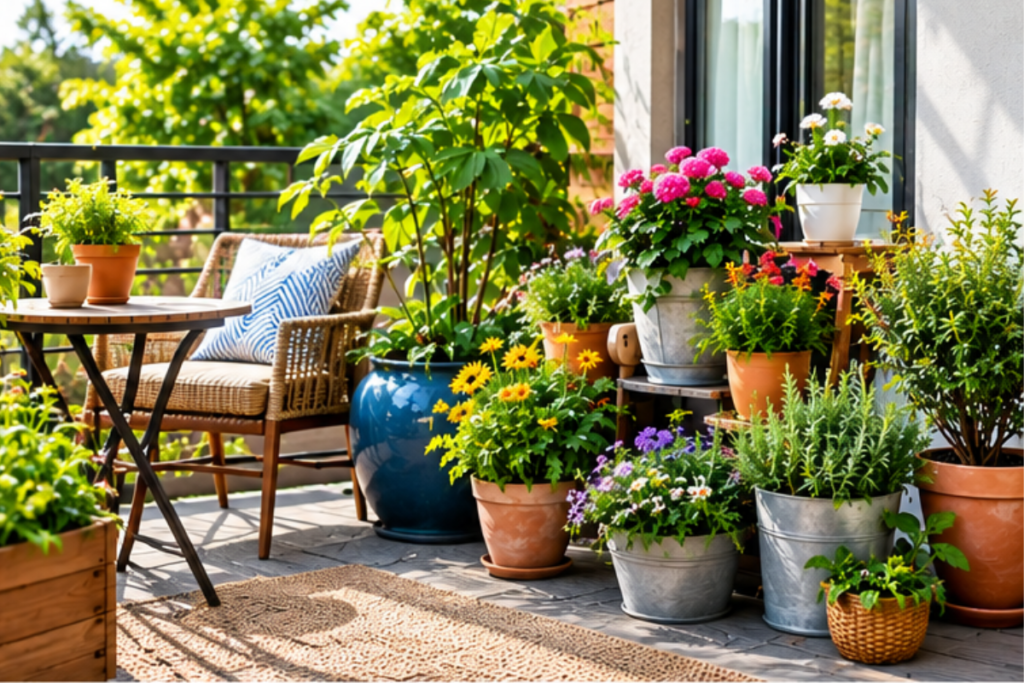
3. Turn a Patio Into a Container Garden
You don’t need a traditional backyard to grow plants.
A sunny patio can become a productive garden with containers of different sizes.
How to do it
Group pots according to their purpose. Keep frequently used herbs near the kitchen door, place flowering plants where you can enjoy them, and position larger containers toward the edges.
Always choose containers with appropriate drainage.
Why it works
Containers are flexible and can be rearranged as your needs change.
Best for: Patios, renters, apartments, and small yards
Cost level: Moderate
Things to avoid: Filling the patio with too many tiny pots that dry out quickly and create unnecessary maintenance.
4. Use a Narrow Garden Bed Along a Fence
Fence lines are often overlooked when planning a small garden.
A narrow planting bed can turn that unused strip into a productive and attractive part of the yard.
How to do it
Create a long, relatively narrow bed along the fence. Place taller plants toward the back and shorter plants toward the front so everything remains visible.
Why it works
You use space that might otherwise remain empty while keeping the center of the yard open.
Best for: Narrow backyards and side yards
Cost level: Moderate
Things to avoid: Planting species that will eventually become too wide for the available space.
5. Build a Corner Garden
Awkward corners can become some of the most useful areas in a small garden.
How to do it
Instead of forcing a rectangular bed into the corner, use a triangular, curved, or layered arrangement. Add one taller feature, such as a suitable plant or trellis, and surround it with shorter plants.
Why it works
It turns an overlooked area into a deliberate design feature without taking over the main garden.
Best for: Small yards with unused corners
Cost level: Low to Moderate
Things to avoid: Filling the corner with too many unrelated plants or decorations.
6. Grow Herbs in a Small Kitchen Garden
If you enjoy cooking, a small herb garden can provide more everyday value than a large ornamental planting area.
How to do it
Grow frequently used herbs such as basil, parsley, cilantro, thyme, rosemary, or mint in containers or a compact raised bed.
Place herbs according to their sunlight and watering needs.
Why it works
You get a practical garden that directly supports everyday cooking.
Best for: Small patios, balconies, and areas near the kitchen
Cost level: Low to Moderate
Things to avoid: Planting aggressive spreaders such as mint directly in the ground without a plan to contain them.
7. Create a No-Grass Garden
A small lawn can sometimes require more maintenance than the space is worth.
Replacing some or all of the lawn with planting areas, gravel, stepping stones, or other suitable landscape features can create a more useful outdoor space.
How to do it
Remove unnecessary lawn and divide the area into simple zones using planting beds, mulch, gravel, or pavers.
Choose plants that match your climate and growing conditions.
Why it works
You can create an attractive outdoor area without dedicating most of your limited space to grass.
Best for: Small backyards and low-maintenance landscapes
Cost level: Moderate to Higher
Things to avoid: Covering the entire area with hardscape without considering drainage, runoff, and heat.
A trellis is one of the simplest ways to add vertical interest to a small garden.
How to do it
Place a suitable trellis against a wall, fence, or other appropriate structure. Train compatible climbing plants upward as they grow.
Why it works
You gain growing space and visual height without using much ground area.
A well-placed trellis can also provide some privacy.
Best for: Narrow gardens and patios
Cost level: Low to Moderate
Things to avoid: Installing a trellis where mature vines could block windows, pathways, gates, or access to utilities.
A vertical garden does not have to be attached to a wall.
Tiered plant stands allow you to stack multiple containers within a relatively small footprint.
How to do it
Place larger or taller plants on lower levels and smaller plants where they can receive adequate light. Make sure the stand is stable and easy to water.
Why it works
Several plants can occupy the floor space of a much smaller single-level arrangement.
Best for: Patios, balconies, and rental homes
Cost level: Low to Moderate
Things to avoid: Arranging the tiers so densely that lower plants receive very little sunlight.
10. Create a Small Pollinator Garden
A small garden can still provide useful habitat and food sources for pollinators.
How to do it
Choose several suitable pollinator-friendly plants that bloom at different times. Group plants together instead of scattering single plants throughout the garden.
Choose varieties appropriate for your region.
Why it works
A compact planting area can add seasonal color while supporting bees, butterflies, and other beneficial pollinators.
Best for: Front yards, patios, and small planting beds
Cost level: Low to Moderate
Things to avoid: Choosing plants only because they are labeled “pollinator-friendly” without checking whether they suit your growing conditions.
11. Make a Small Gravel Garden
Gravel can create a clean, structured look while reducing the amount of lawn in a small garden.
How to do it
Define the area with suitable edging, prepare the ground appropriately, and add decorative gravel. Introduce carefully selected plants and stepping stones where needed.
Why it works
Gravel creates visual separation and can reduce mowing in areas where grass is unnecessary.
Best for: Sunny areas and modern garden designs
Cost level: Moderate
Things to avoid: Choosing gravel without considering drainage, summer heat, or how comfortable the surface will be to walk on.
12. Use Containers at Different Heights
A collection of containers at exactly the same height can make a small garden feel flat.
Instead, create several visual levels.
How to do it
Combine floor-level containers with raised planters, hanging baskets, and taller pots. Keep taller elements toward the back or edges when appropriate.
Why it works
Different heights create depth and make a compact space more visually interesting.
Best for: Patios and small courtyards
Cost level: Moderate
Things to avoid: Mixing too many unrelated container styles, colors, and materials.
13. Grow a Compact Vegetable Garden
You don’t need a large backyard to grow food.
How to do it
Prioritize vegetables that provide good value for the space they occupy. Use compact varieties where appropriate and consider vertical supports for climbing crops.
Divide a small raised bed into sections so different crops have their own areas.
Why it works
A carefully planned vegetable garden can produce useful harvests without taking over the entire yard.
Best for: Homeowners who want edible plants
Cost level: Moderate
Things to avoid: Growing large, space-hungry plants without accounting for their mature size.
14. Turn an Unused Side Yard Into a Garden
Side yards are often narrow and overlooked, but they can be ideal for a small garden.
How to do it
Use narrow planting beds, vertical plants, stepping stones, and compact containers. Maintain a clear path if the area provides access to the backyard, utilities, storage, or other parts of the property.
Why it works
It transforms otherwise unused space without reducing the usefulness of your main yard.
Best for: Narrow side yards
Cost level: Moderate to Higher
Things to avoid: Blocking gates, utility equipment, drainage areas, or maintenance access.
15. Create a Low-Maintenance Planting Area
A small garden should not become a second job.
How to do it
Choose plants suited to your climate, sunlight, soil, and available maintenance time. Group plants with similar watering requirements together.
Add mulch where appropriate to help protect the soil and reduce unnecessary maintenance.
Why it works
The right plant selection can reduce watering, pruning, replacement, and other routine work.
Best for: Busy homeowners and first-time gardeners
Cost level: Moderate
Things to avoid: Choosing plants simply because they look attractive at a nursery without checking their mature size and care requirements.
16. Add a Small Seating Area
A garden doesn’t have to be purely about plants.
A compact seating area can make the space much more useful.
How to do it
Choose a small bench, two chairs, or a compact bistro set. Position the seating beside the garden rather than consuming the center of the available space.
Why it works
It turns the garden into a place to relax and enjoy rather than something that only looks attractive.
Best for: Small patios, courtyards, and backyard gardens
Cost level: Moderate to Higher
Things to avoid: Oversized furniture that takes up most of the available floor space.
17. Use a Wall or Fence for Hanging Planters
A blank fence can become a useful growing surface.
How to do it
Attach appropriately rated planters or hanging containers securely to a suitable structure. Make sure the structure can support the weight and that water runoff will not cause damage.
Why it works
You add plants without using much valuable floor space.
Best for: Tiny gardens and patios
Cost level: Low to Moderate
Things to avoid: Installing heavy containers on structures that are not designed to support them.
18. Create a Layered Garden With Three Heights
One of the easiest ways to add depth to a small garden is to create distinct planting layers.
How to do it
Use:
- Low layer: Ground covers and smaller flowers
- Middle layer: Herbs, shrubs, or medium-height plants
- Tall layer: Suitable grasses, larger plants, or trellises
Arrange them so each level remains visible.
Why it works
Layering creates visual depth and prevents a small planting area from looking flat.
Best for: Front yards and compact landscape beds
Cost level: Moderate
Things to avoid: Planting fast-growing species too close together.
19. Create a Small Garden With Stones and Stepping Paths
Stones can provide structure without requiring a large amount of space.
How to do it
Use stepping stones to create a simple path through planting areas. Surround them with gravel, mulch, or suitable low-growing plants.
Why it works
A path gives the garden a sense of movement and makes even a small space feel intentionally designed.
Best for: Small backyards and courtyard gardens
Cost level: Moderate
Things to avoid: Making the path unnecessarily wide or choosing slippery materials.

20. Use a Foldable or Movable Garden Setup
Flexibility can be extremely useful when space is limited.
How to do it
Use lightweight containers, rolling planters, movable stands, or compact planters that can be repositioned when necessary.
Why it works
You can change the layout, move plants according to seasonal sunlight, or clear the space when you need it for another purpose.
Best for: Renters, patios, balconies, and multipurpose outdoor spaces
Cost level: Low to Moderate
Things to avoid: Choosing containers that become too heavy to move safely after they are filled with wet soil.
21. Design the Garden Around One Focal Point
A small garden does not need dozens of decorative features.
One strong focal point can often create a more polished result.
How to do it
Choose one main feature, such as an attractive planter, small tree, fountain, sculpture, colorful plant grouping, or trellis.
Keep the surrounding design relatively simple so the focal point stands out.
Why it works
A clear focal point creates visual organization and prevents a small garden from feeling cluttered.
Best for: Small front yards, patios, and modern gardens
Cost level: Low to Higher, depending on the feature
Things to avoid: Adding several competing focal points that make the space feel busy.
How to Make a Small Garden Look Bigger
You don’t necessarily need more space. You need to use the space you have strategically.
One of the most effective small garden ideas is to use vertical space instead of spreading everything across the ground.
Use vertical space
Walls, fences, trellises, and plant stands can add growing capacity without expanding the garden’s footprint.
Keep pathways simple
A complicated path can consume a surprising amount of valuable space.
Plant in layers
Different plant heights create depth and make a compact garden more visually interesting.
Repeat plants
Using a smaller selection of plants repeatedly often creates a more cohesive look than filling the garden with dozens of unrelated varieties.
Keep some open space
In a very small yard, leaving part of the area open can actually make the entire garden feel larger.
Consider mature plant size
Always consider how large a plant will become, not just how large it looks when you buy it.
Small Garden Ideas on a Budget
You don’t need an expensive landscaping project to improve a small outdoor space.
Many small garden ideas can be created affordably by reusing containers, choosing low-cost plants, and working with materials you already have.
Consider these approaches:
- Repurpose suitable containers as planters.
- Grow plants from seeds where practical.
- Use simple trellises instead of elaborate structures.
- Start with one compact raised bed.
- Add mulch instead of expensive hardscape where appropriate.
- Propagate suitable plants.
- Use gravel selectively.
- Buy plants gradually rather than filling the entire garden at once.
- Improve one section before expanding into another.
The goal is to spend money where it makes the biggest difference rather than trying to complete the entire garden at once.
Common Small Garden Mistakes to Avoid
Even a good garden idea can fail when the layout is poorly planned.
Choosing plants that become too large
A plant that looks perfect at the garden center can overwhelm a small garden after a few growing seasons.
Trying to fit too many plants
More plants do not automatically create a better garden. Crowding can increase maintenance and create competition for resources.
Ignoring sunlight
Observe how much direct sunlight the area receives before choosing plants.
Forgetting drainage
Containers and planting areas need appropriate drainage. Standing water can create serious problems for many plants.
Making everything the same height
Flat planting can make a small garden look smaller. Use different heights strategically.
Blocking access
Don’t cover utility areas, gates, pathways, drainage routes, or equipment with permanent garden features.
Designing only for appearance
A beautiful garden that is difficult to water, weed, harvest, or walk through can quickly become frustrating.
Pros and Cons of Small Gardens
Pros
- Easier to maintain than a large garden
- Can be less expensive to establish
- Easy to experiment with different layouts
- Works for patios, balconies, and small yards
- Can support vegetables and herbs
- Easier to create a defined style
Cons
- Limited planting space
- Containers may dry out quickly
- Poor planning becomes more noticeable
- Less room for large plants
- Requires careful plant selection
- Seating and storage compete for space
How Much Does a Small Garden Cost?
The cost depends on the size of the project, materials, plants, and whether you are starting from scratch or improving an existing space.
Instead of giving an exact dollar figure that may not apply to every U.S. region, use these general cost levels:
| Project | Approximate Cost Level |
|---|---|
| A few basic containers | Low |
| Small herb garden | Low |
| Simple vertical garden | Low to Moderate |
| Small raised bed | Moderate |
| Gravel garden | Moderate |
| Patio container garden | Moderate |
| Larger landscaping changes | Moderate to Higher |
Tip: You don’t have to complete the entire garden in one weekend. Start with one high-impact area, see how it works, and expand gradually.
How to Choose the Best Small Garden Idea for Your Space
Before buying plants or materials, ask yourself these five questions.
1. How much sunlight does the area receive?
Observe the area throughout the day rather than guessing. Sun exposure can change significantly between different parts of the same yard.
2. How much floor space can I actually use?
Measure the area before buying containers, furniture, raised beds, or other features.
3. What do I want from the garden?
Do you want vegetables, flowers, privacy, a relaxing seating area, pollinator-friendly plants, or simply a more attractive yard?
Your answer should influence the design.
4. How much maintenance can I realistically handle?
A garden designed around your actual lifestyle will be easier to maintain over time.
5. Is the space permanent?
If you’re renting, containers, movable planters, and portable garden structures may make more sense than permanent landscaping.
Frequently Asked Questions About Small Garden Ideas
What is the best idea for a very small garden?
A vertical garden is one of the most space-efficient options because it uses walls, fences, and other vertical surfaces instead of relying entirely on floor space. Container gardening and tiered planters are also useful for very small areas.
How can I make a small garden look bigger?
Use vertical planting, layered plants, simple pathways, repeated plant varieties, and some open space. Avoid filling every available area with plants and decorations.
What can I grow in a small garden?
Depending on your climate and available sunlight, you can grow herbs, compact vegetables, flowers, pollinator-friendly plants, and many container-friendly ornamentals. Choose varieties based on mature size and growing conditions.
How do I create a small garden on a budget?
Start with a small area, reuse suitable containers, grow plants from seeds where practical, choose affordable materials, and add features gradually. You don’t need to complete the entire garden at once.
Are raised beds good for small gardens?
Yes. A compact raised bed can make a small garden easier to organize and can provide better control over soil and drainage. Just make sure the bed is narrow enough that you can comfortably reach the plants.
What is the easiest small garden for beginners?
A simple container garden with a few easy-care plants is a good starting point. It requires less initial planning than a large landscape project and can be changed easily as you learn what works.
What are the best small garden ideas for a backyard?
Vertical gardens, compact raised beds, narrow planting beds, container gardens, and layered planting can work especially well in small backyards.
How do I make a small garden look modern?
Use simple planters, clean edges, repeated plant groupings, gravel, natural stone, and a limited color palette to create a modern look.
What are the best small garden ideas with stones?
Gravel gardens, stepping-stone paths, stone borders, and small rock gardens are practical options for adding structure without taking up much space.
Can I create a small garden without a lawn?
Yes. Replace grass with gravel, stepping stones, containers, raised beds, or planted ground cover to create an attractive low-maintenance garden.
Related Small Kitchen Organization Guides
Relevant existing articles:
- 15 Amazing Indoor Gardening Ideas for Beginners — link when discussing growing plants in limited spaces.
- 10 Amazing Gardening Tools for Beginners — link when discussing starting or maintaining a garden.
- 21 Budget Small Garden Ideas That Look Great Without Spending Much — link from the budget section once that article is published.
Final Thoughts
The best small garden ideas don’t try to make a small space behave like a large one. They work with the limitations of the space.
Use vertical structures when floor space is scarce. Choose containers when flexibility matters. Create narrow beds along unused edges, grow herbs and vegetables where they provide practical value, and use different planting heights to add depth without adding clutter.
The best small garden ideas are the ones that fit your space, lifestyle, and maintenance preferences.
Most importantly, design the garden around the way you actually plan to use it.
A small garden designed around your needs can be more enjoyable—and easier to maintain—than a much larger garden filled with features you rarely use.
You also don’t need to finish everything at once. Start with one area, learn what works in your space, and expand gradually.
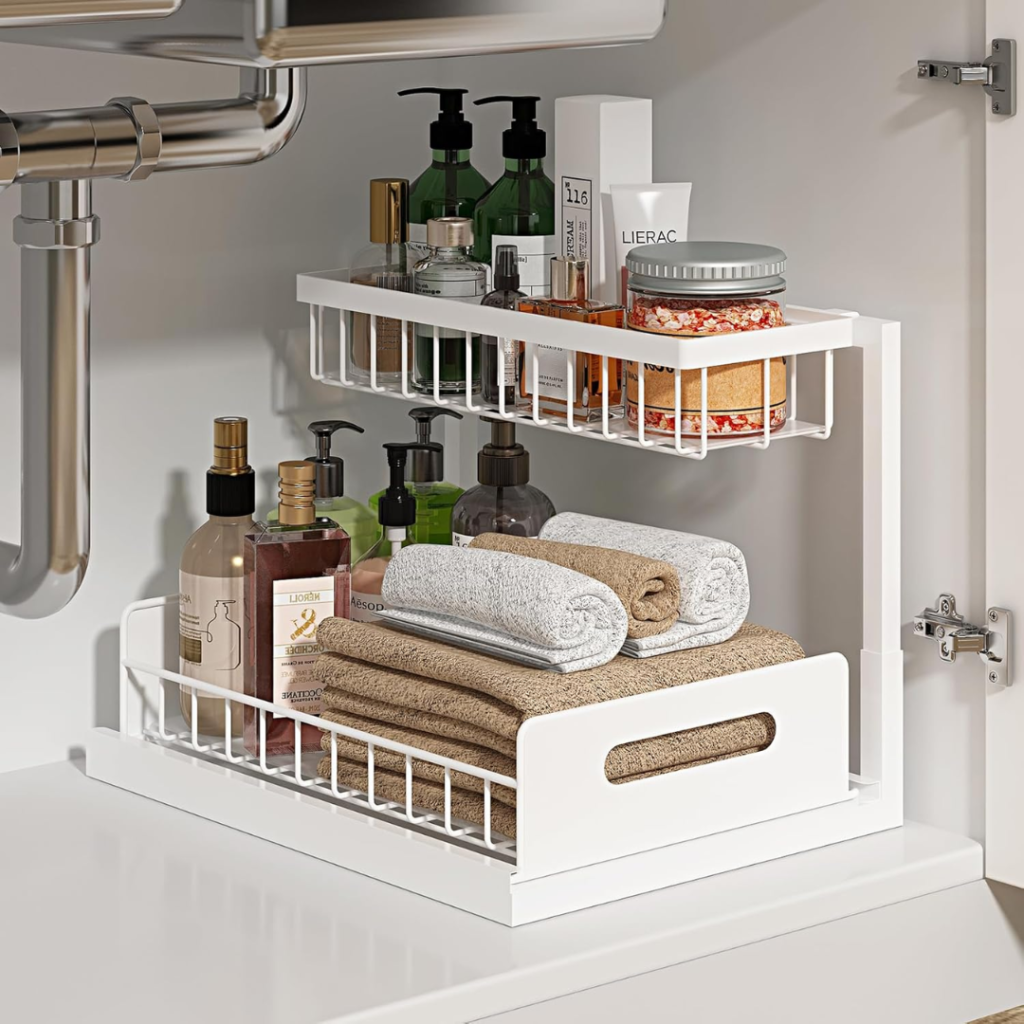
Sink Organizer
Key Features:
- L-Shaped 2-Tier Design – Makes use of vertical space while leaving room for plumbing and taller bottles.
- Pull-Out Drawer – Slides out from either side for easier access to items at the back.
- Tool-Free Installation – Includes suction cups and adhesive for stable placement without drilling.
- Sturdy & Rust-Resistant – Steel construction with a water-friendly grid design and removable pads.
- Versatile Storage – Great for under-sink cabinets, kitchens, bathrooms, and laundry areas.
- Size: 14.2 × 10.6 × 11 inches; bottom tier fits bottles up to 8 inches tall.
As an Amazon Associate I earn from qualifying purchases.
Pingback: 21 Budget Small Garden Ideas That Look Great Without Spending Much - grapcyhub.com