
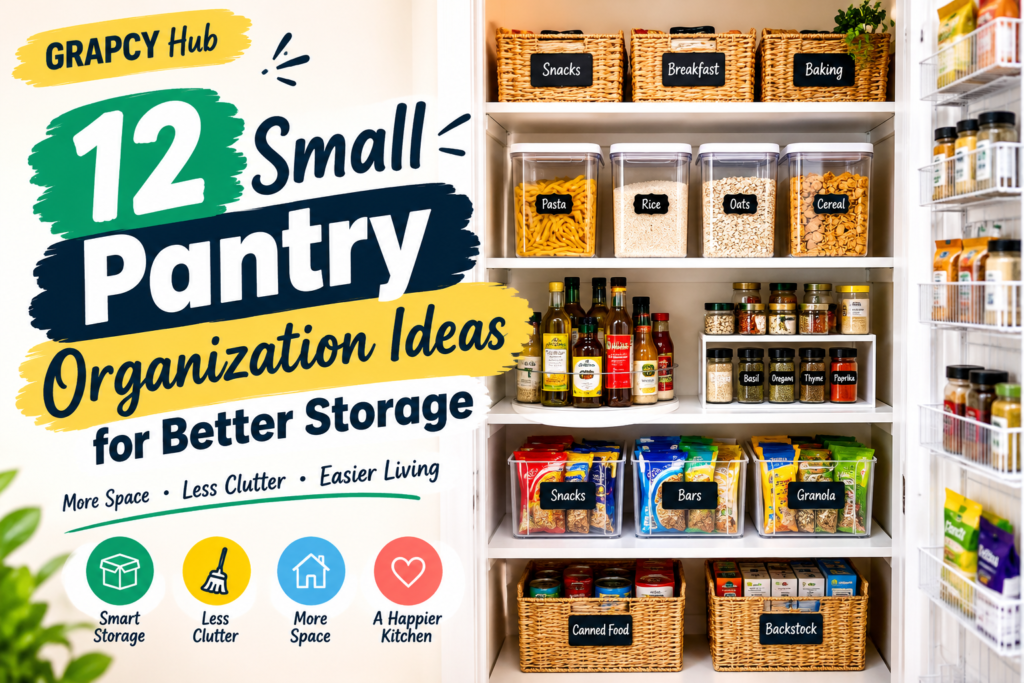
A small pantry can become difficult to use surprisingly quickly. A few cans, snack packages, cereal boxes, and food containers can turn into crowded shelves where everything gets pushed toward the back.
The solution is not always a bigger pantry. Often, the better approach is to use the space you already have more efficiently.
These small pantry organization ideas can help you create clearer shelves, make everyday foods easier to reach, and get more useful storage from a compact pantry without a major remodel.
These small pantry organization ideas focus on practical changes that can make a compact pantry easier to use every day.
Quick Guide to the Best Pantry Organization Ideas
| Organization Idea | Best For | Effort | Main Benefit |
| Shelf risers | Cans and jars | Easy | Uses vertical space |
| Clear bins | Snacks and packets | Easy | Keeps groups together |
| Turntables | Bottles and sauces | Easy | Improves access |
| Door storage | Small items | Easy | Uses unused space |
| Stackable containers | Dry foods | Easy | Reduces wasted space |
| Pull-out baskets | Deep shelves | Medium | Makes items easier to reach |
| Labels | Similar foods | Easy | Makes items easier to find |
| Narrow organizers | Small gaps | Easy | Uses overlooked space |
1. Start by Removing Everything You Do Not Need
Before buying organizers, take everything out of the pantry and group similar items together.
Check expiration dates, combine duplicate packages where practical, and remove foods that your household no longer uses. This gives you a better idea of how much storage you actually need.
Why it works: Organization becomes much easier when you are not trying to create storage for items you rarely use.
Best for: Overcrowded pantries that have gradually accumulated food and household supplies.
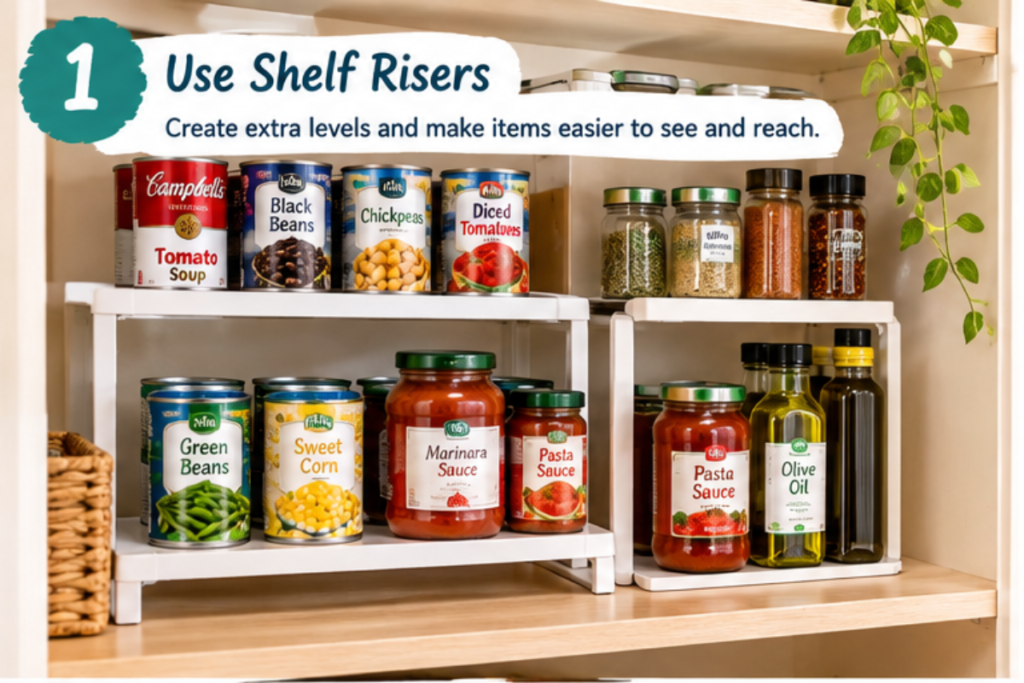
2. Use Shelf Risers to Create Extra Levels
Shelf risers are one of the simplest ways to improve a small pantry. Instead of stacking cans, jars, or small boxes in one tall pile, a riser creates a second level so more items remain visible.
Place frequently used items toward the front and taller containers toward the back where they will not block smaller products.
Among the simplest small pantry organization ideas, shelf risers are useful when your pantry has unused vertical space.
Best for: Canned goods, jars, spices, and smaller food containers.
Tip: Measure your shelf height before buying a riser so the extra level does not make items difficult to remove.
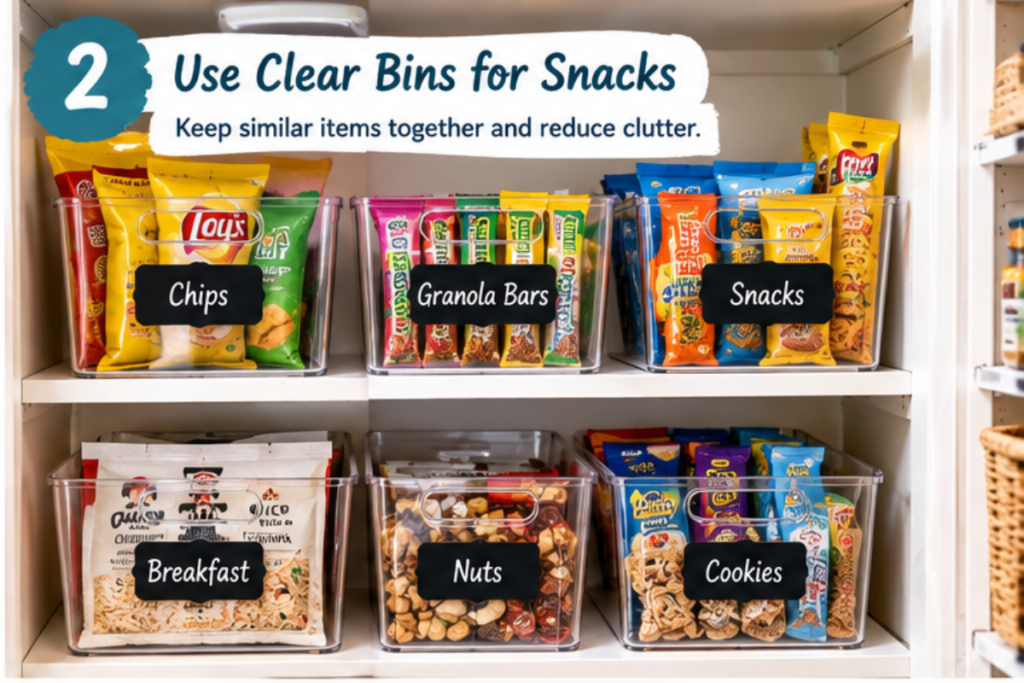
Snack packages can quickly make pantry shelves look messy because bags and boxes come in different sizes.
A few open-front or clear bins can create simple categories such as kids’ snacks, breakfast items, baking supplies, or grab-and-go foods.
Instead of searching through several packages, you can pull one bin forward and see what is available.
Clear bins are another practical option when choosing small pantry organization ideas for snacks and small packages.
Best for: Snack bags, granola bars, small packets, and individually wrapped foods.
Pros
- Easy to group similar items
- Makes small packages easier to find
- Can make shelves look less cluttered
Cons
- Bins take up some space themselves
- Overfilling them makes access harder
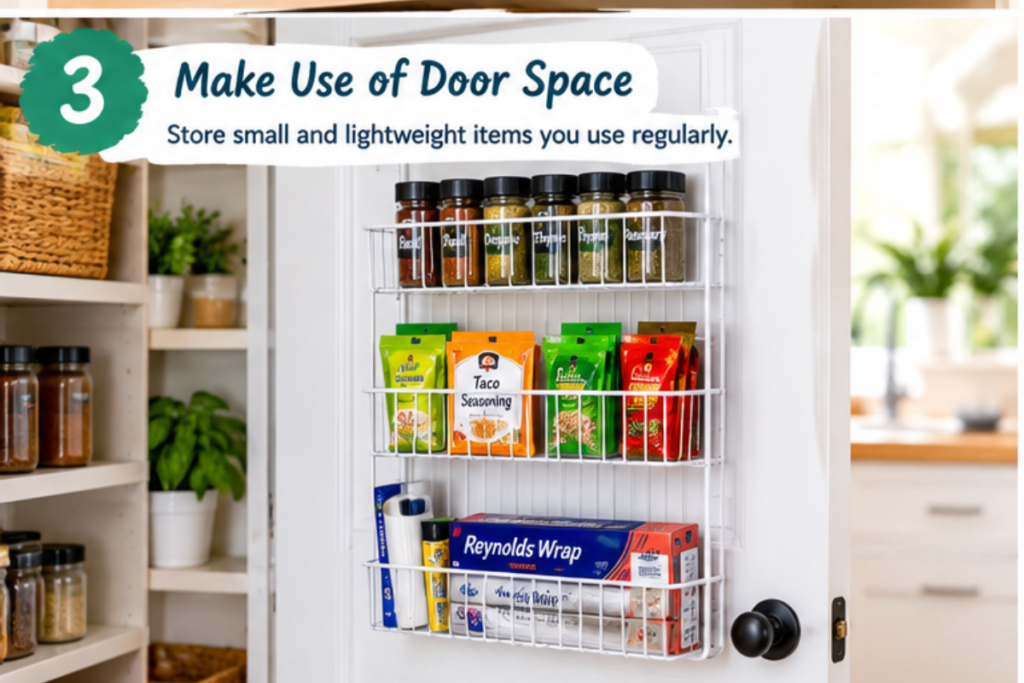
The inside of a pantry door is often overlooked. Depending on the door and available clearance, a slim over-the-door organizer can provide additional storage without taking up shelf space.
Use door storage for smaller and lighter items that you reach for regularly.
Good candidates include spice packets, seasoning mixes, small snacks, wraps, and other lightweight supplies.
Important: Check the door’s clearance before installing an organizer. It should close comfortably without hitting shelves or stored food.
5. Add a Turntable for Bottles and Sauces
Deep pantry shelves can make bottles difficult to reach, especially when several containers are stored together.
A turntable lets you rotate the contents toward you instead of reaching behind other bottles.
This works particularly well for oils, sauces, condiments, and other containers that are used regularly.
Best for: Bottles and jars that tend to disappear behind other items.
Tip: Avoid putting too many heavy bottles on one turntable. A crowded turntable can become harder to rotate and less useful.
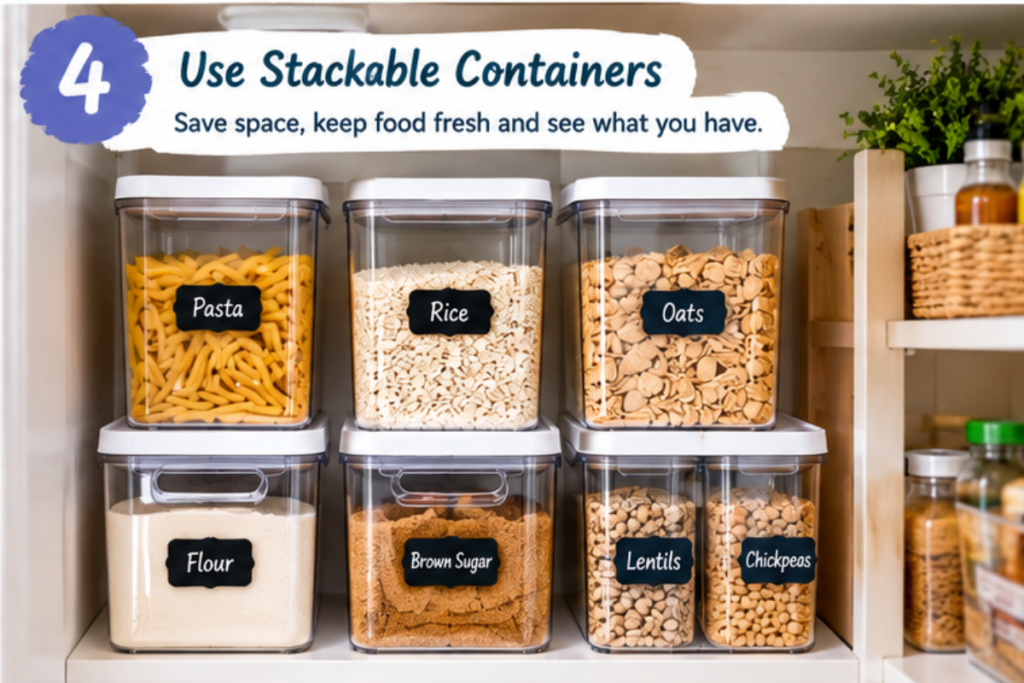
6. Store Dry Foods in Stackable Containers
If your pantry contains open bags of rice, pasta, cereal, flour, or other dry foods, matching containers can make the shelves easier to organize.
Stackable containers are especially useful when shelf height is limited because they allow you to use more vertical space without creating unstable piles of packages.
Transparent containers can also make it easier to see how much food remains.
Best for: Frequently used dry foods that are suitable for container storage.
Before buying: Measure both shelf depth and height. A container that fits the width of a shelf may still be too tall to stack comfortably.
7. Use Pull-Out Baskets for Deep Shelves
Deep shelves can create a common pantry problem: the items at the back are easy to forget.
A pull-out basket or drawer-style organizer can turn part of that deep shelf into a more accessible storage area.
Instead of reaching into the back of the pantry, you can pull the basket forward and see its contents.
Best for: Baking supplies, packaged foods, extra pantry items, and less frequently used ingredients.
Consideration: Measure the full shelf dimensions and check how far the organizer needs to extend before purchasing.
8. Create Dedicated Zones for Different Food Categories
One of the easiest ways to make a pantry feel more organized is to give every major category a consistent home.
For example, you might create separate areas for:
- Breakfast foods
- Snacks
- Baking supplies
- Pasta and grains
- Canned foods
- Sauces and condiments
- Tea and coffee
- Backstock items
The exact categories depend on your household. The important part is that similar items stay together.
Why it works: You spend less time searching and can quickly see when a category needs restocking.
9. Use Narrow Organizers in Small Gaps
Small gaps between shelves or along the sides of a pantry can sometimes be useful for narrow organizers.
These spaces may work for packets, wraps, small bottles, or other items that do not need much room.
This is especially useful in compact pantries where every few inches matter.
Tip: Measure the gap first. A narrow organizer should slide in and out easily without blocking nearby shelves.
10. Keep Frequently Used Foods at Eye Level
Not every pantry item deserves the same amount of attention.
Keep foods you use every day or several times a week at comfortable eye or hand level. Less frequently used items can go higher or farther back.
This simple change can make a pantry feel more convenient without adding any new storage products.
Best for: Breakfast foods, coffee, tea, snacks, cooking staples, and other daily-use items.
11. Label Containers and Storage Bins When Helpful
Labels are not necessary for every pantry, but they can be useful when several bins or containers look similar.
Simple labels such as “Snacks,” “Baking,” “Pasta,” or “Breakfast” can make it easier for everyone in the household to return items to the right place.
You do not need elaborate labels. Clear, readable wording is usually enough.
Tip: Label the category rather than every individual food when several products belong in the same storage area.
12. Create a Separate Backstock Zone
If you regularly buy extra food when it is on sale, keep backstock separate from the items you are currently using.
For example, you might keep one box of cereal in the everyday breakfast area and additional unopened boxes together on a higher shelf or in a designated bin.
This prevents duplicate packages from taking over the easiest-to-reach areas.
Why it works: You can see what you have without mixing opened and unopened supplies.
How to Organize a Small Pantry Step by Step
Use these small pantry organization ideas as a starting point rather than trying to change everything at once.
Once you have chosen the storage solutions that fit your pantry, use this simple process.
Step 1: Empty the Pantry
Remove everything so you can see every shelf, corner, and available gap.
Step 2: Check Expiration Dates
Separate expired or unwanted food before putting anything back.
Step 3: Group Similar Items
Create basic categories based on how your household actually uses food.
Step 4: Measure the Space
Measure shelf width, depth, and height before buying organizers or containers.
Step 5: Put Everyday Items Within Easy Reach
Place frequently used foods where they are easy to see and grab.
Step 6: Add Organizers Only Where They Solve a Problem
Do not fill every shelf with bins. Use an organizer when it improves visibility, access, or available space.
Step 7: Leave Some Open Space
A pantry does not need to be packed completely full. A little breathing room makes it easier to remove and return items.
Small Pantry Organization Mistakes to Avoid
Even good organizers can make a pantry harder to use if they are used incorrectly.
Buying Organizers Before Measuring
A container or shelf riser that is slightly too large can waste more space than it saves.
Overfilling Bins
Bins work best when you can remove them and see their contents easily. Stuffing too many items into one bin defeats that purpose.
Putting Everything Into Matching Containers
Aesthetic consistency is nice, but transferring every food into containers is not always practical. Use containers where they solve a real storage problem.
Ignoring Expiration Dates
An organized pantry can still become wasteful if older food gets hidden behind newer purchases.
Keeping Frequently Used Items Too High
Storage should make daily routines easier. Avoid placing everyday foods where you need a stool or have to move several items first.
The most effective small pantry organization ideas should make your pantry easier to use, not simply make it look more organized.
How to Choose the Right Pantry Storage Solutions
When comparing small pantry organization ideas, focus on accessibility and everyday convenience rather than appearance alone.
Before buying a pantry organizer, ask four simple questions:
1. What problem am I trying to solve?
Is the issue limited shelf space, poor visibility, deep shelves, small gaps, or cluttered categories?
2. Will the organizer improve access?
More storage is not automatically better. A useful organizer should make items easier to find and reach.
3. Does it fit the space?
Measure the shelf before buying. Pay attention to width, depth, height, and door clearance.
4. Will I actually maintain it?
The best system is one that is simple enough for everyone in the household to keep using.
Frequently Asked Questions
What are the best small pantry organization ideas for limited space?
Shelf risers, clear bins, turntables, door organizers, stackable containers, and narrow storage solutions can help make better use of limited pantry space. The right combination depends on your shelf dimensions and the types of food you store.
The best small pantry organization ideas depend on your shelf dimensions, food categories, and how often you use different items.
How do I organize a small pantry without buying lots of organizers?
Start by decluttering, grouping similar foods, and moving frequently used items to easy-to-reach shelves. You may be able to improve the pantry significantly before purchasing any storage products.
How can I make a deep pantry easier to use?
Pull-out baskets, drawer-style organizers, and turntables can make deep shelves easier to access. You can also keep less frequently used items toward the back while placing everyday foods closer to the front.
Should I use clear containers in a small pantry?
Clear containers can work well for frequently used dry foods because they make contents easier to see and can create a consistent stacking system. They are not necessary for every food, though, so use them where they provide a clear benefit.
How do I organize pantry snacks?
Group snacks by type or how they are used, then place them in an accessible bin or designated shelf area. Keeping similar snacks together makes it easier to see what is available and restock when needed.
How do I use pantry door space?
A slim door organizer can hold lightweight items such as seasoning packets, wraps, or small snacks, provided there is enough clearance for the door to close properly.
What should I keep at eye level in a pantry?
Keep foods and ingredients you use most often at eye or hand level. Breakfast foods, coffee, tea, snacks, and everyday cooking staples are common examples.
How often should I reorganize a small pantry?
A quick reset every few weeks can help prevent clutter. You do not need to completely empty the pantry each time. Focus on expired food, misplaced items, and categories that have become difficult to access.
Related Small Kitchen Organization Guides
If you are working on a small kitchen, these GRAPCY Hub guides can help you organize other storage areas:
Final Thoughts
A small pantry does not have to feel chaotic. The biggest improvement often comes from using the space more intentionally rather than simply adding more storage products.
The best small pantry organization ideas are simple enough to maintain and practical enough to improve your everyday routine.
Start with decluttering and measuring your shelves. Then choose a few solutions that address your actual problems, such as shelf risers for unused vertical space, pull-out organizers for deep shelves, or bins for loose snack packages.
The best small pantry organization ideas are the ones that make everyday food easier to see, reach, use, and put away. A simple system that your household can maintain will usually work better than a pantry packed with complicated organizers.
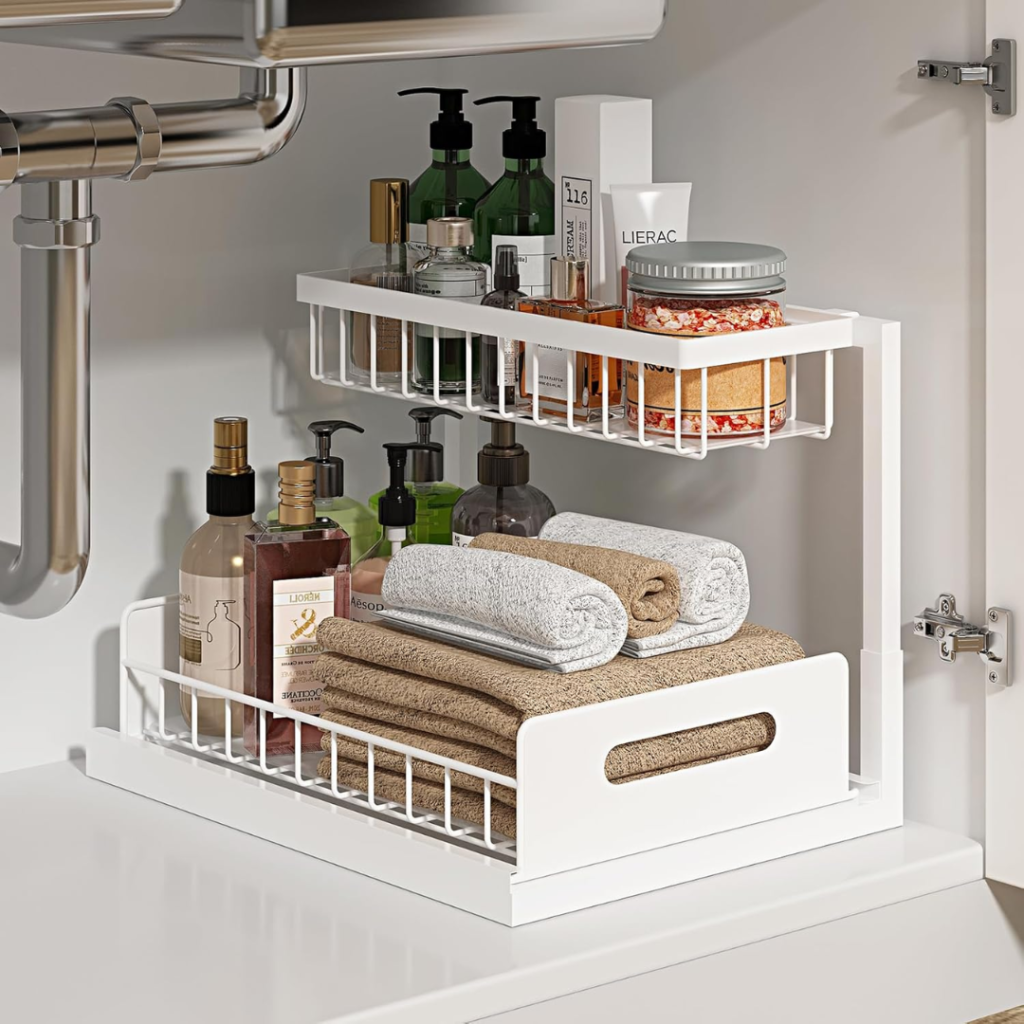
Sink Organizer
Key Features:
- L-Shaped 2-Tier Design – Makes use of vertical space while leaving room for plumbing and taller bottles.
- Pull-Out Drawer – Slides out from either side for easier access to items at the back.
- Tool-Free Installation – Includes suction cups and adhesive for stable placement without drilling.
- Sturdy & Rust-Resistant – Steel construction with a water-friendly grid design and removable pads.
- Versatile Storage – Great for under-sink cabinets, kitchens, bathrooms, and laundry areas.
- Size: 14.2 × 10.6 × 11 inches; bottom tier fits bottles up to 8 inches tall.
As an Amazon Associate I earn from qualifying purchases.