
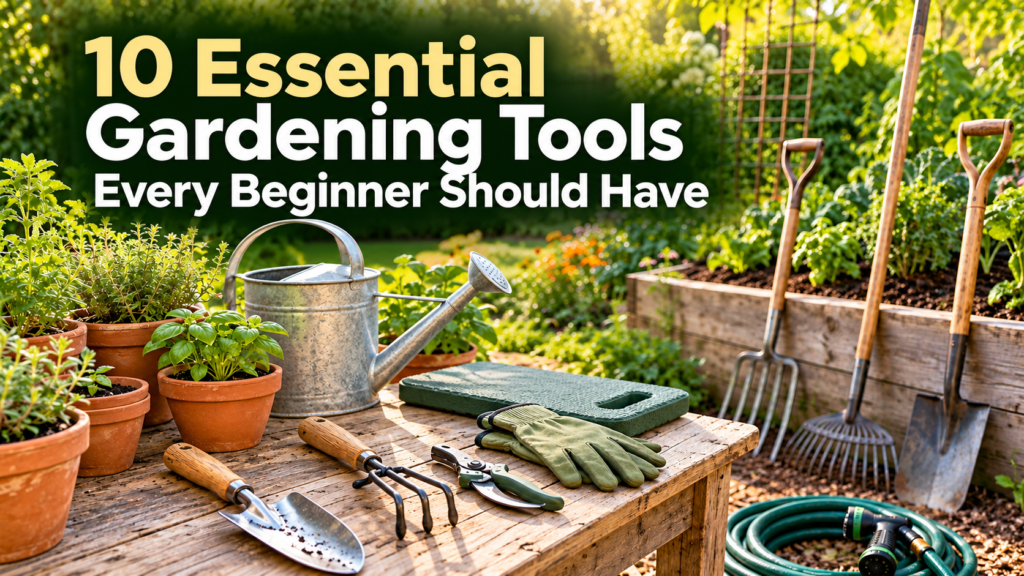
Starting a garden can seem complicated when you see shelves full of tools, accessories, and gardening equipment. The good news is that you do not need a large collection to get started.
For most beginners, a small set of reliable tools is enough to handle everyday tasks such as planting, loosening soil, watering, pruning, and cleaning up. The right tools can also make gardening more comfortable and help you work more efficiently.
This guide covers 10 practical gardening tools for beginners, explains what each one does, and shows when you actually need it.
These gardening tools for beginners can help you handle most everyday planting, watering, pruning, and soil-care tasks.
Quick Guide: Gardening Tools for Beginners
| Tool | Best use | How often you may use it | Beginner friendly |
|---|---|---|---|
| Hand trowel | Planting and transplanting | Very often | ✅ |
| Hand cultivator | Loosening soil | Often | ✅ |
| Pruning shears | Cutting stems and small branches | Often | ✅ |
| Garden gloves | Hand protection | Very often | ✅ |
| Watering can | Watering containers and seedlings | Very often | ✅ |
| Garden hose + nozzle | Watering larger areas | Often | ✅ |
| Garden fork | Turning and loosening soil | Occasionally | ✅ |
| Garden rake | Clearing leaves and debris | Often | ✅ |
| Kneeling pad | Comfortable low-level work | Often | ✅ |
| Garden shovel or spade | Digging larger holes | As needed | ✅ |
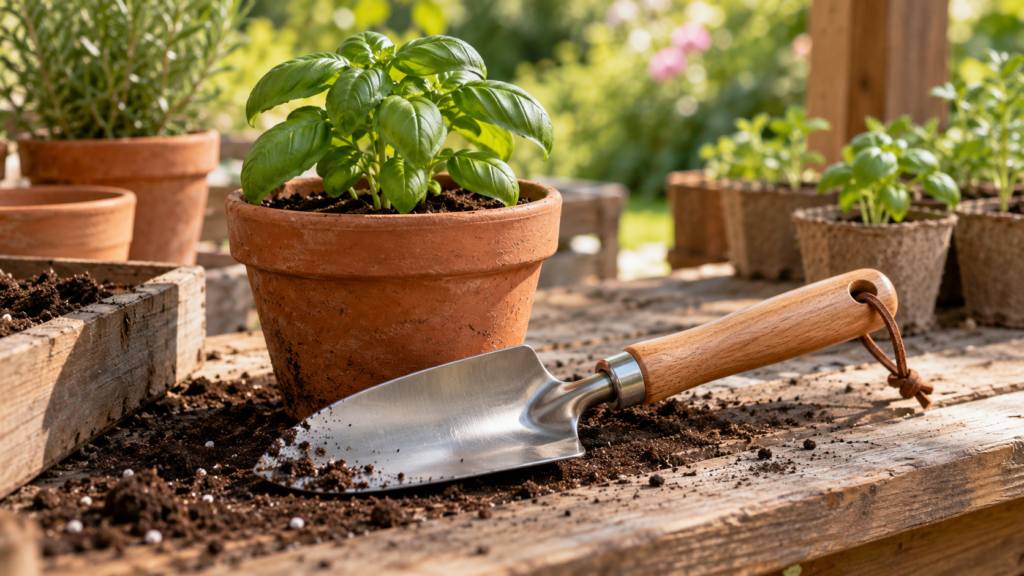
1. Hand Trowel
A hand trowel is one of the first tools most new gardeners should own.
It is a small handheld tool with a narrow blade that works well for planting flowers, herbs, seedlings, and small plants. It is also useful for moving potting mix, digging small holes, and transplanting plants.
A comfortable grip matters because you may use a trowel frequently. Look for a sturdy blade and a handle that feels secure in your hand.
Best for: container gardening, flower beds, herb gardens, and transplanting.
What to look for:
- Strong, comfortable handle
- Sturdy metal blade
- Easy-to-clean surface
- Comfortable grip for repeated use
For apartment gardeners, a hand trowel may be one of the only digging tools you need.
2. Hand Cultivator
A hand cultivator has several short metal prongs designed to loosen and work the surface of the soil.
It can break up compacted soil, remove small weeds, mix amendments into the upper layer, and help prepare a planting area.
A cultivator is especially useful when soil becomes hard after drying out or when the surface becomes crusted.
Use it gently around established plants because aggressive digging can disturb shallow roots.
Best for: loosening soil, light weeding, and preparing small planting areas.
Trowel vs. Cultivator
A trowel is mainly for digging and planting, while a cultivator is mainly for loosening and working the soil.
Having both gives you a simple combination for many small gardening jobs.
3. Pruning Shears
Pruning shears are small cutting tools designed for trimming stems, removing damaged growth, harvesting some herbs, and maintaining many common garden plants.
A sharp, properly sized pair makes cleaner cuts and is generally easier to control than larger cutting tools.
For beginners, choose shears that open and close smoothly and fit comfortably in your hand. Keep them clean and dry after use.
Do not use small pruning shears for branches that are too thick for the tool. Forcing the blades can damage both the plant and the shears.
Best for: trimming stems, removing dead growth, shaping plants, and light harvesting.
Among common gardening tools for beginners, pruning shears are especially useful once your plants begin producing regular new growth.
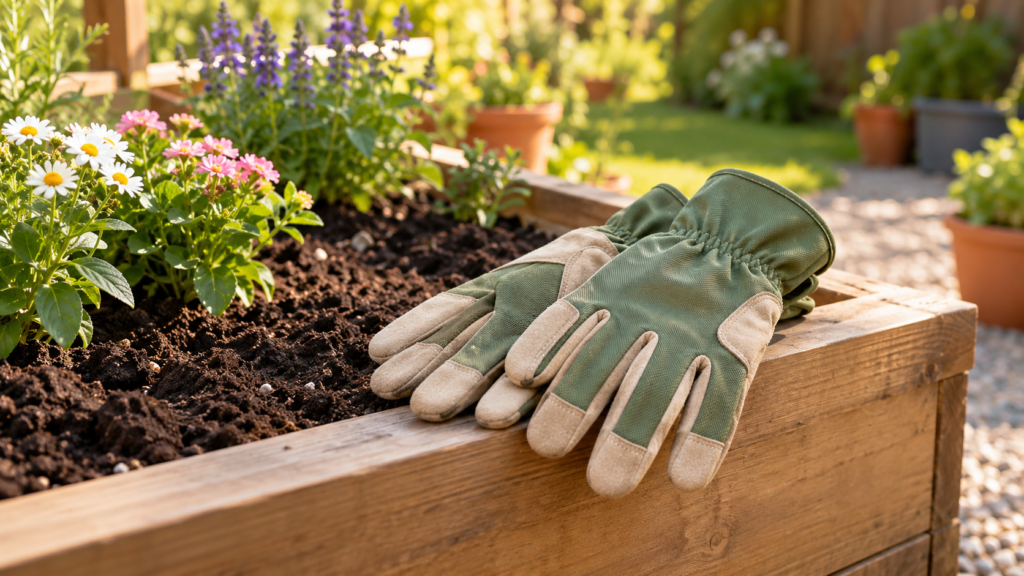
4. Garden Gloves
Garden gloves may not look exciting, but they can make routine gardening much more comfortable.
Gloves help keep dirt off your hands and provide a barrier against rough soil, thorns, splinters, and some minor irritants. They can also make tasks such as weeding and handling garden debris more comfortable.
Choose gloves based on the type of gardening you do. Lightweight gloves can work well for potting and everyday tasks, while more durable gloves may be better for pruning, yard cleanup, or working around thorny plants.
Best for: planting, weeding, pruning, handling soil, and cleanup.
A good fit matters more than having the thickest possible glove. Gloves that are too loose can make small tasks harder.
5. Watering Can
A watering can is one of the simplest and most useful gardening tools.
It gives you better control than a hose when watering containers, seedlings, herbs, and small indoor or outdoor garden areas. A narrow spout can help direct water close to the soil instead of splashing delicate plants.
Choose a size that you can carry comfortably when full. A very large watering can may seem convenient at first, but it can become heavy and awkward.
Best for: container plants, seedlings, herbs, houseplants, and small garden beds.
If you are also interested in indoor gardening, see our guide to 15 Amazing Indoor Gardening Ideas for Beginners.
6. Garden Hose With an Adjustable Nozzle
For larger outdoor spaces, a hose becomes more practical than repeatedly carrying a watering can.
An adjustable nozzle lets you change the water pattern for different jobs. A gentle spray can work for delicate plants, while a stronger stream can help with some cleanup tasks.
Avoid using an overly forceful spray directly on soft soil or delicate plants. Watering too aggressively can disturb soil and damage young growth.
Best for: raised beds, flower beds, larger containers, lawns, and general outdoor watering.
Watering Can vs. Hose
| Feature | Watering Can | Hose |
|---|---|---|
| Small containers | Excellent | Good |
| Large garden area | Less convenient | Excellent |
| Water control | Very good | Depends on nozzle |
| Portability | High | Lower |
| Storage | Easy | Requires more space |
For a balcony or small patio garden, a watering can may be enough. For a yard, a hose is usually more convenient.
7. Garden Fork
A garden fork uses several sturdy tines to loosen soil, break apart compacted areas, lift plant debris, and work through beds.
It can be especially useful in heavier soil or in areas that are difficult to loosen with a hand cultivator alone.
For a beginner, a garden fork becomes more useful once you move from containers into larger beds or outdoor planting areas.
Choose a handle that feels comfortable and a head that is strong enough for your soil conditions.
Best for: loosening soil, turning garden beds, and moving garden material.
Among the gardening tools for beginners, this is one you may not need immediately if your garden is limited to small pots.

8. Garden Rake
A garden rake helps collect leaves, grass clippings, and other loose debris while also smoothing soil in prepared beds.
If you have a yard, a rake can quickly become one of your most frequently used tools during seasonal cleanup.
There are different types of rakes, so choose one based on the job. A leaf rake is designed for lightweight debris, while a garden or bow rake is better suited to soil and heavier material.
Best for: leaf cleanup, garden-bed cleanup, spreading loose material, and smoothing soil.
Beginner tip: Do not buy several specialized rakes immediately. Start with the style that matches the space you maintain most often.
Do not buy several specialized rakes immediately. Start with the style that matches the space you maintain most often.
9. Kneeling Pad
A kneeling pad is a comfort-focused tool that can make a surprising difference during planting and weeding.
Gardening often involves working close to the ground for extended periods. A cushioned kneeling pad gives you a cleaner, softer surface and can make low-level tasks more comfortable.
You can also use one near raised beds, container gardens, and flower borders where you frequently work at ground level.
Best for: planting, weeding, transplanting, and low garden maintenance.
It is especially useful for beginners who are spending more time in the garden and want to make routine work more comfortable.
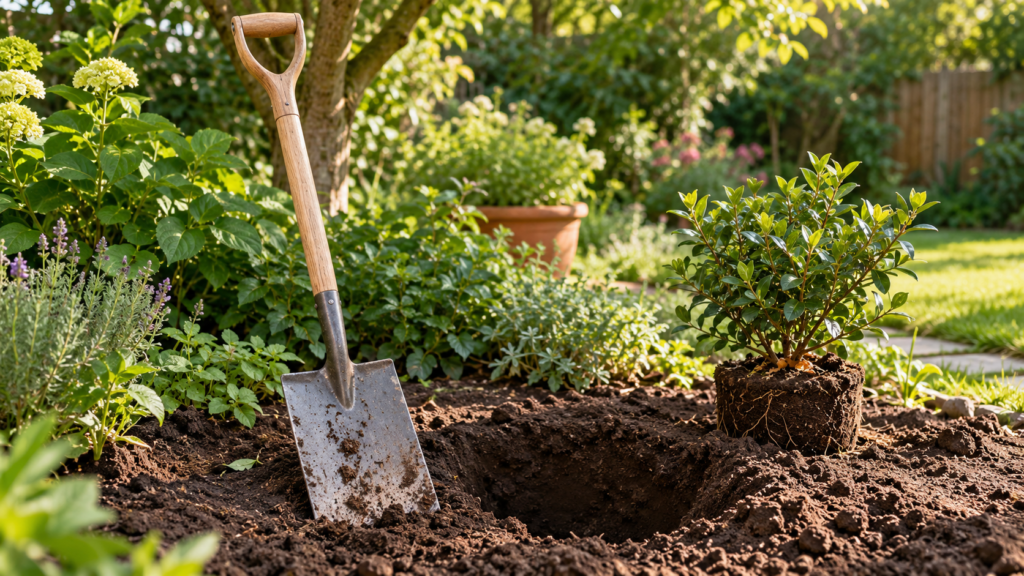
10. Garden Shovel or Spade
A garden shovel or spade becomes important when you move beyond small planting jobs.
A shovel is useful for moving soil, compost, mulch, or other loose material. A spade has a flatter blade and is often useful for edging, cutting through soil, and digging planting holes.
For a small container garden, you may not need a full-size shovel immediately. But for a yard, raised bed, or larger garden project, it quickly becomes one of the most practical gardening tools for beginners.
Choose a tool that matches your size and strength. A comfortable handle and manageable weight are important for repeated use.
Which Gardening Tools Should You Buy First?
You do not need all 10 tools on your first day.
Choosing the right gardening tools for beginners depends on the size and type of garden you plan to maintain.
For a small beginner garden, start with:
- Hand trowel
- Pruning shears
- Garden gloves
- Watering can
- Hand cultivator
This small set can handle a surprisingly wide range of everyday tasks.
As your garden expands, add a hose and nozzle, garden fork, rake, kneeling pad, and shovel or spade based on what you actually need.
The best approach is to buy tools according to your garden rather than buying a large kit simply because it contains many pieces.
How to Choose Gardening Tools for Beginners
Before buying a tool, think about the size and type of garden you maintain.
1. Consider Your Garden Size
A balcony garden and a backyard garden have completely different equipment needs.
Small spaces usually require lightweight handheld tools, while larger outdoor areas can justify full-size tools and a hose.
2. Prioritize Comfort
You will use some tools repeatedly, so a comfortable handle and manageable weight can matter more than appearance.
3. Look for Durable Construction
Tools are exposed to soil and moisture regularly. Choose materials and construction that can handle repeated outdoor use.
4. Avoid Buying Too Much
A large starter kit may contain tools you never use.
Instead, build your collection around your actual gardening routine.
5. Think About Storage
If you live in an apartment or small home, tool storage matters. A compact set can often be stored in a small bin, cabinet, or wall-mounted organizer.
This approach also fits well with a space-conscious home organization system.
A small, practical collection of gardening tools for beginners is usually more useful than buying a large kit you may rarely use.
Essential Gardening Tools for a Small Space
You can grow herbs, flowers, and many houseplants without owning traditional yard tools.
For balconies, patios, and indoor setups, focus on compact equipment:
- Hand trowel
- Small cultivator
- Pruning shears
- Gloves
- Watering can
- Kneeling pad
- Small storage container
These gardening tools for beginners take up little space and can support a surprisingly wide range of container-gardening tasks.
For more ideas, read 15 Amazing Indoor Gardening Ideas for Beginners.
How to Store Your Gardening Tools
Good tool storage keeps your equipment easier to find and helps you maintain it properly.
Keep frequently used hand tools together in a small basket, tool box, or dedicated storage container. Larger tools such as rakes and shovels can be stored vertically in a garage, shed, utility area, or other dry location.
Before storing tools, remove visible dirt and allow them to dry. Keeping metal tools relatively clean and dry can help reduce unnecessary wear and rust.
Do not leave sharp tools loose in a drawer or container where you can accidentally grab the blade.
Simple Gardening Tool Care Routine
Taking care of your tools can help them stay useful longer.
After each use
Remove soil and plant debris from the tool.
Before storing
Dry wet surfaces and return the tool to its designated storage area.
For pruning tools
Keep the blades clean and sharp, and follow the manufacturer’s care recommendations.
At the end of the season
Check handles, blades, fasteners, and other components for damage before putting tools away for an extended period.
A few minutes of maintenance can save you from discovering a problem when you need the tool again.
Common Gardening Tool Mistakes Beginners Make
Buying a large kit too soon
More tools do not automatically mean better gardening. Start with the basics.
Choosing tools by appearance
A tool that looks great but feels uncomfortable may end up sitting unused.
Using the wrong tool for the job
Small pruning shears should not be forced through thick branches, and a watering nozzle should not be used with excessive pressure on delicate plants.
Ignoring storage
Leaving tools outside in the rain or direct sun can shorten their useful life.
Forgetting cleaning
Soil and plant residue can build up over time, especially on cutting tools.
Are Expensive Gardening Tools Better?
Not necessarily.
Price can reflect materials, construction, ergonomics, brand positioning, or specialized features, but a beginner does not always need the most expensive option.
For basic gardening, focus on comfort, durability, correct size, and intended use.
A reasonably priced tool that fits your hand and matches your garden may be more useful than a premium tool that is too heavy or specialized for your needs.
Frequently Asked Questions
What are the most important gardening tools for beginners?
A hand trowel, pruning shears, gloves, watering can, and hand cultivator are a practical starting set. Add larger tools as your garden grows.
How many gardening tools does a beginner really need?
Most beginners can start with five basic tools and add others according to the size and type of garden they maintain.
What tools do I need for a small balcony garden?
A hand trowel, small cultivator, pruning shears, gloves, and watering can are usually enough for many container-gardening tasks.
Are gardening gloves necessary?
They are not mandatory for every task, but gloves can improve comfort and help protect your hands from dirt, rough materials, and some plants.
What is the difference between a trowel and a hand cultivator?
A trowel is mainly used for digging small holes and planting, while a cultivator loosens soil and helps work around the surface.
Do I need a garden hose for a small garden?
Not necessarily. A watering can may be more convenient for containers, balconies, and small patios. A hose becomes more useful as the outdoor garden area grows.
What should I look for when buying pruning shears?
Look for a comfortable grip, smooth operation, sturdy construction, and blades appropriate for the type of plants and stems you plan to cut.
How should I store gardening tools?
Clean and dry tools before storing them. Keep hand tools together and store larger tools upright in a dry, accessible location.
Which gardening tools should I buy first?
Start with a hand trowel, pruning shears, gloves, watering can, and hand cultivator. These cover many everyday gardening tasks without requiring a large collection.
What are the best gardening tools for beginners with a small garden?
The best gardening tools for beginners with a small garden include a hand trowel, pruning shears, gloves, a watering can, and a hand cultivator.
Related Small Kitchen Organization Guides
If you are working on a small kitchen, these GRAPCY Hub guides can help you organize other storage areas:
- 15 Small Kitchen Organization Ideas That Actually Work
- 10 Spice Rack Ideas for Small Kitchens and Better Organization
- 12 Kitchen Cabinet Organization Ideas for Small Spaces
- 15 Small Kitchen Storage Ideas to Maximize Every Inch
- 15 Small Kitchen Countertop Organization Ideas
- 12 Small Pantry Organization Ideas for Better Storage
Final Thoughts
You do not need a garage full of equipment to start gardening successfully. A few well-chosen tools can handle most beginner tasks, especially when you match them to the size and type of garden you maintain.
Start with the basics, learn what you actually use, and build your collection gradually. The best gardening tools for beginners are the ones that make everyday gardening easier, more comfortable, and more manageable.
As your garden grows, your tool collection can grow with it. That approach keeps your setup practical, organized, and easier to maintain.
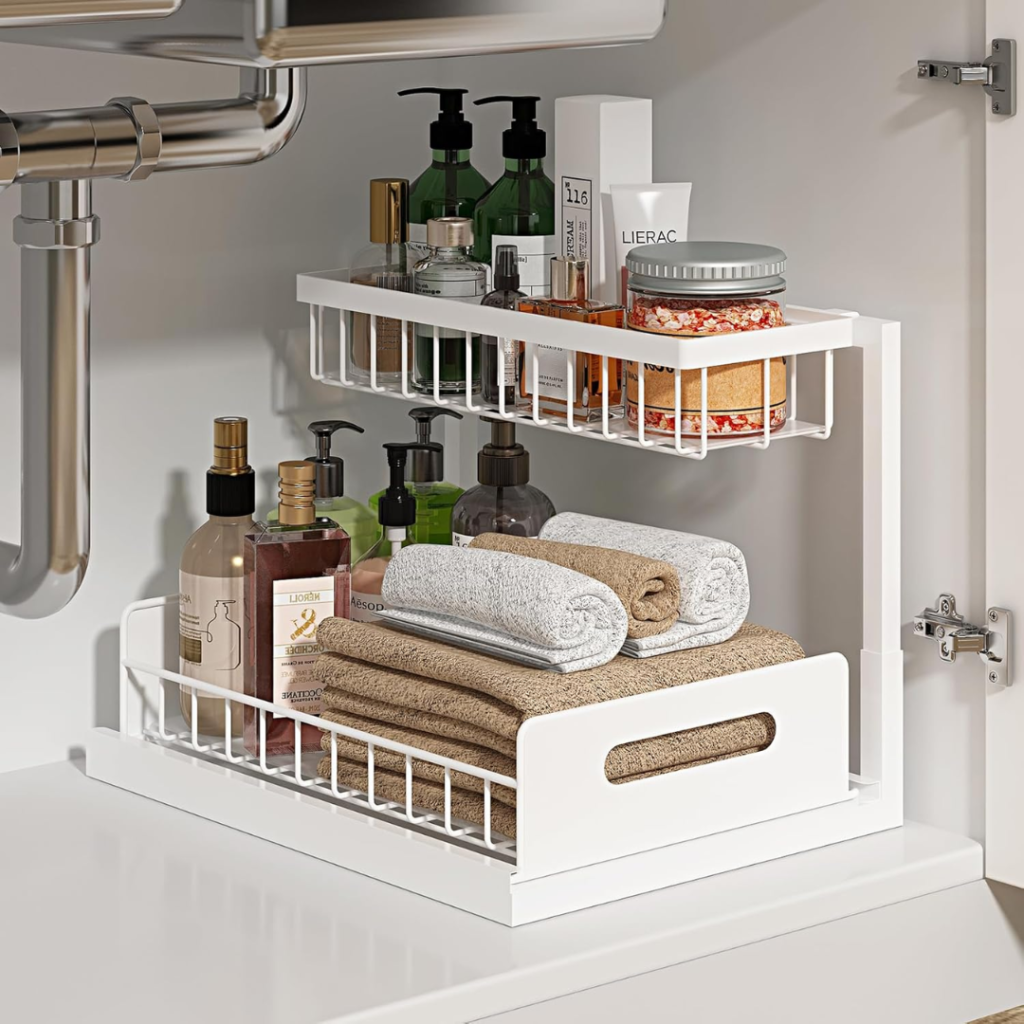
Sink Organizer
Key Features:
- L-Shaped 2-Tier Design – Makes use of vertical space while leaving room for plumbing and taller bottles.
- Pull-Out Drawer – Slides out from either side for easier access to items at the back.
- Tool-Free Installation – Includes suction cups and adhesive for stable placement without drilling.
- Sturdy & Rust-Resistant – Steel construction with a water-friendly grid design and removable pads.
- Versatile Storage – Great for under-sink cabinets, kitchens, bathrooms, and laundry areas.
- Size: 14.2 × 10.6 × 11 inches; bottom tier fits bottles up to 8 inches tall.
As an Amazon Associate I earn from qualifying purchases.