
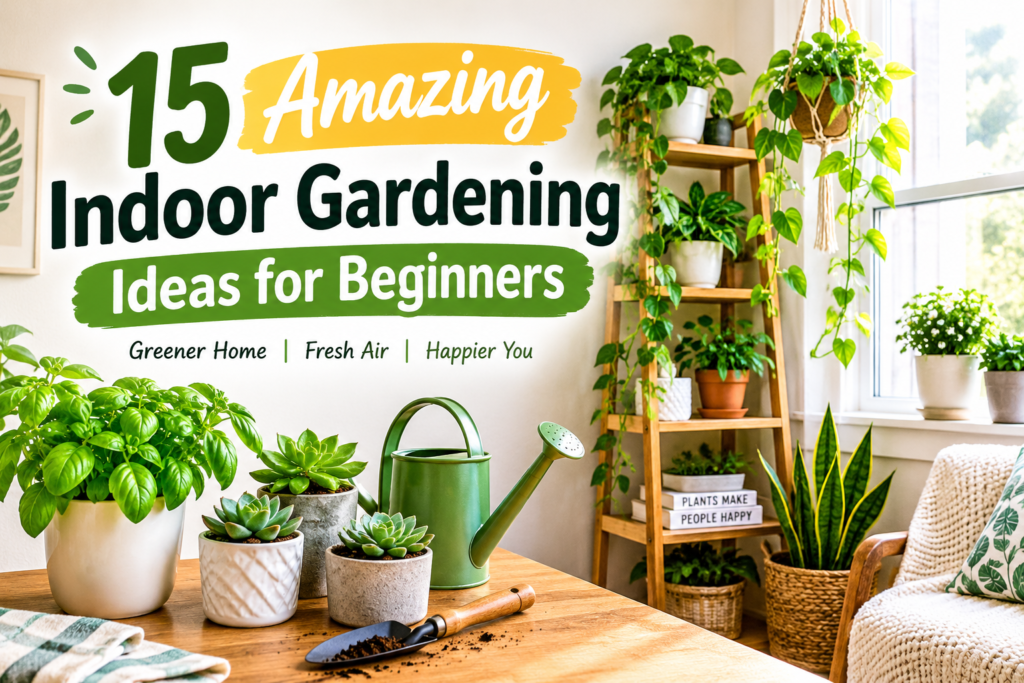
Indoor plants can make a home feel fresher, more welcoming, and more connected to nature, even when you do not have a yard or much outdoor space. You also do not need a greenhouse, a large collection of plants, or advanced gardening skills to get started.
The easiest way to build an indoor garden is to choose a setup that matches your space, light, routine, and comfort level. Some ideas need only a sunny windowsill, while others can turn an empty corner into a small green area.
This guide shares 15 practical indoor gardening ideas for beginners that work especially well in apartments, small homes, kitchens, bedrooms, and other everyday living spaces.
| Idea | Best for | Space needed | Beginner level |
|---|---|---|---|
| Sunny windowsill garden | Herbs and small plants | Very small | Easy |
| Indoor herb garden | Cooking herbs | Small | Easy |
| Plant shelf | Several small plants | Small | Easy |
| Hanging planter | Empty wall or ceiling area | Small | Easy |
| Kitchen plant corner | Small kitchen | Small | Easy |
| Bathroom greenery | Bright, humid rooms | Small | Easy |
| Indoor succulent display | Low-maintenance plants | Small | Easy |
| Propagation station | Learning and multiplying plants | Very small | Easy |
| Indoor plant cart | Renters and flexible setups | Small | Easy |
| Vertical plant wall | Empty wall space | Medium | Moderate |
| Reading-corner garden | Cozy living areas | Medium | Easy |
| Bedroom plant group | Relaxed natural look | Small–medium | Easy |
| Seed-starting station | Growing from seed | Small | Moderate |
| Mini indoor garden tray | Compact displays | Very small | Easy |
| Plant care zone | Organized plant routines | Small | Easy |
1. Start With a Sunny Windowsill Garden
A windowsill is one of the easiest places to begin because it uses space you already have.
Small pots of herbs such as basil, parsley, chives, or mint can work well when the window provides enough light. You can also use compact houseplants if you want greenery rather than edible plants.
Before placing several pots together, check how much direct or indirect light the window receives throughout the day. Choosing the right location is one of the most important indoor gardening ideas for beginners because light often determines whether a plant thrives or struggles.
Beginner tip: Start with two or three plants rather than filling the entire sill. A smaller collection is easier to monitor and water consistently.
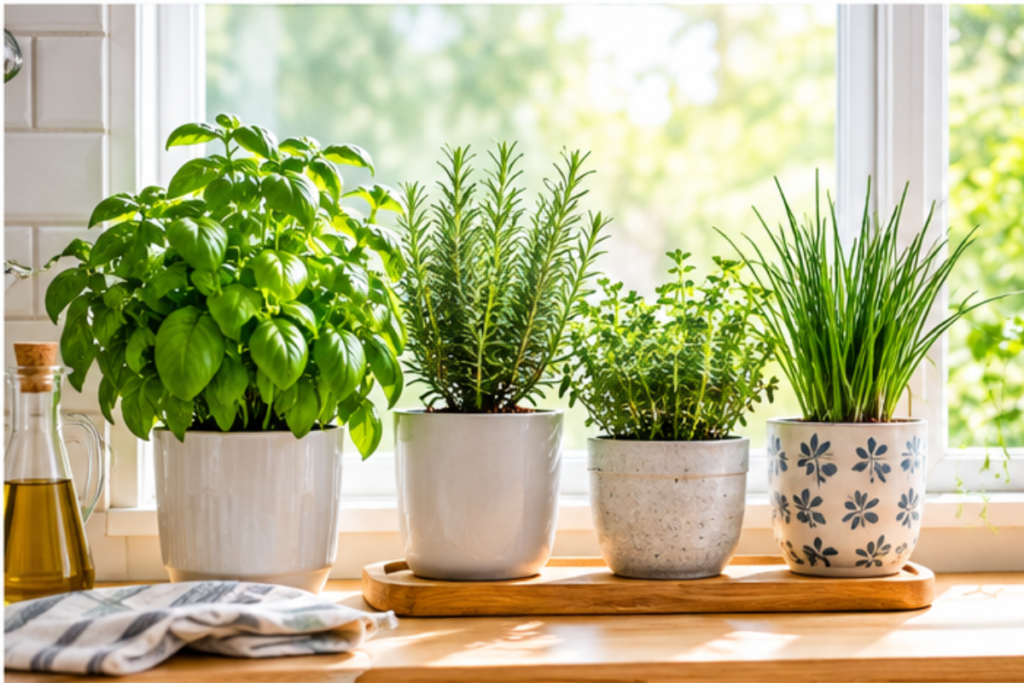
2. Create a Simple Indoor Herb Garden
An indoor herb garden can be both decorative and useful in the kitchen.
Use a few matching pots or small containers and group herbs together in a place with suitable light. Basil, chives, parsley, thyme, and mint are common choices, but their light and watering needs are not identical.
Keep herbs you use often close to the area where you prepare food. This turns gardening into part of your daily routine rather than another task you have to remember.
Watch out for: overwatering. Containers need drainage, and the soil should not stay constantly wet.
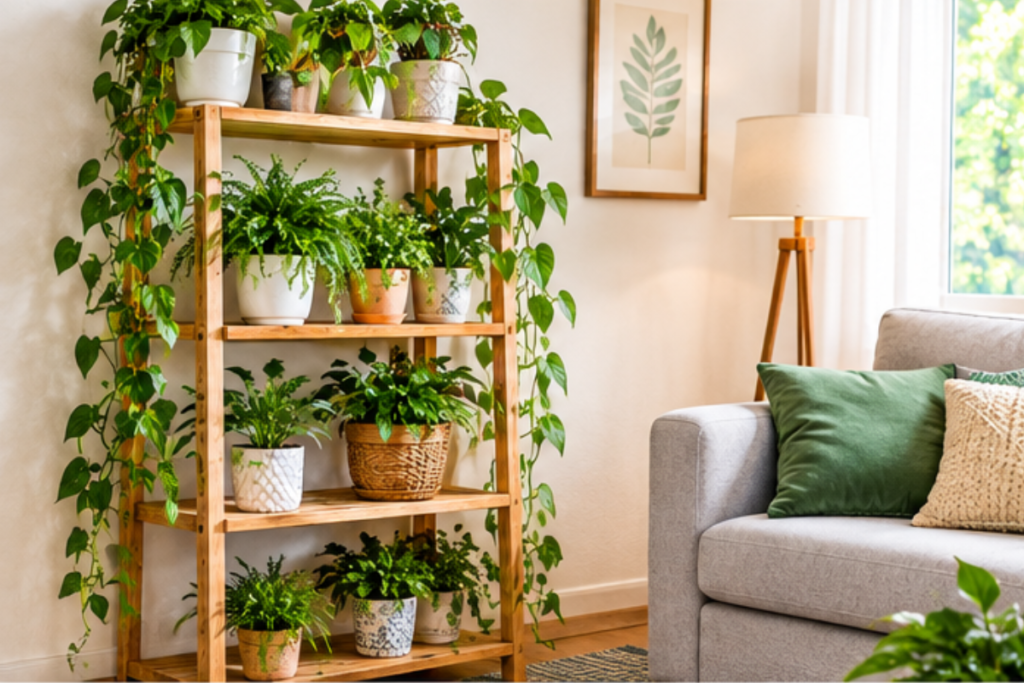
3. Use a Plant Shelf to Build a Small Indoor Garden
A narrow shelf can turn vertical space into a plant display without using much floor area.
Place larger or taller plants toward the back and smaller pots in front. This layered arrangement helps each plant stay visible and can make a simple shelf look more intentional.
Choose a sturdy shelf that can safely support the combined weight of pots, soil, and water. Keep the setup away from areas where a spill could damage electronics or furniture.
These indoor gardening ideas for beginners work particularly well in apartments because they use vertical space instead of valuable floor space.
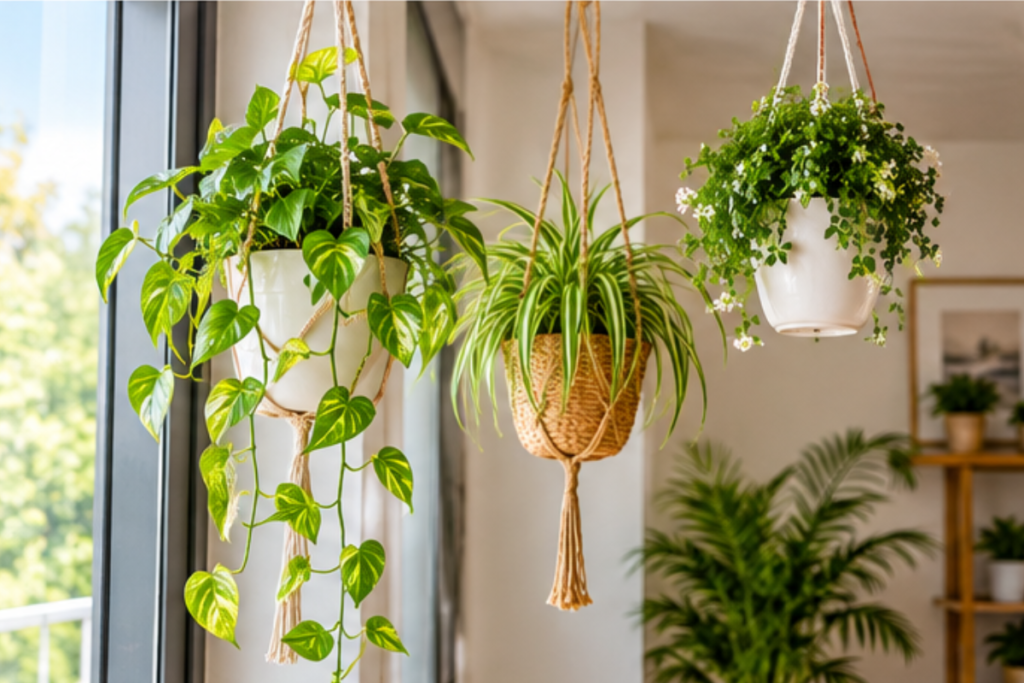
4. Hang Plants to Save Floor Space
Hanging planters are useful when every surface is already occupied.
A hanging pot can add greenery beside a window, in a living room corner, or near a bright kitchen area. Trailing plants can also create a fuller look without requiring a large footprint.
For renters, check your lease before making permanent ceiling or wall changes. A freestanding hanging stand can provide a similar effect without drilling.
Best approach: Keep hanging plants at a comfortable height so watering and trimming remain easy.
5. Create a Small Kitchen Plant Corner
Your kitchen can be more than a place for herbs. A small plant corner can add color and soften a space filled with hard surfaces.
Use a narrow shelf, a countertop tray, or a small plant stand to group a few suitable plants. Keep them away from hot burners, heavy steam, and areas where cooking splashes are common.
If counter space is limited, combine this idea with your existing kitchen organization system. A defined plant area is easier to maintain than placing small pots randomly around the room.
See our guide to 15 Small Kitchen Organization Ideas That Actually Work for more ways to use limited kitchen space.
6. Add Greenery to a Bright Bathroom
A bathroom can be a good location for plants when it has enough natural or suitable artificial light.
Some plants may appreciate higher humidity, but humidity alone does not replace the light a plant needs. Focus on light first, then choose plants that fit the room’s conditions.
Keep pots on a stable shelf or plant stand, and make sure water cannot collect underneath them.
For a small bathroom, one or two well-placed plants can make the space feel more finished without creating another clutter problem.
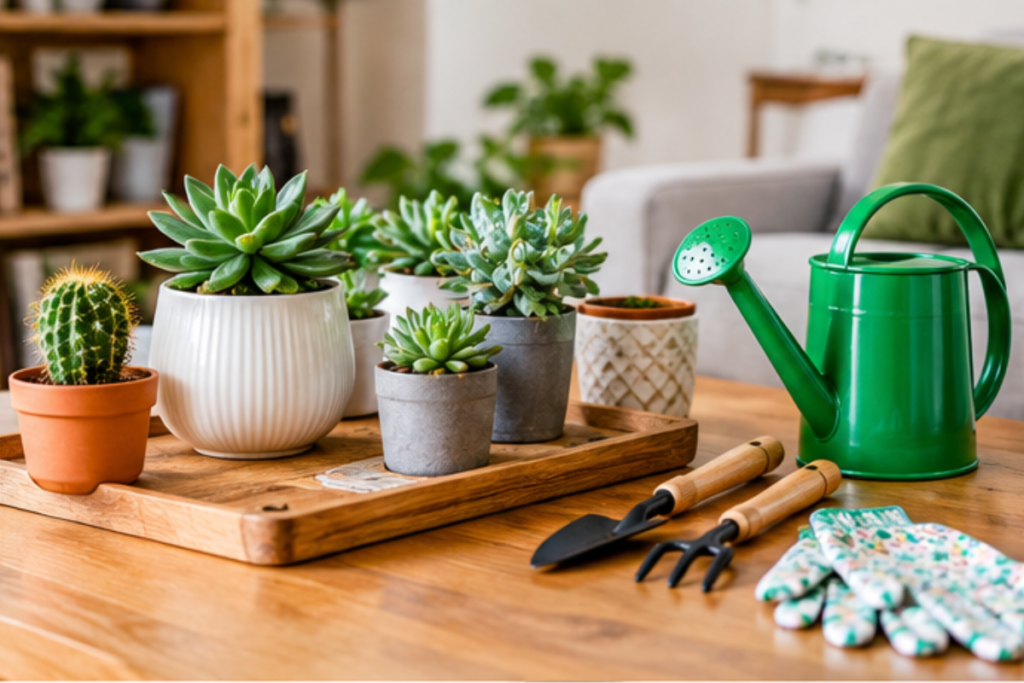
7. Build a Low-Maintenance Succulent Display
Succulents are often attractive to beginners because many varieties can work well in bright spaces and do not need frequent watering.
Use pots with drainage and a growing medium suited to succulents. Let the soil dry appropriately between waterings rather than treating succulents like tropical houseplants.
A shallow tray with several different shapes can create a simple tabletop display.
Pros: compact, decorative, and often easy to maintain.
Cons: they generally need strong light, and overwatering can still cause problems.
8. Set Up a Simple Plant Propagation Station
Propagation lets you learn how plants grow while expanding your collection from plants you already own.
For some easy-to-propagate houseplants, cuttings can be placed in water so you can watch roots develop. A small glass or propagation vase on a windowsill can become a simple learning project.
Not every plant propagates the same way, so identify the plant before taking a cutting. Keep the station clean and change water as needed for the specific method you are using.
This is one of the most enjoyable indoor gardening ideas for beginners because you can actually see progress over time.
9. Use a Rolling Plant Cart
A rolling cart can be useful when your plants need to move between rooms or when you want a flexible indoor garden.
A three-tier cart can hold small plants, watering supplies, pruning tools, and a small spray bottle. It can also act as a temporary plant station near a bright window.
Choose a cart with stable shelves and enough weight capacity for wet pots. Avoid overcrowding it because moving a top-heavy cart can be awkward.
For small homes, the biggest advantage is flexibility: you can move the whole setup when cleaning, rearranging furniture, or adjusting plants to seasonal light.
10. Create a Vertical Plant Wall
A vertical plant display can make an unused wall part of your indoor garden.
You can use wall-mounted planters, a plant ladder, or a freestanding vertical stand. Start with a small arrangement instead of covering an entire wall immediately.
Think about watering before installing anything. Watering several wall-mounted pots can be more difficult than caring for plants on a shelf or cart.
Beginner rule: Choose a vertical system that still gives you easy access to every pot.
11. Turn a Reading Corner Into a Green Corner
An empty reading corner can become a relaxing indoor garden with a few plants, a small table, and a comfortable chair.
Place taller greenery behind the chair or beside the table, then add one or two smaller plants at eye level. Keep the arrangement open so the corner still feels usable.
You do not need many plants. A carefully grouped collection can create more visual impact than dozens of unrelated pots.
This idea also works well in living rooms where a blank corner feels unfinished.
12. Group a Few Plants in the Bedroom
A bedroom plant group can add greenery without making the room feel crowded.
Choose plants that match the available light and place them on a nightstand, dresser, shelf, or small plant stand. Leave enough clear space around the bed and walking paths.
Avoid creating a dense collection that becomes difficult to clean around. Indoor gardening should make your home more enjoyable, not add unnecessary maintenance.
For renters or people living in smaller bedrooms, using a narrow stand is often more practical than a large floor planter.
13. Try a Small Seed-Starting Station
Growing plants from seed is a useful next step when you feel comfortable caring for established plants.
You can start with a few herbs or other suitable plants in a compact tray near a bright window or under an appropriate grow light. Label each container with the plant name and planting date.
Seed-starting requires more attention to moisture and light than simply keeping a houseplant alive, so begin with a small number of seedlings.
Beginner tip: Treat your first seed-starting project as an experiment. A few failures are normal and can teach you what your space needs.
14. Make a Mini Indoor Garden Tray
A garden tray is a simple way to create a coordinated display using several small plants.
Choose plants with broadly similar care needs, then arrange them on a waterproof tray. Keep enough space between pots for airflow and easy watering.
A tray also protects a shelf or table from small water spills. You can change the arrangement as plants grow instead of committing to a permanent display.
This is one of the easiest indoor gardening ideas for beginners for people who want the look of a larger garden without using much room.
15. Create a Dedicated Plant Care Zone
Instead of storing plant supplies in different places, create one small care zone.
A compact basket, drawer, cart, or shelf can hold pruning scissors, plant ties, gloves, labels, a watering can, and other basic supplies you regularly use.
Keeping everything together makes plant care simpler and helps prevent small tasks from being forgotten.
A dedicated plant care zone is especially useful once your collection grows beyond a few plants.
How to Start an Indoor Garden Step by Step
You do not need to build your entire indoor garden at once. Follow a simple progression.
These indoor gardening ideas for beginners are especially useful when you want more greenery without using valuable floor space.
Step 1: Check Your Light
Walk through your home at different times of day and identify windows and rooms with bright, moderate, or low light.
Do not choose plants first and then try to force them into unsuitable locations. Start with the conditions you already have.
Step 2: Choose Two or Three Plants
Select beginner-friendly plants that match your available light and your willingness to water and maintain them.
Starting small makes it easier to notice problems early.
Step 3: Pick the Right Containers
Use containers with appropriate drainage for the plants you choose. Decorative pots can be used as outer covers, but make sure excess water does not remain trapped inside.
Step 4: Create One Defined Area
Put your plants together on a windowsill, shelf, cart, tray, or stand.
A defined area makes watering, cleaning, and checking plant health easier.
Step 5: Build a Simple Care Routine
Choose one or two days each week to check soil moisture, leaves, pests, and general plant condition.
Do not water every plant automatically on the same schedule. Different plants and rooms dry out at different rates.
Starting with one small setup is one of the easiest indoor gardening ideas for beginners because it lets you learn your plants’ needs before expanding.
How to Choose Indoor Gardening Supplies
You do not need a large shopping list to start.
Basic supplies
- Containers with suitable drainage
- Appropriate potting mix
- A small watering can
- A tray for protecting furniture
- Basic pruning scissors
- Plant labels if you have several varieties
When to add more equipment
A grow light may be useful when natural light is insufficient. A rolling cart or plant shelf can help when your collection grows. A humidity tool may be useful for specific plants, but it is not automatically necessary for every indoor garden.
The goal is to buy equipment that solves an actual problem rather than creating a complicated setup. Good indoor gardening ideas for beginners should make plant care simpler, not turn it into a collection of unnecessary gadgets.
Start with the basics and add equipment only when your indoor gardening ideas for beginners require it.
Choosing the right supplies is one of the most important indoor gardening ideas for beginners because simple equipment can make plant care easier.
Common Indoor Gardening Mistakes Beginners Should Avoid
1. Watering on a fixed schedule
Watering every plant every few days can lead to overwatering. Check the plant and growing medium instead.
2. Ignoring light
A beautiful plant can still struggle if it does not receive enough usable light.
3. Choosing too many plants at once
A collection of 20 plants may sound exciting, but it can become difficult to monitor. Start with a manageable number.
4. Using containers without proper drainage
Extra water needs somewhere to go. Poor drainage is a common source of plant problems.
5. Putting plants where they are difficult to reach
If watering or cleaning requires moving furniture, maintenance becomes easier to skip.
6. Mixing plants with very different care needs
Grouping plants looks attractive, but the setup works better when the plants have similar light and watering requirements.
How to Make an Indoor Garden Work in a Small Home
Small spaces can actually work well for indoor gardening because you are forced to be intentional. Several of these indoor gardening ideas for beginners are designed specifically around vertical storage and compact zones.
Use vertical space instead of spreading plants across every countertop. Narrow shelves, hanging planters, plant ladders, and rolling carts can create more room without taking over the floor.
Create zones rather than random collections. One windowsill can be for herbs, one shelf for decorative plants, and one small cart for plant-care supplies.
You can also rotate plants when light conditions change. A flexible setup often works better than a permanent one.
Indoor Gardening Ideas for Beginners: What Should You Start With?
Your first setup should match your lifestyle.
If you cook regularly, an indoor herb garden may be the most useful place to begin. If you have very little space, start with a windowsill garden or mini tray.
If floor space is limited, use a plant shelf, hanging planter, or rolling cart. If you enjoy learning and experimenting, try propagation or seed starting after you become comfortable with basic plant care.
The best garden is not the one with the most plants. It is the one you can maintain consistently.
Frequently Asked Questions
What are the easiest indoor gardening ideas for beginners?
Start with a sunny windowsill, a small herb garden, a plant shelf, or a few low-maintenance houseplants. Choose plants that match your available light and routine.
How many plants should a beginner start with?
Two to three plants is a manageable starting point. You can expand once you understand how quickly your space dries out and how much maintenance you can comfortably handle.
Can I grow herbs indoors all year?
Many herbs can be grown indoors, but success depends on light, temperature, container size, and care. A bright window or suitable grow light can help when natural light is limited.
What indoor gardening ideas work best for apartments?
Vertical shelves, hanging planters, windowsill gardens, plant carts, and compact trays work well because they use limited floor space.
Do indoor plants need direct sunlight?
Not every plant needs direct sunlight. Different plants have different light requirements, so choose varieties based on the conditions available in your home.
How often should indoor plants be watered?
There is no single schedule for every plant. Check the growing medium and the plant’s specific care needs rather than watering automatically on a fixed timetable.
Are indoor gardens safe for pets?
Some common houseplants can be harmful to cats or dogs if chewed. Pet owners should check the safety of each plant before bringing it indoors and place plants where pets cannot access unsafe varieties.
When should I add a grow light?
A grow light can be useful when natural light is not strong or consistent enough for the plants you want to grow. Choose the equipment based on the plants and the size of the growing area. This is one of the indoor gardening ideas for beginners that is worth adding only when natural light is genuinely limiting your choices.
What are the best indoor gardening ideas for beginners with limited space?
The best indoor gardening ideas for beginners with limited space include windowsill herb gardens, narrow plant shelves, hanging planters, compact succulent displays, and rolling plant carts. These setups use vertical or unused areas while keeping plants easy to access and care for.
Related Small Kitchen Organization Guides
If you are working on a small kitchen, these GRAPCY Hub guides can help you organize other storage areas:
- 15 Small Kitchen Organization Ideas That Actually Work
- 10 Spice Rack Ideas for Small Kitchens and Better Organization
- 12 Kitchen Cabinet Organization Ideas for Small Spaces
- 15 Small Kitchen Storage Ideas to Maximize Every Inch
- 15 Small Kitchen Countertop Organization Ideas
- 12 Small Pantry Organization Ideas for Better Storage
Final Thoughts
Starting an indoor garden does not have to mean filling your home with dozens of plants. The easiest approach is to begin with a small area, choose plants that match your light and routine, and build a system that is simple to maintain.
From a sunny windowsill and compact herb garden to a plant shelf, rolling cart, or propagation station, there are plenty of ways to bring more greenery into your home.
Among these indoor gardening ideas for beginners, the best starting point is the one that fits your space, light, and daily routine.
Choose one setup, learn what works in your space, and expand gradually. Among all the indoor gardening ideas for beginners in this guide, start with the one that fits your available light and daily routine most naturally.
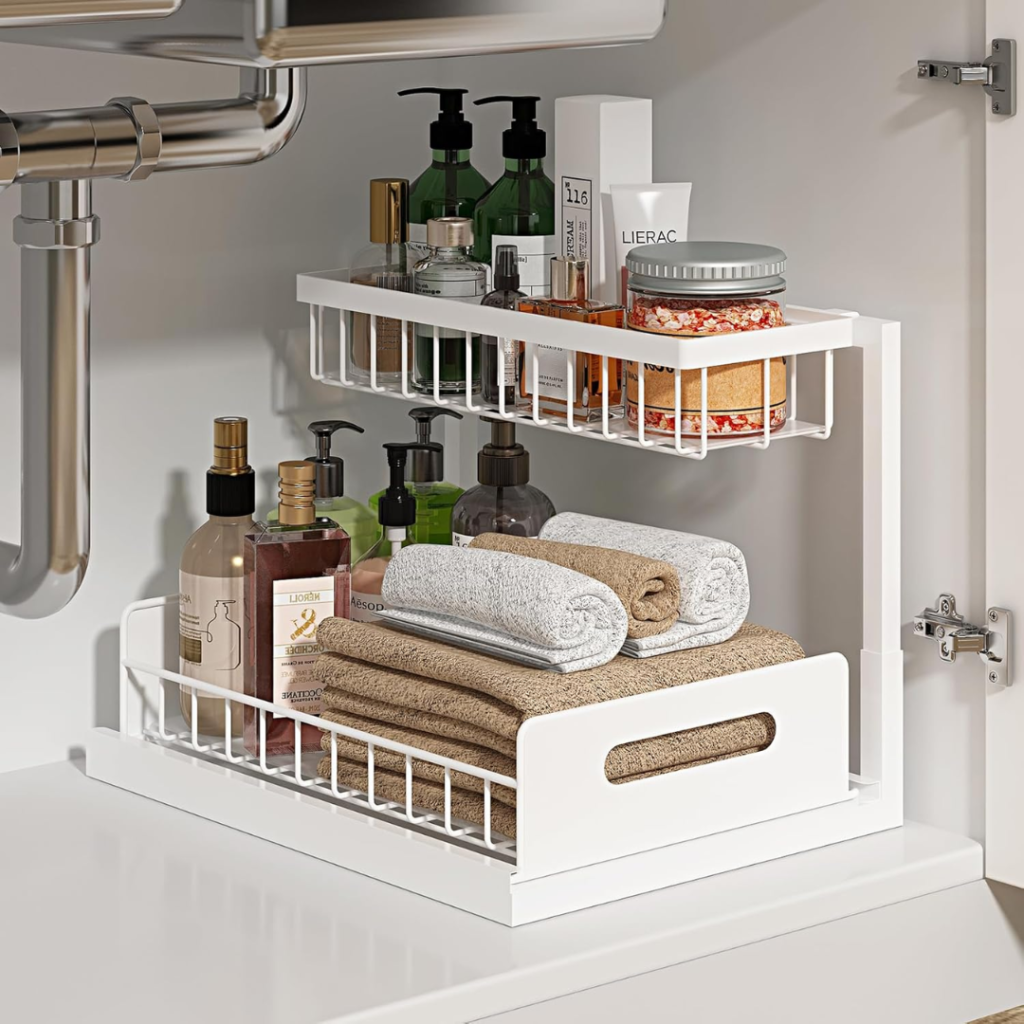
Sink Organizer
Key Features:
- L-Shaped 2-Tier Design – Makes use of vertical space while leaving room for plumbing and taller bottles.
- Pull-Out Drawer – Slides out from either side for easier access to items at the back.
- Tool-Free Installation – Includes suction cups and adhesive for stable placement without drilling.
- Sturdy & Rust-Resistant – Steel construction with a water-friendly grid design and removable pads.
- Versatile Storage – Great for under-sink cabinets, kitchens, bathrooms, and laundry areas.
- Size: 14.2 × 10.6 × 11 inches; bottom tier fits bottles up to 8 inches tall.
As an Amazon Associate I earn from qualifying purchases.