
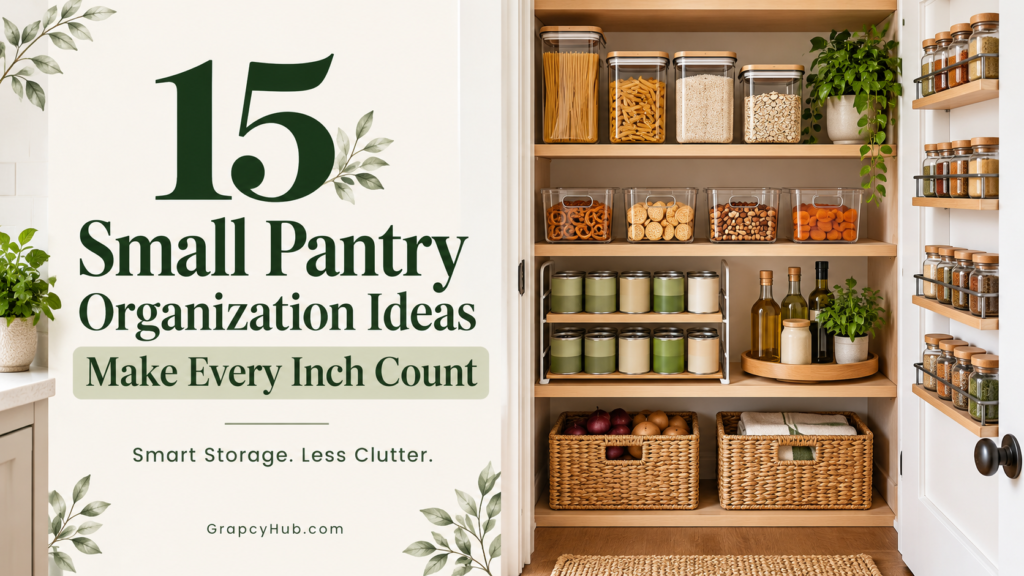
A small pantry can quickly become cluttered when food, snacks, containers, and everyday kitchen essentials compete for limited space. But with the right layout and a few simple changes, even a small pantry can feel more organized and easier to use.
These small pantry organization ideas will help you maximize storage, make better use of shelves and corners, and keep frequently used items easy to find. From simple shelf organization to space-saving storage solutions, these practical ideas can help you create a pantry that works better for your everyday kitchen needs.
1. Declutter Before Adding More Storage
Before buying containers or organizers, take everything out of the pantry and see what you actually have.
Check expiration dates, combine duplicate items where appropriate, and remove foods your household no longer uses.
Then group similar items together.
For example:
- Canned vegetables
- Pasta and grains
- Baking ingredients
- Breakfast foods
- Snacks
- Sauces and condiments
- Drinks
- Cooking essentials
Starting with decluttering is important because adding storage to an already overcrowded pantry can simply create more places for unnecessary items to hide.
2. Measure Your Pantry Before Buying Organizers
One of the most useful small pantry organization ideas is also one of the easiest to overlook: measure first.
Measure the width, depth, and height of each storage area before purchasing bins, shelves, or racks.
Pay particular attention to shelf depth. A container that fits the width may still make it difficult to reach items stored behind it.
Also check the space between shelves. Tall cereal boxes may need more clearance than short containers, while smaller shelves can be ideal for cans and jars.
A few minutes with a measuring tape can prevent a lot of wasted money.
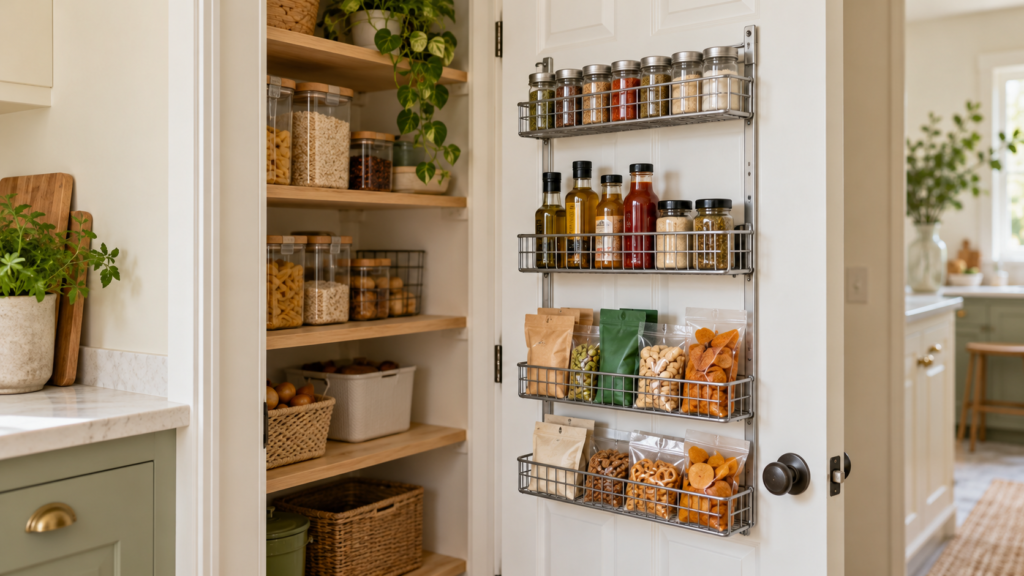
3. Use the Back of the Pantry Door
The back of a pantry door can provide valuable storage without taking up additional floor space.
A door-mounted rack can hold lightweight items such as:
- Spices
- Sauces
- Snack packets
- Wraps and bags
- Small baking supplies
- Kitchen accessories
This works particularly well in narrow pantries where shelf space is limited.
Just make sure the door still closes properly and that the added weight is appropriate for the door and organizer.
4. Add Shelf Risers to Create Extra Levels
If your pantry shelves are tall but your food containers are short, you’re probably wasting vertical space.
Shelf risers create an additional level so you can stack cans, jars, or small packages without hiding the items underneath.
For example, instead of placing several cans in one tall stack, a shelf riser can create two visible rows.
This makes it easier to see what you have and reduces the need to move several items just to reach one can.
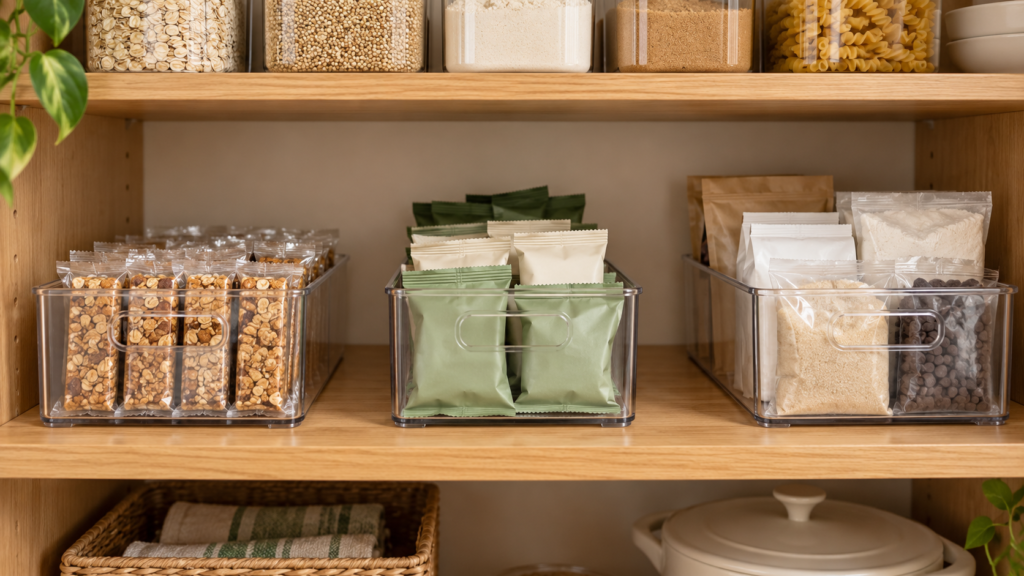
5. Use Clear Bins for Small Packages
Small food packages can quickly make a pantry look messy.
Clear bins can keep similar items together while allowing you to see what’s inside without opening every container.
Consider creating separate bins for:
- Granola bars
- Snack packets
- Baking supplies
- Pasta
- Breakfast items
- Kids’ snacks
Choose bins that are easy to lift and clean. Avoid making them so large that they become heavy when completely full.
The goal is better access, not simply putting more food into a container.
6. Create Dedicated Food Zones
A pantry becomes easier to maintain when every category has a defined location.
Instead of putting food wherever you find an empty spot, create simple zones.
For example:
Upper shelves: Less frequently used items
Eye-level shelves: Everyday foods
Lower shelves: Heavy items and larger containers
Door storage: Small, lightweight items
Floor: Larger or backup items
You can adjust these zones based on your household’s routine.
The important thing is consistency. When similar items always return to the same area, shopping and meal preparation become easier.
7. Make Better Use of Vertical Space
Small pantries often have more unused vertical space than horizontal space.
Look for opportunities to stack or add levels without making items difficult to reach.
Stackable bins, shelf risers, and vertical organizers can help turn unused space into useful storage.
However, don’t stack everything as high as possible.
If you have to remove four containers to reach the one underneath, the system isn’t really saving you time.
Keep the items you use most often within easy reach.
8. Organize Deep Pantry Shelves Strategically
Deep shelves can provide plenty of storage, but they also create one major problem: forgotten items.
Instead of pushing food toward the back, use organizers that allow you to group items and pull them forward.
A shallow bin can work as a simple pull-out container for smaller packages. You can also place taller items toward the back and shorter items toward the front where appropriate.
Another useful rule is to avoid storing two unrelated categories directly behind each other.
For example, don’t put baking supplies behind canned goods. You’ll eventually have to move one category just to reach the other.
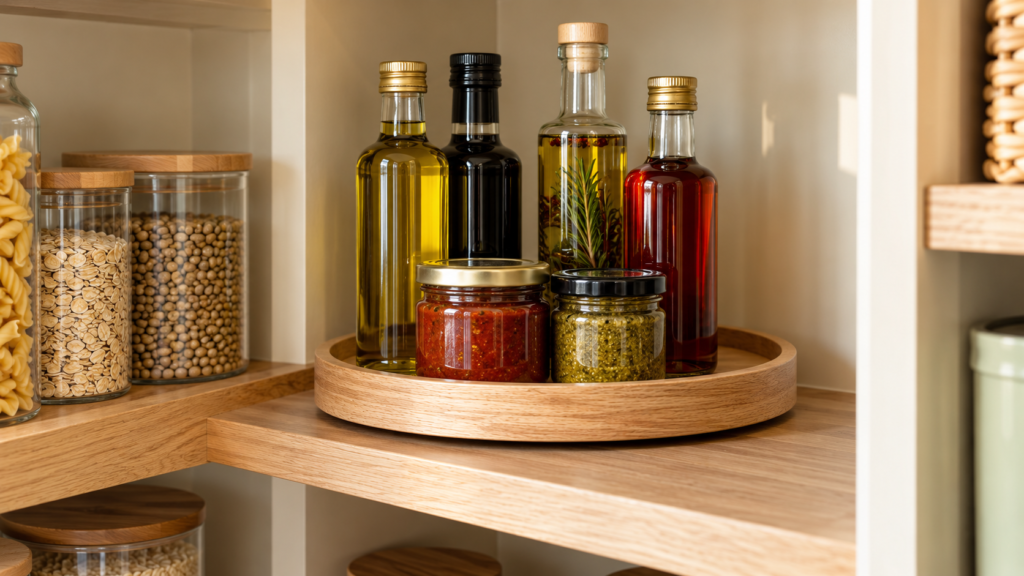
9. Use a Lazy Susan for Awkward Corners
Corners are some of the hardest areas of a pantry to access.
A rotating organizer, often called a lazy Susan, can make bottles, sauces, jars, and other small containers easier to reach.
Instead of reaching around several bottles to find one item, you can simply rotate the organizer.
This is especially useful for:
- Oils
- Vinegars
- Sauces
- Spreads
- Small jars
- Baking ingredients
Choose the size based on the shelf rather than buying the largest rotating organizer available.
10. Keep Frequently Used Foods at Eye Level
Your pantry shouldn’t treat every item equally.
Foods you use several times a week deserve the easiest-to-reach locations.
Think about what your household actually reaches for:
- Coffee
- Cereal
- Pasta
- Snacks
- Bread
- Baking staples
- Everyday cooking ingredients
Place these items around eye or waist level when possible.
Less frequently used foods can move to higher or less accessible shelves.
This simple change can make the pantry feel more organized without adding any new storage products.
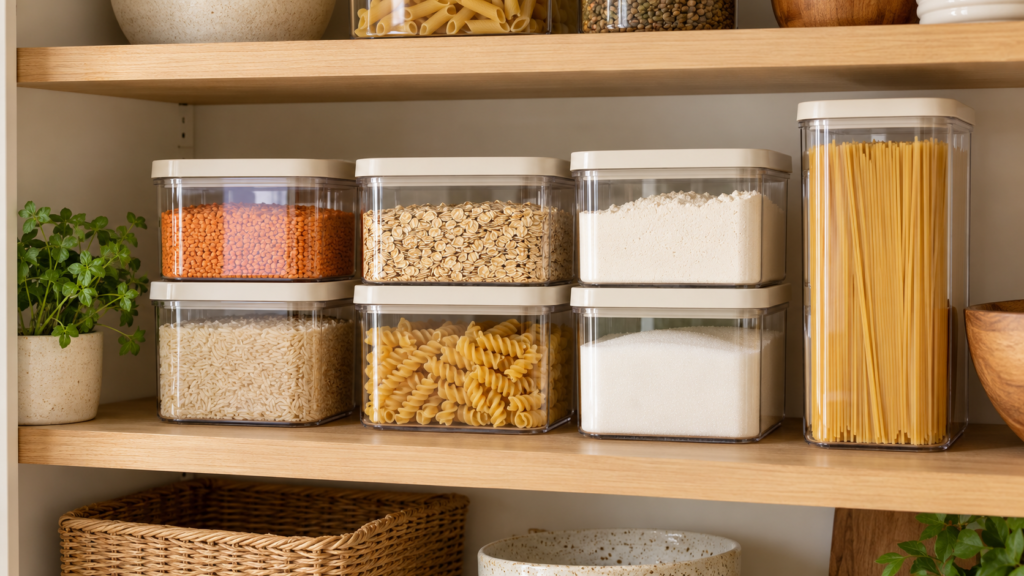
11. Try Stackable Food Storage Containers
If you regularly buy dry foods such as rice, flour, sugar, pasta, or cereal, stackable containers can help make shelves look more orderly.
Containers with similar footprints are particularly useful because they make better use of the available shelf area.
Before transferring food, check that the container is suitable for the ingredient and that you can identify what it contains.
Clear containers are convenient because you can see the contents at a glance, while labels can help distinguish similar-looking ingredients.
Don’t feel obligated to transfer every pantry item into matching containers. Use them where they genuinely make storage easier.
12. Create a Dedicated Snack Zone
Snacks have a habit of spreading throughout a pantry.
Create one clearly defined snack zone instead.
A small bin or basket can hold individually packaged snacks, while another section can be used for larger snack items.
This can be particularly helpful for families because everyone knows where snacks belong.
It also makes restocking easier. When the snack bin starts looking empty, you’ll immediately know what needs to be added to your grocery list.
13. Label Only What Actually Helps
Labels can make a pantry look organized, but too many labels can create unnecessary work.
Label categories that are genuinely useful, especially when several containers look similar.
For example:
- Flour
- Sugar
- Rice
- Pasta
- Baking Supplies
- Snacks
You don’t necessarily need a label for every single item.
The best organization system is one you can maintain without spending an hour reorganizing the pantry every weekend.
14. Use Floor Space Carefully
The pantry floor is useful, but it shouldn’t become a dumping area.
Use it for larger and heavier items that would be inconvenient to store on upper shelves.
Depending on the space available, this could include:
- Bulk food
- Large beverage packages
- Small appliances
- Extra paper products
- Pet food
A low rolling cart can also be useful in some pantries because it allows you to pull stored items forward.
Keep enough clearance to walk into the pantry and access the shelves comfortably.
15. Leave Some Empty Space
This may be the most counterintuitive idea on the list.
You don’t need to fill every inch of your pantry.
A completely packed pantry may technically contain more items, but it becomes harder to see what you own, harder to clean, and harder to put groceries away.
Leave a little breathing room between categories and containers.
That empty space also gives you flexibility when you bring home a larger grocery haul.
A good pantry should be functional before it is full.
How to Organize a Small Pantry Step by Step
If your pantry is currently overflowing, don’t try to fix everything at once.
Use this simple process.
Step 1: Empty the pantry
Remove everything so you can see the shelves clearly.
Step 2: Check expiration dates
Discard expired food according to appropriate food-safety guidance and set aside items you no longer want.
Step 3: Group similar items
Create broad categories rather than dozens of tiny groups.
Step 4: Measure the shelves
Record the width, depth, and height of your storage areas.
Step 5: Decide what belongs at eye level
Give your most frequently used foods the easiest access.
Step 6: Choose only the storage solutions you need
You may only need a few shelf risers and baskets rather than a complete set of matching containers.
Step 7: Put everything back by category
Give every major category a permanent home.
Step 8: Leave some breathing room
Don’t fill every shelf to its maximum capacity.
This process is more sustainable than buying storage products first and trying to make your pantry fit around them.
Common Small Pantry Organization Mistakes
Even a pantry with plenty of storage can become difficult to use if the system isn’t practical.
Buying organizers before measuring
This is one of the easiest mistakes to make. Always check dimensions before ordering.
Storing frequently used items too high
Convenience matters. Everyday ingredients should be easy to reach.
Using oversized containers
Large bins can waste shelf space and become difficult to lift when full.
Creating too many categories
A complicated system is harder to maintain. Start with broad, useful categories.
Hiding items behind other items
If you can’t see what you own, food is more likely to expire before you use it.
Overfilling the pantry
A little empty space makes the pantry easier to maintain and restock.
Best Storage Products for a Small Pantry
You don’t need every organizer on the market. Choose products based on the specific problem you’re trying to solve.
Useful options can include:
- Clear storage bins for small packages and loose items
- Shelf risers for cans and short containers
- Lazy Susans for corners and bottles
- Stackable containers for dry ingredients
- Door racks for lightweight items
- Pull-out bins for deep shelves
- Rolling carts when additional flexible storage is needed
- Labels for containers where identification is genuinely useful
If you’re shopping through Amazon, compare the product’s dimensions, material, weight capacity, cleaning instructions, and customer reviews before purchasing. A highly rated organizer isn’t necessarily the right fit if it doesn’t match your pantry’s measurements.
How to Keep Your Pantry Organized
Getting the pantry organized is only half the job. The real goal is making the system easy enough to maintain.
Try these simple habits:
Put groceries away by category
Don’t simply place new groceries in the first empty space. Return them to their designated zone.
Use older items first
When appropriate, place older products toward the front so they are easier to use before newer purchases.
Do a quick weekly check
Before making your grocery list, spend a few minutes checking the pantry.
Don’t save empty containers
If you finish an item, remove or clean the container before it becomes unnecessary clutter.
Adjust the system when your routine changes
Your pantry organization should evolve with your household. If a category keeps overflowing, give it more space instead of repeatedly forcing it into an undersized bin.
Frequently Asked Questions About Small Pantry Organization
How do I organize a very small pantry?
Start by removing expired and unused items, then group similar foods together. Measure your shelves before buying organizers and use vertical space with shelf risers, stackable containers, and door-mounted storage. Keep frequently used foods within easy reach.
What is the best way to organize a small pantry?
The best approach is to create simple food zones based on how you use your pantry. Keep everyday foods at eye level, heavier items lower down, and less frequently used products on higher shelves. Use bins or shelf risers only where they solve a specific storage problem.
How can I maximize space in a small pantry?
Use vertical space, the back of the pantry door, shelf risers, stackable containers, and narrow organizers. Deep shelves can also be easier to use when items are grouped in pull-out bins or rotating organizers.
What should I store at eye level in a small pantry?
Keep foods you use most often at eye or waist level. This might include breakfast foods, snacks, pasta, coffee, baking staples, or everyday cooking ingredients. Less frequently used items can go on higher shelves.
Are clear containers good for small pantry organization?
Yes. Clear containers can make dry foods easier to see and can help keep similar ingredients grouped together. However, you don’t need to transfer every pantry item into a container. Use them where they genuinely improve visibility and storage.
How do I organize a deep pantry?
Group similar items together and avoid placing unrelated products directly behind one another. Shallow bins, pull-out organizers, or lazy Susans can make deep shelves easier to access. Keep frequently used items toward the front or at a comfortable height.
How often should I reorganize my pantry?
A full reorganization usually isn’t necessary if your system is easy to maintain. A quick weekly check while making your grocery list can help prevent clutter, while a more thorough decluttering session can be done every few months or whenever the pantry becomes difficult to use.
How do I keep a small pantry organized after decluttering?
Give every category a permanent location and return groceries to the same area after shopping. Avoid overfilling shelves, use older items first when appropriate, and adjust the storage system if a particular category repeatedly becomes overcrowded.
What are the best small pantry organization ideas for limited space?
The best small pantry organization ideas focus on using vertical space, creating simple food zones, and keeping frequently used items within easy reach. Shelf risers, clear bins, stackable containers, and door storage can help you make better use of limited pantry space.
How can small pantry organization ideas help reduce clutter?
Small pantry organization ideas can reduce clutter by giving different food categories a designated location. When similar items stay together and unused food is removed regularly, it’s easier to see what you have, restock groceries, and keep the pantry organized.
Related Small Kitchen Organization Guides
If you are working on a small kitchen, these GRAPCY Hub guides can help you organize other storage areas:
- 15 Small Kitchen Organization Ideas That Actually Work
- 10 Spice Rack Ideas for Small Kitchens and Better Organization
- 12 Kitchen Cabinet Organization Ideas for Small Spaces
- 15 Small Kitchen Storage Ideas to Maximize Every Inch
- 15 Small Kitchen Countertop Organization Ideas
- 12 Small Pantry Organization Ideas for Better Storage
Final Thoughts
A small pantry doesn’t have to feel cramped or chaotic.
The most effective small pantry organization ideas aren’t about buying the most storage products. They’re about understanding how you use the space, removing what you don’t need, grouping similar items, and making the available shelves easier to access.
Start with the basics: declutter, measure, create food zones, use vertical space, and keep frequently used items within easy reach.
Then add organizers only where they solve a specific problem.
Whether you have a narrow cabinet pantry, a small walk-in pantry, or a few shelves tucked into your kitchen, a thoughtful system can help you make every inch count while keeping everyday cooking and grocery shopping much easier.
Quick Takeaway
If you’re starting from scratch, prioritize these five changes:
- Measure first before buying storage products.
- Create simple food zones so everything has a home.
- Use vertical space with shelf risers and stackable storage.
- Keep everyday foods accessible at eye or waist level.
- Leave some empty space so the pantry stays functional as you restock.
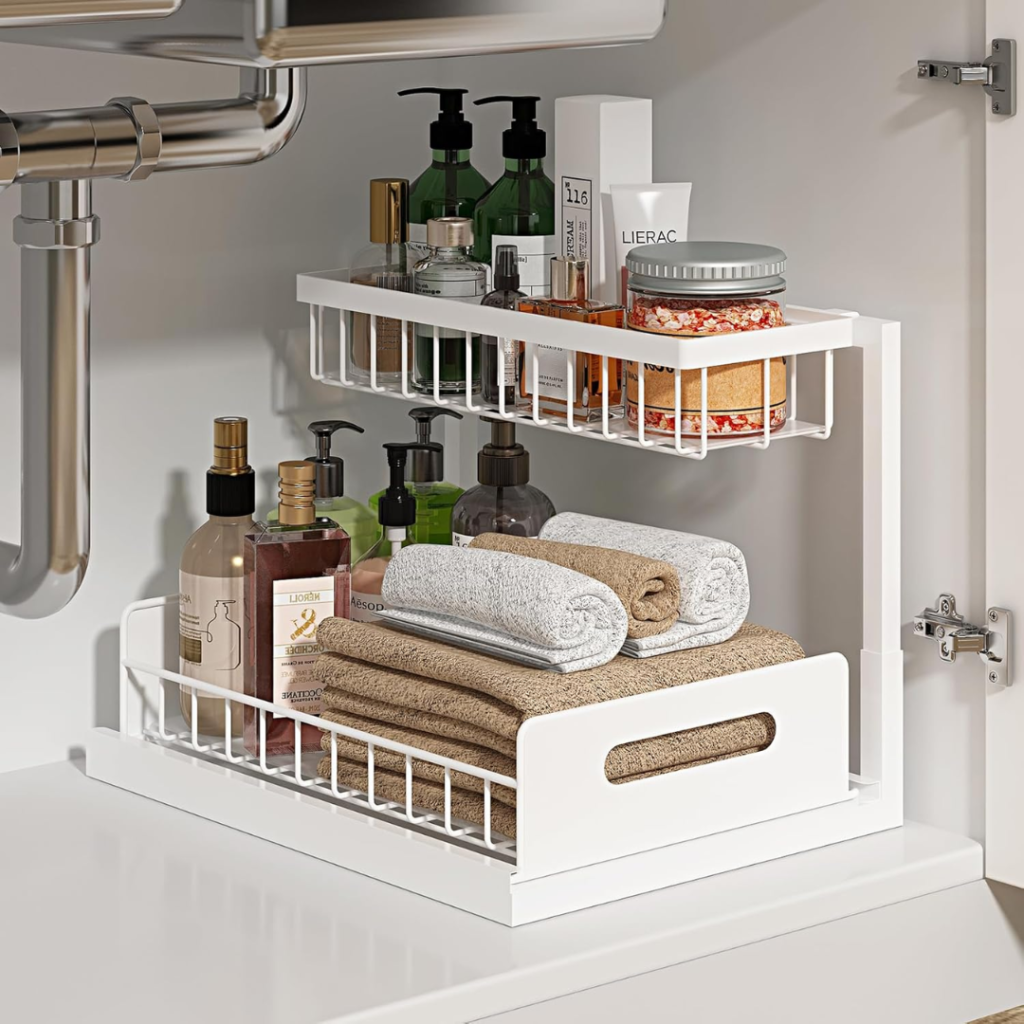
Sink Organizer
Key Features:
- L-Shaped 2-Tier Design – Makes use of vertical space while leaving room for plumbing and taller bottles.
- Pull-Out Drawer – Slides out from either side for easier access to items at the back.
- Tool-Free Installation – Includes suction cups and adhesive for stable placement without drilling.
- Sturdy & Rust-Resistant – Steel construction with a water-friendly grid design and removable pads.
- Versatile Storage – Great for under-sink cabinets, kitchens, bathrooms, and laundry areas.
- Size: 14.2 × 10.6 × 11 inches; bottom tier fits bottles up to 8 inches tall.
As an Amazon Associate I earn from qualifying purchases.