
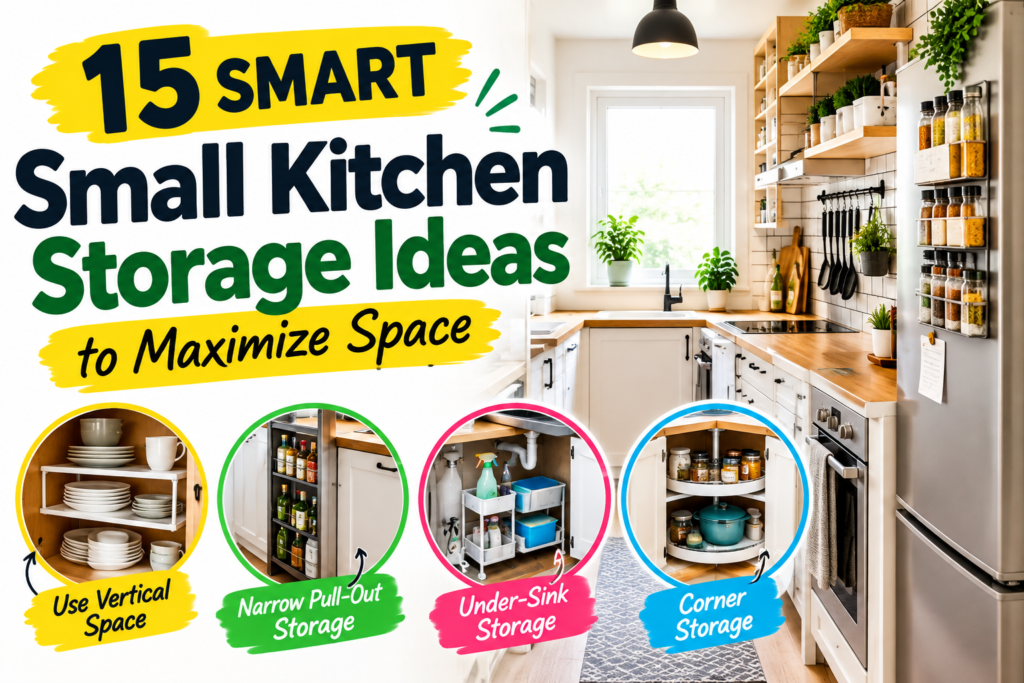
A small kitchen can feel crowded even when you do not own that much stuff. Limited cabinets, narrow counters, awkward corners, and overflowing drawers can quickly make everyday cooking frustrating.
The good news is that you do not always need a bigger kitchen to gain more storage. The key is to make better use of the space you already have.
These small kitchen storage ideas focus on overlooked areas, vertical space, cabinets, counters, drawers, and other practical storage solutions. Whether you live in a compact apartment or simply have a small kitchen, these ideas can help you create more room without a major remodel.
If you’re also looking for ways to keep your existing kitchen storage neat and functional, see our guide to small kitchen organization ideas for additional tips.
Quick Overview: Small Kitchen Storage Ideas
| Storage Idea | Best For | Difficulty |
|---|---|---|
| Vertical wall storage | Empty walls | Easy |
| Shelf risers | Cabinets | Easy |
| Cabinet door storage | Small cabinets | Easy |
| Pull-out storage | Narrow gaps | Medium |
| Above-cabinet storage | Extra items | Easy |
| Under-sink storage | Cleaning supplies | Easy |
| Drawer dividers | Utensils | Easy |
| Corner storage | Awkward corners | Easy |
| Rolling cart | Flexible storage | Easy |
| Appliance zones | Bulky appliances | Easy |
| Magnetic storage | Small tools | Easy |
| Refrigerator-side storage | Narrow spaces | Medium |
| Stackable containers | Pantry items | Easy |
| Countertop station | Daily essentials | Easy |
| Forgotten spaces | Extra capacity | Easy |
1. Use Vertical Wall Space for Extra Storag
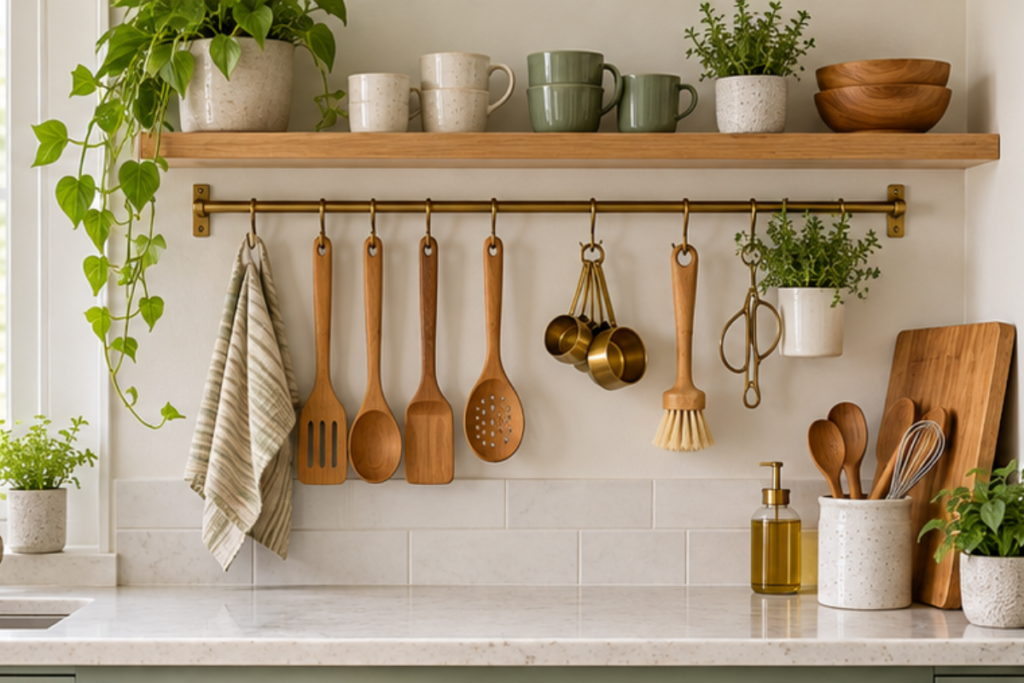
When floor and cabinet space are limited, look up.
An empty kitchen wall can provide valuable storage without taking up counter space. A simple rail, pegboard, narrow shelf, or wall-mounted rack can hold items that would otherwise crowd your cabinets.
Consider using vertical space for:
- Cooking utensils
- Measuring cups
- Small pots and pans
- Cutting boards
- Mugs
- Kitchen towels
- Frequently used tools
Keep the items you use most often within easy reach. Less frequently used items can go higher on the wall.
The goal is not to fill every inch of wall space. Instead, use one or two well-planned areas to add storage without making the kitchen feel visually crowded.
2. Add Shelf Risers Inside Cabinets
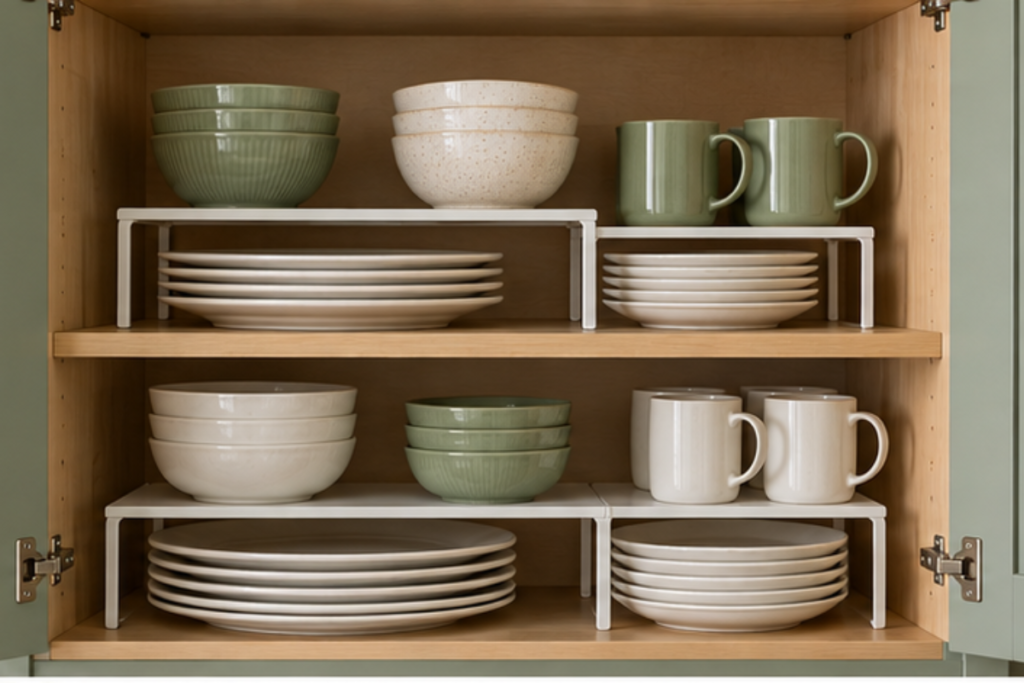
Cabinet shelves often waste vertical space because there is a large gap between one shelf and the next.
Shelf risers can divide that unused space into two levels.
For example, you can place plates or bowls underneath a riser and smaller dishes or mugs on top. This allows you to use the same cabinet footprint more efficiently.
Shelf risers work especially well for:
- Plates
- Bowls
- Mugs
- Food containers
- Canned goods
- Small serving dishes
Choose risers that fit your cabinet dimensions so doors can still close comfortably.
3. Use Cabinet Door Storage
The inside of a cabinet door is often completely unused.
A slim adhesive or mounted organizer can turn this hidden surface into useful storage. Depending on the cabinet, you could use it for spices, measuring spoons, cleaning supplies, cutting boards, or small kitchen tools.
Before installing anything, check the available clearance. The added storage should not interfere with shelves or prevent the cabinet door from closing.
This is one of the simplest small kitchen storage solutions because it creates storage without requiring additional floor or counter space.
4. Create a Narrow Pull-Out Storage Zone
Small gaps between cabinets, appliances, or walls can become surprisingly useful.
If you have a narrow space that is wide enough for a slim rolling or pull-out organizer, consider turning it into a dedicated storage zone.
A narrow pull-out can hold:
- Spices
- Oils
- Sauces
- Cleaning supplies
- Baking ingredients
- Kitchen wraps
Measure the opening carefully before purchasing or building anything. Even a few inches of unused space can become valuable in a very small kitchen.
5. Make Use of the Space Above Cabinets
If your kitchen cabinets do not reach the ceiling, the area above them can provide additional storage.
This space is best for items you do not use every day, such as:
- Seasonal serving pieces
- Extra baskets
- Large trays
- Special-occasion cookware
- Decorative kitchen items
Use attractive baskets or matching containers to keep the area looking intentional rather than cluttered.
Avoid storing extremely heavy objects overhead, especially where they could become difficult or unsafe to remove.
6. Maximize Under-Sink Storage
The area beneath the kitchen sink is awkward, but it does not have to be wasted.
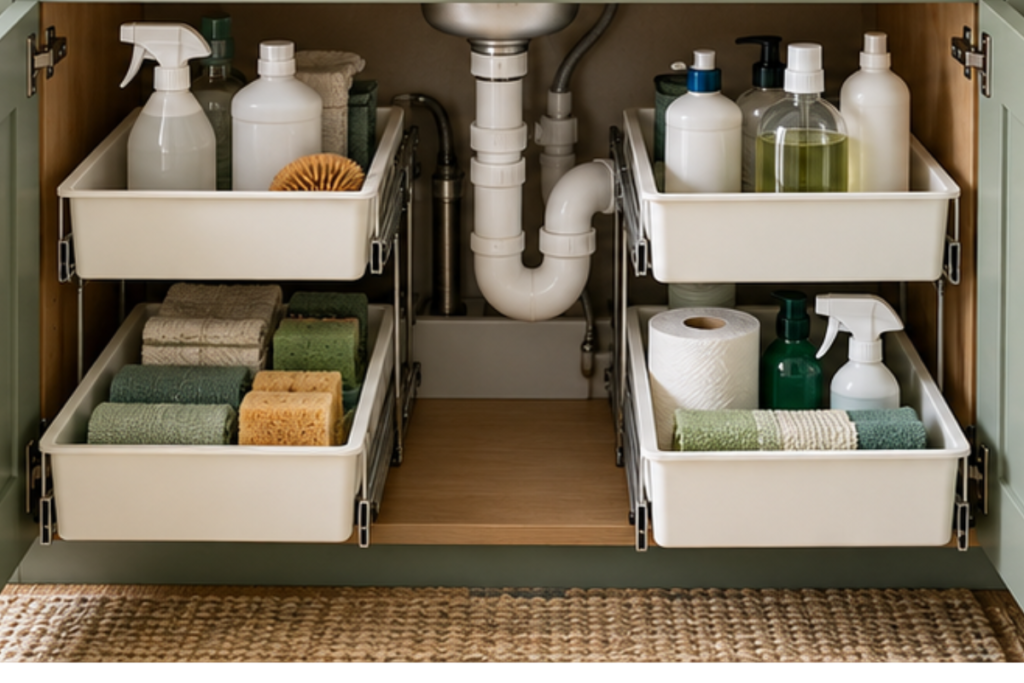
Start by working around the plumbing rather than trying to fit one large container into the entire cabinet.
Stackable bins, small pull-out drawers, and adjustable organizers can make better use of the available space.
Under-sink storage is particularly useful for:
- Dish soap
- Sponges
- Cleaning brushes
- Trash bags
- Dishwasher supplies
- Cleaning cloths
Keep cleaning products separated from food and cooking supplies.
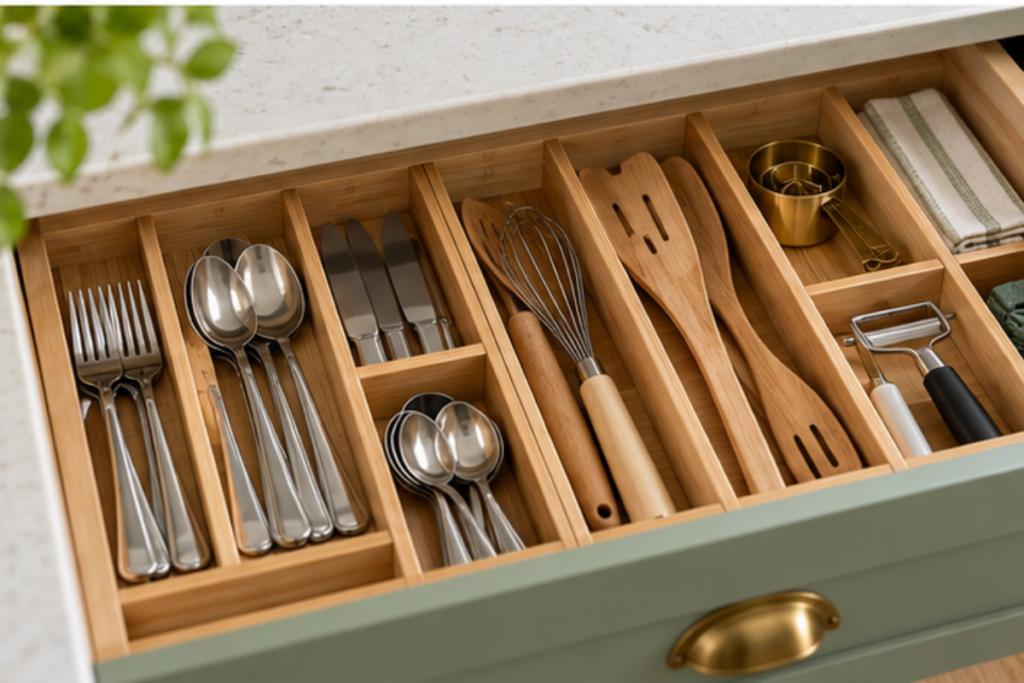
7. Add Drawer Dividers for Better Storage
A crowded drawer may technically have enough room but still feel unusable.
Drawer dividers help separate utensils into smaller sections so every item has a designated place.
You can create sections for:
- Forks and spoons
- Measuring tools
- Cooking utensils
- Kitchen gadgets
- Knives
- Food-preparation tools
Adjustable dividers are especially useful because you can change the layout as your storage needs change.
For small kitchens, the goal is not simply to fit more into a drawer. It is to make the entire drawer easier to access.
8. Turn Awkward Corners Into Useful Storage
Kitchen corners are notorious for becoming dead zones.
Instead of leaving the corner empty, consider using a corner shelf, lazy Susan, narrow shelving unit, or appropriately sized storage basket.
Corner storage works particularly well for items that are difficult to organize in standard cabinets.
You could use a rotating organizer for sauces and condiments or a small shelf for mugs and serving pieces.
Just make sure the solution does not block nearby cabinet doors or create another difficult-to-reach area.
9. Use a Slim Rolling Kitchen Cart
A rolling cart can provide flexible storage without requiring permanent remodeling.
Choose a slim cart that fits into an unused area of your kitchen. When you need additional workspace, you can move it closer to the counter. When you are finished, roll it back into its storage position.
Depending on its design, a kitchen cart can hold:
- Produce
- Baking supplies
- Appliances
- Cookbooks
- Coffee supplies
- Snacks
- Extra dishes
This can be particularly useful in apartments or rental kitchens where permanent storage changes are not practical.
10. Create Dedicated Appliance Storage Zones
Small appliances can consume a surprising amount of cabinet and counter space.
Instead of allowing them to spread throughout the kitchen, create one dedicated appliance zone.
For example, you might keep your:
- Blender
- Toaster
- Hand mixer
- Air fryer
- Coffee maker
- Food processor
in one carefully selected area.
Keep the appliances you use daily accessible, while less frequently used appliances can go into deeper cabinets or higher storage.
If an appliance lives permanently on the counter, make sure it earns that space by being used regularly.
11. Use Magnetic Storage on Empty Surfaces
Magnetic storage can turn certain unused surfaces into practical storage areas.
A magnetic strip can hold small metal kitchen tools, while magnetic containers can be useful for spices or other small items.
Possible uses include:
- Measuring spoons
- Small kitchen tools
- Spice containers
- Scissors
- Metal utensils
Always check that the surface and magnetic strength are appropriate for the items you want to store.
The biggest advantage is that magnetic storage can keep small tools accessible without using another drawer.
12. Make Use of the Space Beside the Refrigerator
The side of a refrigerator can sometimes provide a narrow but useful storage surface.
Depending on your kitchen layout, you may be able to use a slim magnetic organizer, narrow shelving unit, or vertical rack.
This space can work well for:
- Spices
- Kitchen wraps
- Cooking utensils
- Small bottles
- Grocery lists
- Kitchen towels
Be careful not to interfere with refrigerator ventilation, doors, or nearby walkways.
A few inches of usable space can make a meaningful difference in a compact kitchen.
13. Use Stackable Containers to Go Vertical
Food containers can quickly turn a small cabinet or pantry into a chaotic pile.
Stackable containers help you use vertical space instead of spreading everything across a single shelf.
For dry foods, consider matching containers for items such as:
- Rice
- Pasta
- Flour
- Sugar
- Cereal
- Snacks
Choose container sizes based on the actual dimensions of your shelves.
There is no need to replace every container at once. Start with the area that creates the most clutter and expand the system gradually.
If your pantry is also short on space, our guide to small pantry organization ideas can help you create a more efficient setup.
14. Create a Small Countertop Storage Station
Counter space is precious in a small kitchen, so every item left on it should have a purpose.
Instead of spreading frequently used items across the counter, create one compact storage station.
For example, a small tray or organizer could hold your everyday:
- Cooking oils
- Salt and pepper
- Frequently used utensils
- Coffee supplies
- Breakfast essentials
Keeping these items together makes the counter easier to clean and prevents everyday essentials from spreading into multiple areas.
If your counter is already crowded, prioritize vertical or wall-mounted storage instead.
15. Find and Use Forgotten Storage Spaces
Some of the best small kitchen storage ideas involve spaces you normally overlook.
Walk through your kitchen and look for areas such as:
- The space above the refrigerator
- The side of a cabinet
- The back of a door
- Empty wall sections
- Gaps beside appliances
- The area beneath shelves
- The tops of cabinets
- Unused corners
You may discover several small spaces that can collectively provide a meaningful amount of extra storage.
Instead of searching for one large storage solution, think of your kitchen as a collection of smaller storage opportunities.
Small Kitchen Storage Ideas on a Budget
You do not need to spend hundreds of dollars to improve storage.
Start with inexpensive solutions that address your biggest problem first.
Some budget-friendly options include:
- Shelf risers
- Drawer dividers
- Adhesive hooks
- Stackable bins
- Small baskets
- Magnetic organizers
- Tension rods
- Slim storage racks
- Cabinet-door organizers
Before buying anything, measure your available space.
A cheap organizer that does not fit properly is not a storage solution—it is just another item taking up space.
Small Kitchen Storage Ideas for Very Small Spaces
If your kitchen is extremely small, prioritize storage that does not consume valuable floor or counter space.
Focus on:
- Vertical walls
- Cabinet doors
- The backs of doors
- Narrow gaps
- Cabinet interiors
- Refrigerator sides
- Under-sink space
- Vertical stacking
In a very small kitchen, multifunctional storage is especially valuable.
For example, a rolling cart can provide storage and temporary workspace, while a wall-mounted rail can hold several tools without using a drawer.
How to Choose the Right Storage Solutions
Before purchasing a new organizer, ask yourself three questions:
1. What problem am I solving?
Do you need more cabinet capacity, counter space, drawer space, or pantry storage?
Identify the actual problem before choosing a product.
2. How often do I use the item?
Everyday items should be easy to reach. Seasonal or rarely used items can go into harder-to-access storage.
3. Will the organizer create more clutter?
A storage product is only useful if it makes the space easier to use.
Avoid buying organizers simply because they look attractive. Measure first and choose products that fit your kitchen and your routine.
Common Small Kitchen Storage Mistakes to Avoid
Even good storage ideas can fail when they are poorly planned.
Buying before measuring
Always measure cabinets, drawers, shelves, and gaps before purchasing organizers.
Using every available surface
More storage does not mean filling every empty inch. Overcrowding can make a small kitchen feel even smaller.
Storing everyday items too high
Frequently used items should remain easy to reach.
Ignoring vertical space
If everything is stored at counter level, you are leaving valuable storage capacity unused.
Creating complicated systems
A storage system should make your kitchen easier to use. If it takes too much effort to put something away, the system probably needs to be simplified.
How to Keep Your Small Kitchen Storage Working
Once you create additional storage, maintain it regularly.
A few simple habits can prevent the kitchen from becoming crowded again:
- Return items to their designated areas.
- Remove duplicate tools you rarely use.
- Check expiration dates in food-storage areas.
- Avoid buying organizers without a specific purpose.
- Reassess storage after major changes to your cooking routine.
- Keep frequently used items within easy reach.
- Leave enough space around stored items to access them comfortably.
The best storage system is one that remains practical after the initial organizing project is finished.
Frequently Asked Questions About Small Kitchen Storage
What are the best small kitchen storage ideas?
The best small kitchen storage ideas make use of areas that are often overlooked, such as cabinet doors, vertical walls, narrow gaps, corners, drawers, and the space beneath the sink. Shelf risers, stackable containers, rolling carts, and pull-out organizers can also help you create more usable storage without remodeling your kitchen.
How can I maximize storage in a very small kitchen?
Start by using vertical space instead of relying only on cabinets and countertops. Add wall-mounted storage, shelf risers, cabinet-door organizers, narrow pull-out racks, and stackable containers. Also look for unused spaces beside appliances, above cabinets, and under the sink.
What are some small kitchen storage ideas for small spaces?
For very limited kitchens, focus on compact solutions that do not take up valuable floor space. Wall rails, magnetic storage, cabinet-door racks, slim rolling carts, shelf risers, and vertical organizers can provide additional storage while keeping the kitchen functional.
How can I organize small kitchen cabinets to fit more?
Use shelf risers to create additional levels, stack similar dishes, and place frequently used items where they are easiest to reach. You can also use the inside of cabinet doors for smaller items. Measure your cabinets before buying organizers so the storage products fit properly.
What are the best small kitchen storage ideas on a budget?
You can improve storage without spending much money by using shelf risers, adhesive hooks, drawer dividers, stackable bins, small baskets, magnetic organizers, and tension rods. Start with the area causing the most clutter rather than buying several organizers at once.
How do I add storage to a small kitchen without cabinets?
If your kitchen has limited cabinet space, use vertical walls, open shelving, rolling carts, pegboards, magnetic organizers, and slim freestanding shelves. You can also use the side of the refrigerator or an unused corner for additional storage.
How can I create more counter space in a small kitchen?
Move items that do not need to stay on the counter into vertical, wall-mounted, or cabinet storage. A narrow rolling cart can provide additional storage and workspace when needed. Keeping only frequently used appliances and essentials on the counter can also make the kitchen feel more spacious.
What are the best small kitchen cabinet storage ideas?
Shelf risers, cabinet-door organizers, stackable containers, pull-out shelves, and small bins are useful for increasing cabinet capacity. Group similar items together and use vertical space so you are not wasting the empty area above shorter items.
How can I use awkward corners for kitchen storage?
Corner shelves, lazy Susans, narrow shelving units, and rotating organizers can turn difficult corners into useful storage. Choose a solution that keeps items accessible and does not interfere with nearby cabinet doors or walkways.
How do I keep a small kitchen from becoming cluttered again?
Give frequently used items a designated storage location and return them there after use. Avoid keeping duplicates you rarely use, review food-storage areas regularly, and do not buy organizers without measuring first. A simple storage system that fits your daily routine is easier to maintain than a complicated one.
Related Small Kitchen Organization Guides
If you are working on a small kitchen, these GRAPCY Hub guides can help you organize other storage areas:
- 15 Small Kitchen Organization Ideas That Actually Work
- 10 Spice Rack Ideas for Small Kitchens and Better Organization
- 12 Kitchen Cabinet Organization Ideas for Small Spaces
- 15 Small Kitchen Storage Ideas to Maximize Every Inch
- 15 Small Kitchen Countertop Organization Ideas
- 12 Small Pantry Organization Ideas for Better Storage
Final Thoughts
The best small kitchen storage ideas do not necessarily require a renovation or a large budget. Often, the biggest improvement comes from using space that was already there but overlooked.
Start with the areas causing the most frustration—whether that is a crowded cabinet, overflowing drawer, limited counter space, or awkward corner. Then choose one or two storage solutions that directly solve that problem.
By using vertical space, cabinet doors, narrow gaps, drawers, corners, and stackable storage more effectively, even a small kitchen can become easier to use and feel much less crowded.
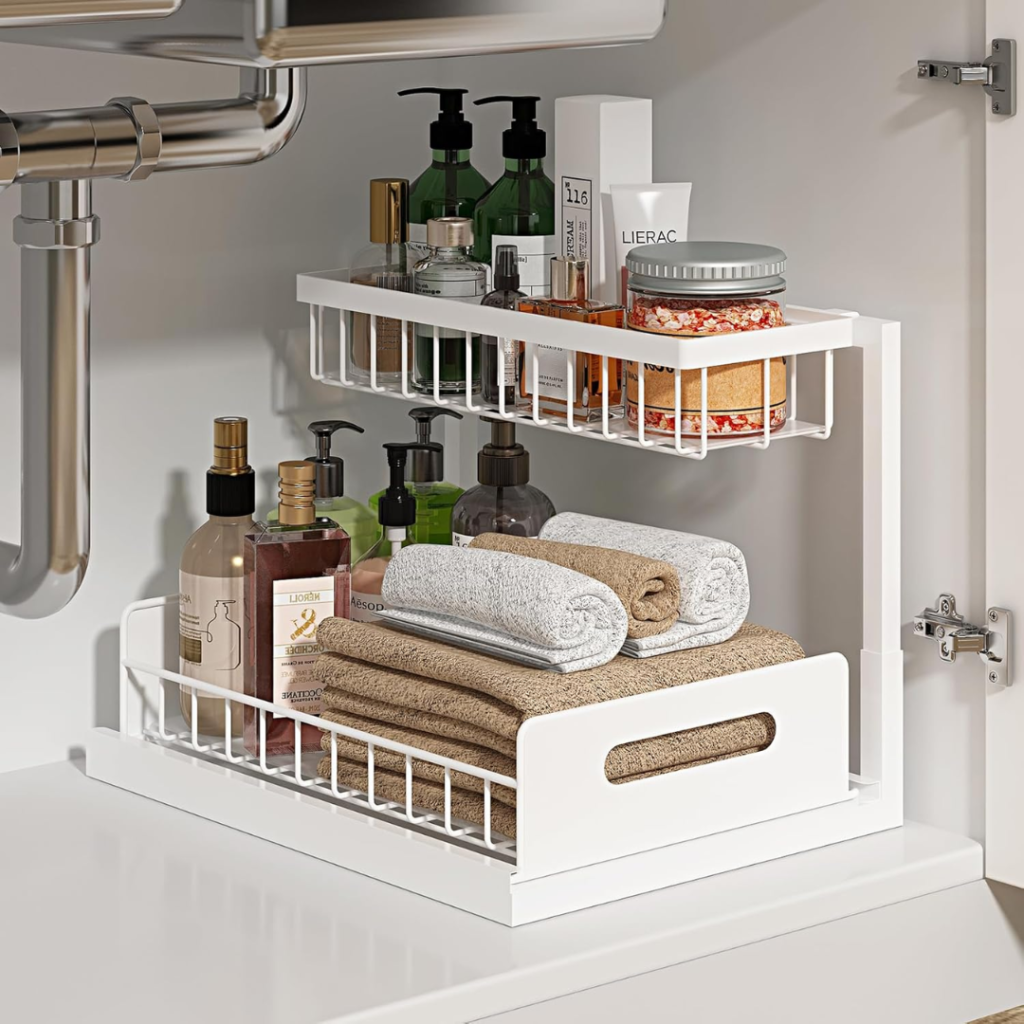
Sink Organizer
Key Features:
- L-Shaped 2-Tier Design – Makes use of vertical space while leaving room for plumbing and taller bottles.
- Pull-Out Drawer – Slides out from either side for easier access to items at the back.
- Tool-Free Installation – Includes suction cups and adhesive for stable placement without drilling.
- Sturdy & Rust-Resistant – Steel construction with a water-friendly grid design and removable pads.
- Versatile Storage – Great for under-sink cabinets, kitchens, bathrooms, and laundry areas.
- Size: 14.2 × 10.6 × 11 inches; bottom tier fits bottles up to 8 inches tall.
As an Amazon Associate I earn from qualifying purchases.